Kenya’s ambition to establish itself as a regional petroleum hub is opening new opportunities for engineers, welders and other specialised technical professionals, as multibillion-shilling investments in oil production, refining and infrastructure gather momentum.
The Sh2.2 trillion Dangote East Africa Petroleum Refinery in Lamu County and the Gulf Energy-led South Lokichar oil development project in Turkana County are emerging as major drivers of demand for skilled labour, placing renewed emphasis on local technical training and internationally recognised certification.
The Dangote refinery, whose construction was launched on September 30, is designed to process up to 700,000 barrels of crude oil daily, making it one of Africa’s largest planned refining facilities.
The integrated complex will also include a 1,000-megawatt power plant and facilities for manufacturing chemicals, plastics and fertilisers.
Completion is targeted for 2030, with project organisers projecting up to 60,000 direct and indirect jobs.
The scale of the investment points to substantial demand for civil, mechanical, electrical and chemical engineers, alongside pipeline welders, instrumentation specialists, plant operators and occupational safety professionals.
The project’s size and complexity suggest demand for hundreds of specialised engineers and potentially thousands of skilled technical workers across construction, installation, testing and commissioning.
The refinery is expected to increase Kenya’s gross domestic product (GDP) by 12 per cent, reflecting its projected economic impact. However, this remains a project-related projection rather than a guaranteed outcome.
The South Lokichar development is creating another opening for petroleum professionals.
Kenya is targeting its first commercial crude production from Turkana by December 2026, with initial exports expected through Mombasa in the first quarter of 2027.
The approved field development plan targets initial production of 20,000 barrels per day, with a subsequent phase expected to raise output to 50,000 barrels daily from 2032.
The project involves drilling, production facilities, storage and transportation infrastructure, requiring petroleum and drilling engineers, geologists, technicians, operators, environmental specialists and health and safety personnel.
The project’s field development plan estimates an overall direct and indirect workforce of about 2,000 people.
This includes opportunities across upstream operations, infrastructure development, logistics and supporting services, with the plan prioritising Kenyan participation in recruitment and procurement.
The immediate hiring needs are already becoming apparent.
In June, Gulf Energy advertised 61 positions across 39 job categories, including senior drilling and production engineers, operations personnel and environmental advisers.
Additional recruitment has followed as the project advances towards commercial production.
The longer-term pipeline question could further expand demand for specialised expertise.
Proposals for transporting Turkana crude towards the coast would require extensive engineering, welding, inspection, maintenance and safety capabilities.
Against this backdrop, Morendat Institute of Oil and Gas National Polytechnic (MIOG-NP), wholly owned by Kenya Pipeline Company Plc (KPC), is expanding specialised training to help bridge skills gaps in the petroleum industry.
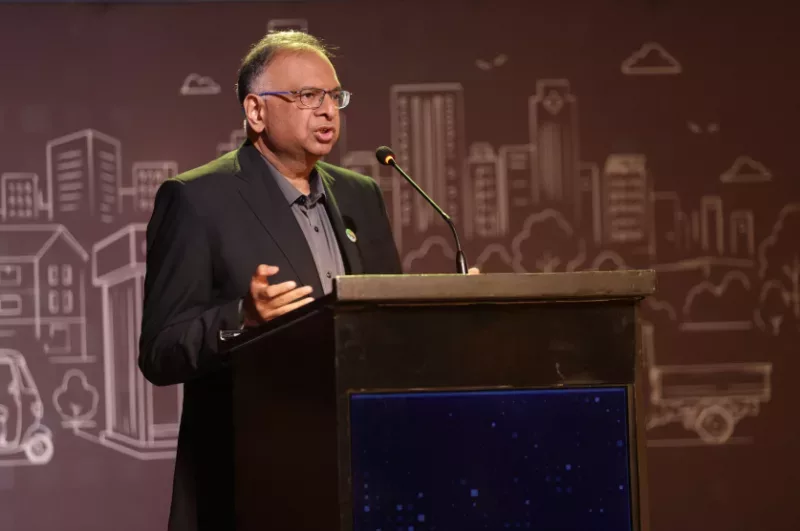
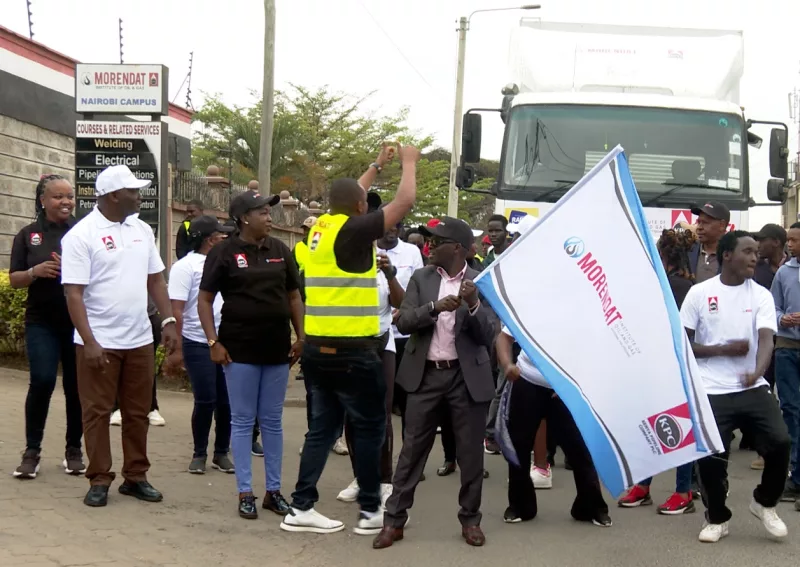
Speaking in Nairobi during the launch of the institute’s first roadshow to promote technical and vocational education, KPC Acting managing director and chief executive officer Pius Mwendwa said the institution was positioning itself as a training hub for Kenya and the wider region.
Mwendwa said the institute was targeting the training and certification of more than 30 pipeline welders annually, while noting that its capacity could support the delivery of more than 100 certified welders each year.
Since 2024, the institution has produced 101 certified pipeline welders, most of whom have joined KPC, while others have secured employment abroad.
This year, it graduated 10 certified pipeline welders, highlighting the importance of expanding specialised training as major projects move forward.
“We are working hard to fuel growth in Kenya and the region by unlocking and tapping into emerging opportunities in the oil and gas sector, including the transformation of Morendat Institute of Oil and Gas as an industry training hub for technical workforce development,” Mwendwa said.
He said developing local expertise would help reduce reliance on imported technicians while creating employment opportunities for young Kenyans.
MIOG-NP Director Nancy Kosgei said the institution was strengthening its portfolio through competency-based diploma and certificate programmes, specialised short courses and internationally recognised certification pathways.
Its welding programmes include training aligned with ISO 9606-1, an international standard covering qualification testing of welders for fusion welding of steels.
Such certification is important in industries where the integrity of pipeline joints and pressure-containing equipment is critical to operational safety.
The institute is also expanding its Recognition of Prior Learning programme, which enables experienced artisans to have skills acquired through practical work assessed and formally recognised.
“Many Kenyans possess valuable technical skills acquired through years of experience but lack formal qualifications,” Kosgei said, adding that certification could help them improve their career prospects locally and internationally.
Beyond pipeline welding, the institution is exploring partnerships with county governments and industry players to expand training in firefighting, occupational health and safety, emergency response, electrical installation and liquefied petroleum gas handling.
Established in 2014 as a regional centre of excellence in oil and gas training, MIOG-NP attained National Polytechnic status in September 2024.
It has trained more than 6,000 professionals across various technical disciplines and operates campuses in Nairobi, Naivasha and Eldoret.