

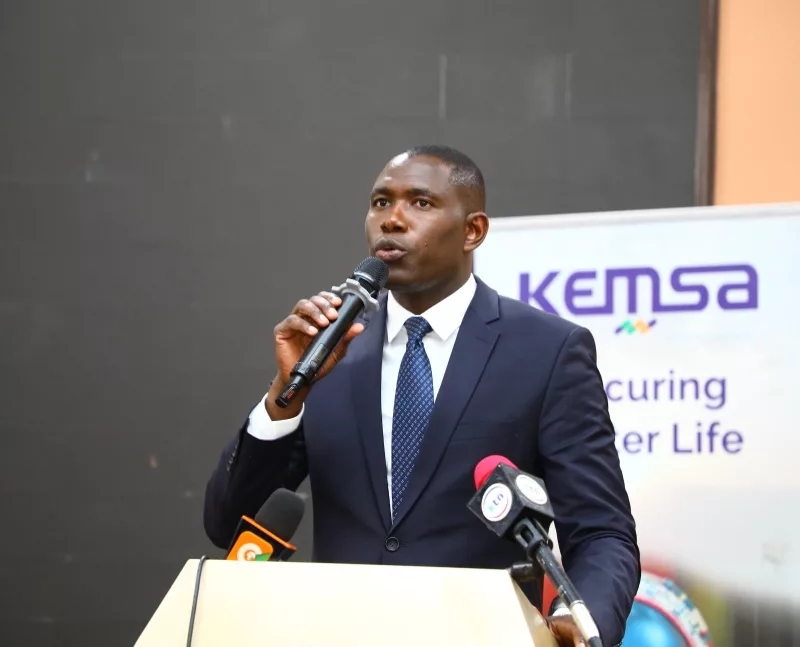
Principal Secretary for Medical Services Dr Ouma Oluga has raised concern over low access to essential medicines in some hospitals, despite the Kenya Medical Supplies Authority (Kemsa) reporting an order fill rate of between 90 and 92 per cent.
Oluga said access to essential medicines at patient level remained as low as 51 per cent in some health facilities, highlighting the need to strengthen hospital pharmacy systems and improve stock management.
He called on hospital pharmacists to work closely with doctors, nurses and other healthcare professionals to ensure medicines procured for facilities reach patients who need them.
Speaking at the Kemsa National Conference on Health Product Procurement and Supply Chain at Lake Naivasha Resort in Nakuru County, the PS said better coordination among healthcare workers was necessary to improve medicine forecasting, prevent stock-outs and reduce wastage.
He also emphasised the need to promote the safe use of medicines, urging hospitals to strengthen internal systems responsible for managing pharmaceutical supplies.
Although Kemsa's order fill rate indicates the proportion of orders supplied, Oluga's concerns point to challenges in ensuring medicines are available to patients at the point of care.
The PS called for functional, multidisciplinary Medicines and Therapeutics Committees in health facilities, with pharmacists actively involved in decisions on medicine selection, procurement, costs and patient safety.
He said pharmacists should play a central role in determining the medicines required by hospitals and ensuring that pharmaceutical resources are managed effectively.
The committees bring together different healthcare professionals to support decisions on the appropriate selection and use of medicines, helping facilities align treatment needs with available resources.
Oluga's remarks came as health sector stakeholders gathered to validate a harmonised list of health products and determine procurement priorities for the 2026/2027 financial year.
The conference is expected to establish quantities to guide the purchase of health products, a process aimed at aligning procurement with the needs of healthcare facilities.
The PS also highlighted ongoing health reforms focused on expanding digital health systems, reducing the cost of medicines and supporting local pharmaceutical manufacturing.
He said the reforms must translate into better services and improved patient outcomes, stressing the need to ensure that investments and policy changes deliver practical benefits to Kenyans seeking medical care.
The gap between Kemsa's reported order fill rate and patient-level access remains a key concern for medicine supply management.
While the agency reports filling between 90 and 92 per cent of orders, access to essential medicines in some facilities stands at 51 per cent, according to Oluga.
His call for stronger pharmacy systems places emphasis on the role of health facilities in managing supplies after procurement and ensuring medicines are available when prescribed.
The conference will help guide procurement decisions for the next financial year, while discussions on stock management and coordination among healthcare professionals are expected to inform efforts to improve access to essential medicines.






