An interesting conversation ensued between President William Ruto and a fish caging project coordinator from Homa Bay county during the inaugural Agriculture and Food Systems Transformation Summit held on Thursday.
The coordinator disclosed that the
government had indeed supported them with cages, fingerlings and feeds, but
upon harvesting, they decided to gift villagers with the fish, apparently
unaware that they needed to sell the harvest and reinvest in the project.
The President, in jest, inquired whether the coordinator was on a political expedition to win votes for an MCA seat by dishing out the harvest to villagers freely.
The man denied it. My instinct was that this man was perhaps a religious man who believed in the age-old wisdom that the hand that giveth more, receives more.
With that, the coordinator appealed to Ruto for another supply of fingerlings, and the President, through the relevant government ministry, committed to the request within a few months. One is reminded of the biblical invitation: ask, and it shall be given to you; knock, and the door shall be opened.
What emerged from the summit is that farmers and other players in the agriculture and food industry continue to contend with a formidable web of challenges.
These include erratic weather patterns, expensive farm inputs, concerns about input quality, high labour costs, limited market access, inadequate information, insufficient storage facilities and delayed payments for farm produce.
The World Bank has documented several of these constraints, including climate-related shocks, inefficient markets and post-harvest losses.
Yet agriculture remains central to achieving the Sustainable Development Goals. Sustainable agrifood systems contribute to all 17 goals, albeit to varying degrees. Their contribution is most visible in ending poverty (SDG 1), achieving zero hunger (SDG 2) and improving health and nutrition (SDG 3).
They also intersect with gender equality (SDG 5), clean water and sanitation (SDG 6), affordable and clean energy (SDG 7), responsible consumption and production (SDG 12), climate action (SDG 13) and life on land (SDG 15), among others.
With just over four years until the 2030 deadline, we must objectively assess how seriously we are investing in agriculture as a driver of sustainable development.
These goals matter because progress in food security, livelihoods, public health and environmental protection underpins a society in which economic growth can translate into a better quality of life for all.
Contrary to recent national ambitions, in truth, we cannot aspire to first-world prosperity while families go to bed hungry and children suffer malnutrition.
A hungry population cannot fully realise its potential to learn, work and contribute to national development. Agriculture deserves to be treated as a national priority.
One way to strengthen agriculture is to integrate digital technologies into the wider farming ecosystem. The need is immediate: farmers cannot make informed decisions about planting, inputs or markets when reliable information is inaccessible, production costs are high and buyers are uncertain.
Kenya already has practical examples. The Kenya Agricultural Observatory Platform provides weather-related information and tailored agronomic advice, while digital extension platforms such as M-shamba connect farmers to agricultural information and markets.
In a World Bank-published account, a Trans Nzoia banana farmer reported increasing her annual sales volume from seven to 18 tonnes after using M-shamba.
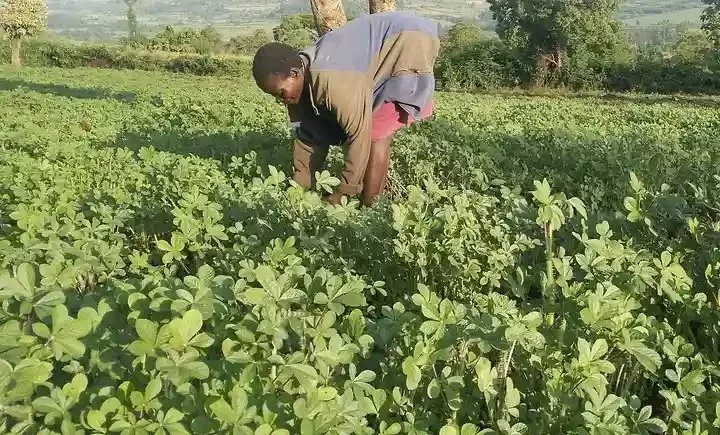
Personally, as a small-scale farmer, it’s always pleasant to receive a message from “Esubsidy” platform indicating that seeds and fertiliser are available and ready to be picked at this amount of money.
These examples demonstrate the potential of digital tools to improve access to information and markets, although their benefits depend on accessibility, reliable services and effective implementation.
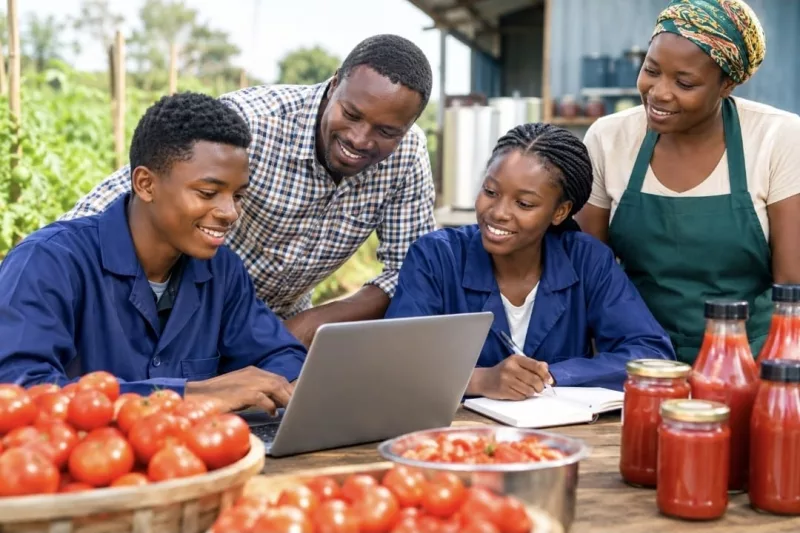
The lesson from the Homa Bay encounter is that distributing fingerlings, seeds or fertiliser is only part of the solution. Farmers also need the systems that help them use these resources productively, manage risks, reach markets and reinvest their earnings.
The national and county governments, the Kenya Agricultural and Livestock Research Organisation and development partners should therefore invest in digital agricultural services, research and innovation hubs tailored to local farming needs.
Such investment must connect technology to practical extension support, quality inputs, storage and reliable markets.
Without an agricultural sector strengthened by technology and supported by a functioning ecosystem, achieving the SDG by 2030 will remain a mirage.
Postdoctoral fellow with interests in digitalising systems for efficiency and effectiveness, [email protected]