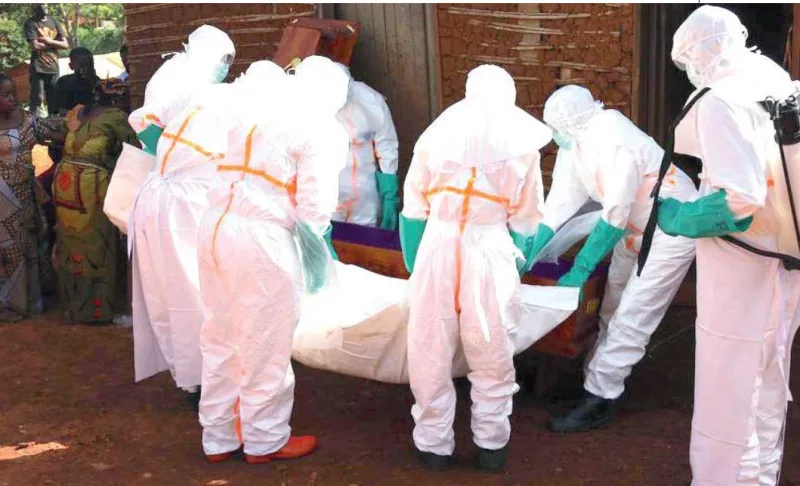
 Medical workers in protective suits transfer the body of an Ebola victim in Mongbwalu, Ituri province, eastern Democratic Republic of Congo, on May 24 /STR/XINHUA
KENYA must strengthen its preparedness for Ebola without triggering public alarm that could hurt tourism, disrupt regional trade and undermine economic confidence.
The recent confirmation of an imported case of Bundibugyo virus disease demands vigilance, not panic.
The government’s decision to suspend hotel-based meetings for public health officials is understandable as a precaution.
However, the response must remain proportionate and guided by scientific evidence. With no local transmission reported, authorities must avoid creating the wrong impression.
The priority should be strengthening surveillance at airports and land border crossings, equipping laboratories, preparing isolation facilities and ensuring health workers have adequate protective equipment.
Contact tracing must be thorough, while suspected cases should be identified and managed swiftly.
The government must also address the Sh2.69 billion funding gap for border logistics and infection prevention equipment. Preparedness requires adequate financing, trained personnel, medical supplies and coordination between national and county governments.
Transparent public communication is equally important. Authorities should provide regular, updates and practical guidance. Misinformation and sensational reporting can fuel fear, stigma and economic losses.
Kenya’s economy depends on regional movement of people and goods. Unnecessary travel restrictions and blanket cancellations could hurt tourism, hospitality and cross-border commerce.
Any restrictions should be justified by scientific evidence and reviewed as circumstances change.
The government must work with neighbouring countries and regional health agencies to share information and coordinate surveillance.
Kenya must remain alert, prepared and transparent. The goal is to contain the risk before it spreads while protecting livelihoods and public confidence.
Effective preparedness, not panic, is the country’s strongest defence against Ebola.