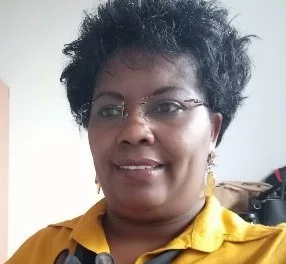
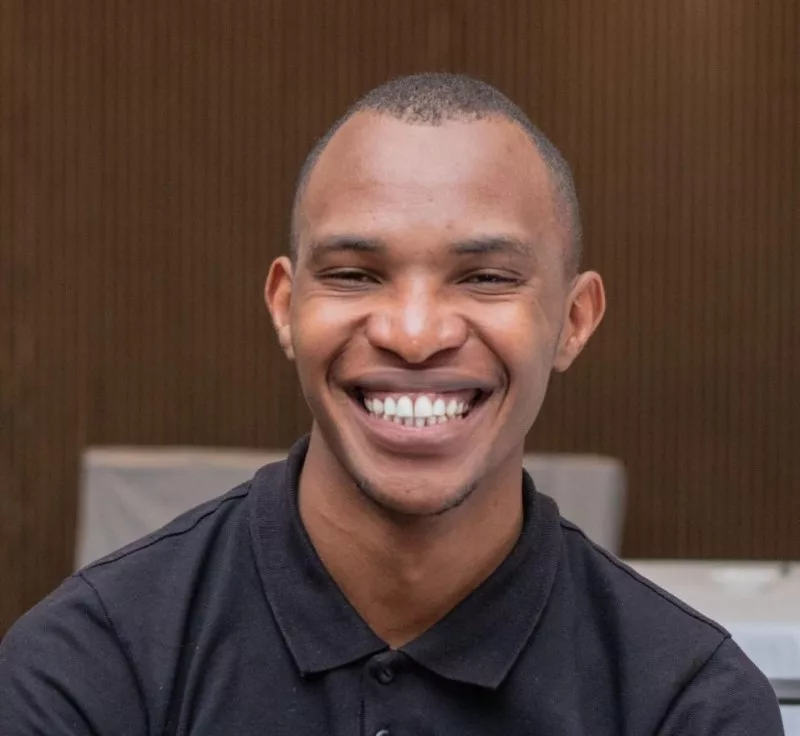
 Ibrahim Sangolo, Psychologist – Community Voices Network/HANDOUT
Kenya has made important strides in putting mental health on the national agenda. We have a Mental Health Policy, a Mental Health Action Plan, clinical guidelines and, more recently, a National Baseline Mental Health Survey. Yet the existence of policies and programs does not automatically mean that they reflect the realities of the people they are intended to serve.
A failure to centre lived
experiences in mental health-related policies creates a gap between mental
health interventions designed and the actual needs of the communities, leading to
poor mental health outcomes, quality of life, and unresponsive government
interventions.
In Kenya, 1 in 4 outpatients and 2 in 5 inpatients are living with mental
health conditions (Ministry of Health, 2021). Even more alarming, Kenya’s
suicide rate is at 11 per 100,000 people, surpassing the global average of 9.
In urban slums, the statistics paint an even grimmer picture. It is estimated that over 60% of Children in these settings report experiencing depression, anxiety, and emotional distress. Yet, mental health remains one of the most underfunded sectors in our country, receiving a mere 0.01% of the national health budget (Ministry of Health, 2021).
While there is richness in policy progression, the level to which it informs budget allocation for mental health access for a common mwananchi, implementation of interventions that matter in relevance to these communities and relevant training supporting adoption and institutionalisation of mental health is incompatible.
Centring lived experiences in mental health policy formulation and implementation as a high return on investment for a country that is already battling human resource challenges and economic crisis, and stigma around mental health.
While the world marks and celebrates World Mental Health Day on 10th October under the theme “Lived experiences heard, real voices, real change.” For Kenya, this should be more than another awareness day slogan.
It should provoke a difficult question of, when we design mental health programs, policies and services, whose voices are actually in the room? People with lived experiences of mental health challenges possess a form of expertise that cannot simply be acquired from a textbook, clinical placement or conference.
They know what it means to seek help and not find it. They know what stigma sounds like in families, workplaces, schools and communities. They know what happens when services are inaccessible, unaffordable, culturally disconnected or designed without listening to the person at the center.
Yet too often, we invite people with lived experiences to tell their stories at conferences, campaigns and media events and then leave them outside the room when decisions are made. That must change. Lived experiences should inform programme design, implementation, monitoring and evaluation.
If we are developing a community mental-health intervention, people who have navigated those communities should help determine what the intervention looks like. If we are developing youth services, young people should not merely be beneficiaries; they should be co-designers. If we are reviewing mental-health policy, people who have experienced the system should have a seat at the table.
This does not mean replacing psychiatrists, psychologists, counsellors, researchers or other professionals. Rather, it means recognizing that clinical expertise and lived expertise are complementary. There is also an opportunity to rethink the role of people with lived experience within community mental health.
With appropriate training, supervision, safeguarding and clear referral pathways, some could contribute as peer supporters, community mental health champions or lay psycho-social support providers.
Kenya is already pursuing community-level mental-health integration and strengthening the capacity of community health workers. The question is whether we are equally intentional about creating structured pathways for people whose greatest qualification may be that they have walked the journey themselves.
But participation must be meaningful. We cannot invite someone into a technical working group simply to satisfy a “community representation” checkbox. They must have the opportunity to influence the agenda, challenge assumptions, question budgets and shape decisions.
Nothing about us, without us, should become a practical governance principle, not merely a campaign phrase. There is another frontier we cannot ignore: the ever-fast-evolving world of technology. Kenya's mental-health conversation increasingly exists online.
Young people seek information, solidarity and sometimes emotional support through TikTok, Instagram, YouTube, WhatsApp and other platforms. Artificial intelligence is now entering that space too. Someone experiencing distress may ask an AI chatbot for advice before speaking to a parent, teacher, clinician or friend.
Technology can expand access, reduce geographical barriers and provide information at scale. But it can also reproduce stigma, misinformation, unsafe advice and harmful content.
WHO has warned that generative AI tools are increasingly being used for emotional support despite many not being designed or tested for mental-health care. It recommends that AI tools for mental health be co-designed with professionals and people with lived experience, including young people.
Our media landscape requires similar reflection. People experiencing mental-health challenges should not only appear in stories when something tragic happens.
Journalists, editors and content creators have an opportunity to move from narratives of tragedy, diagnosis and helplessness towards stories of recovery, agency, resilience and systemic accountability.
So, what should Kenya do? First, national and county governments should establish meaningful lived-experience representation within mental-health technical working groups, policy processes and programme review structures.
Second, funders and implementing organisations should budget for lived-experience participation and not expect people to contribute their expertise for free.
Third, Kenya should develop and strengthen ethical pathways for peer support and lay psychosocial interventions, with appropriate training, supervision, safeguarding and referral mechanisms.
Fourth, digital-health and AI policies should require mental-health risk assessment, privacy safeguards, human oversight and lived-experience participation in design and evaluation.
Finally, media and social-media platforms should treat mental-health communication as a public-health responsibility, amplify authentic voices without exploiting vulnerability, sensationalising distress or turning people's pain into content. Kenya does not lack people who understand mental-health challenges.
We may simply not be listening to them in the places where decisions are made. This World Mental Health Day, perhaps the real shift is not from silence to speaking.
It is from speaking about people to building systems with them. Because lived experience is not merely a story to be heard. It is evidence. It is expertise. And, if we are courageous enough to act on it, it can become the blueprint for real change.
By: Ibrahim Sangolo, Psychologist – Community Voices Network