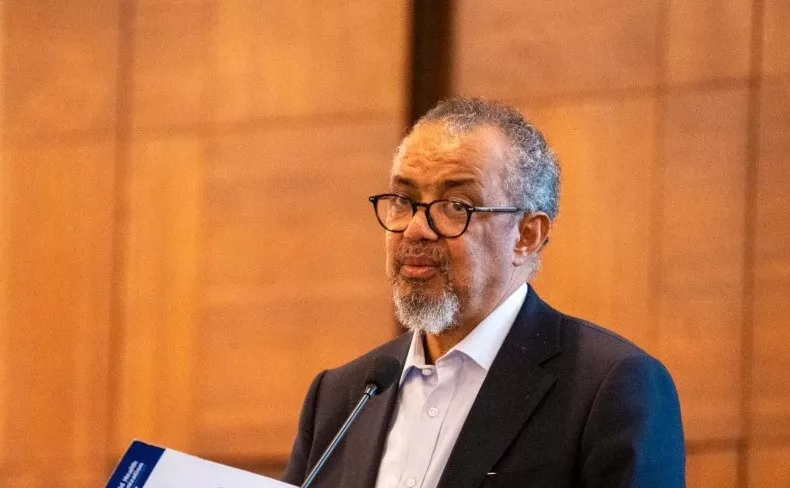
 WHO Director-General Dr Tedros Adhanom Ghebreyesus/HANDOUT
WHO Director-General Dr Tedros Adhanom Ghebreyesus said such restrictions are less effective than measures including screening and contact tracing.
“WHO advises against blanket travel or trade restrictions which are less effective than screening, contact tracing and other measures,” Dr Tedros said.
He also called for openness in reporting cases, saying, “Transparency should be rewarded not punished.”
Dr Tedros was speaking as the Ebola epidemic in the DRC continues, with confirmed cases reaching 8,665 and confirmed deaths standing at 4,178.
He said there were clear signs that the epidemic was slowing in some areas, although transmission continued to increase in others.
“Since the outbreak began, contact tracing has improved significantly,” he said.
Around 2,000 alerts are now reported each day, while about five million people have been reached through community engagement activities, according to the WHO chief.
Clinical trials of therapeutics are also progressing, with more than 600 people enrolled. A vaccine trial is expected to start later this month.
Dr Tedros said WHO was working to ensure access to the products if they prove effective in trials.
“These advances are the result of hard work over many months by communities and partners under the leadership of the government,” he said.
However, he said significant challenges remained, including deaths occurring outside treatment centres and gaps in contact tracing.
“The majority of deaths still happen in the community instead of in treatment centers and contact tracing is still not at the level needed,” Dr Tedros said.
He added that the outbreak was unfolding in an area affected by a prolonged humanitarian crisis. Although transmission was declining overall, new hotspots continued to emerge, including areas close to the South Sudan border.
The WHO statement comes after Kenya reported an Ebola case on October 6 involving a Kenyan citizen who fell ill in the DRC.
According to Dr Tedros, the patient was treated at several facilities in the DRC before travelling to Nairobi through Kampala, Uganda. He was taken to hospital immediately after arriving in Nairobi, isolated and confirmed to have Ebola.
He later died on Monday.
Kenyan authorities are monitoring 55 contacts, including passengers and crew who travelled with the patient on the flight from Kampala to Nairobi.
Dr Tedros said he had spoken to the Cabinet Secretary about the case and Kenya's preparedness.
“I commend the Kenyan government for its prompt action and for reporting the case to WHO under the International Health Regulations in a timely way,” he said.
Ebola is a severe viral disease that can cause fever, weakness, muscle pain, headache, vomiting and diarrhoea. In severe cases, it can lead to bleeding and organ failure.