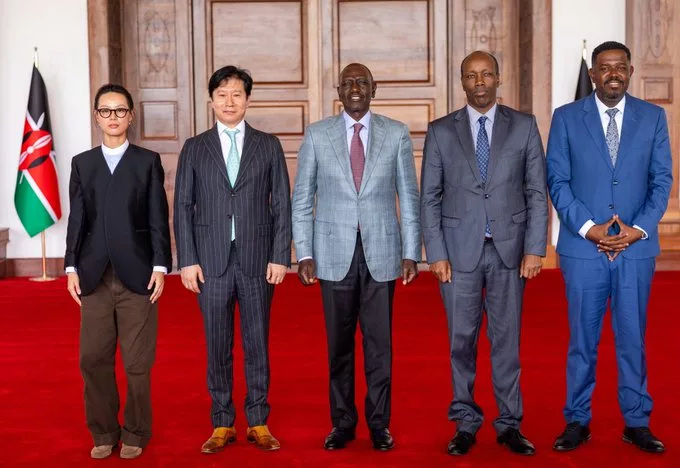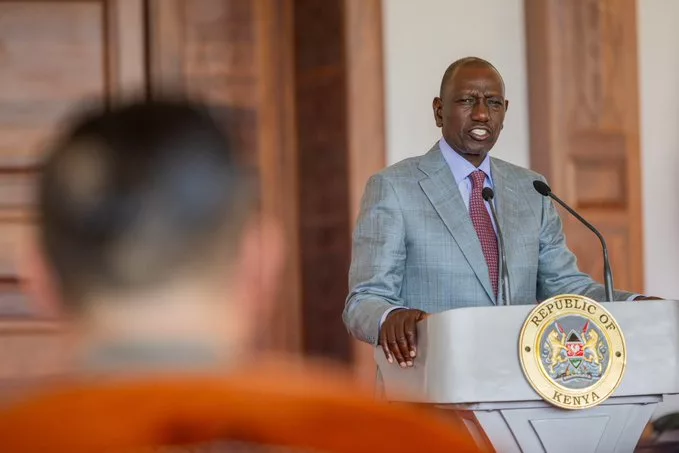
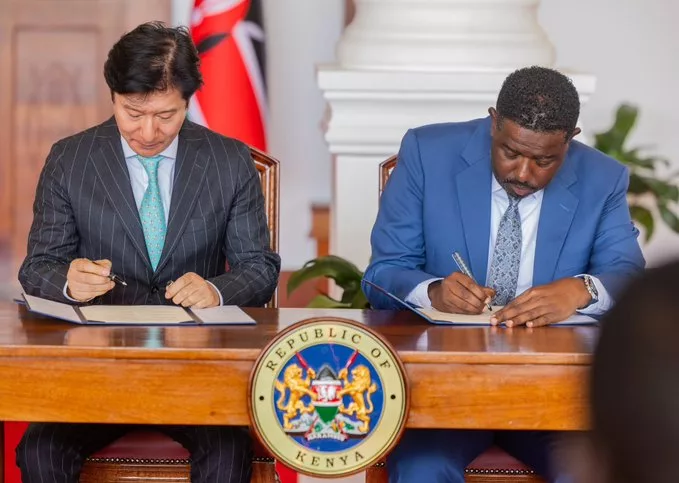
President William Ruto has witnessed the signing of a memorandum of understanding between the government and Endelevu Enterprise Corporation for a proposed $3 billion (about Sh390 billion) investment in electric vehicle manufacturing and green mobility.
The agreement, signed in Nairobi on Tuesday, seeks to establish an integrated green mobility ecosystem covering electric vehicle assembly, charging infrastructure and related value chains.
Ruto said the investment would help Kenya shift from importing vehicles and fuel towards local manufacturing while creating jobs and expanding opportunities for Kenyan businesses.
“For decades, Kenya has imported the fuel that runs our vehicles, and the vehicles that burn that fuel. We have paid for both in hard currency. And with every shipment, we have exported jobs that should have been created here. We are determined to change that equation,” Ruto said.
Under the proposed project, an electric vehicle assembly plant will have the capacity to produce 50,000 four-wheel vehicles annually, while another facility will manufacture up to 100,000 two-wheelers and light-mobility vehicles each year.
The investment will also include 1,000 solar-powered charging hubs and a digital platform capable of supporting up to 100,000 green vehicles.
Ruto said the project was expected to create about 2,000 direct jobs and more than 20,000 indirect opportunities across suppliers, logistics companies and other service providers.
“It is also expected to create up to 80,000 further opportunities in fleet management, operations and services,” he said.
The President said Kenya’s ambition was to manufacture electric vehicles not only for the domestic market but also for the wider African market.
“To our partners from Endelevu and Geely, our ambition goes beyond Kenya. We do not want to assemble for one market. We want to manufacture for East Africa and for Africa,” he said.
He said vehicles manufactured locally and meeting East African Community Rules of Origin requirements would be able to access the regional market.
Ruto said the partnership was expected to deliver investment, industrial capacity, jobs, contracts for small and medium enterprises, as well as technology and skills transfer.
“So, what does Kenya expect from this partnership? We expect investment and industrial capacity. We expect jobs for our young people and contracts for our SMEs. We expect technology and skills to be transferred, not just traded,” he said.
The President directed the Ministry of Investments, Trade and Industry, through Invest Kenya, to facilitate the project and coordinate the necessary approvals, land and infrastructure.
“A signature does not build a factory,” Ruto said, directing the ministry to ensure the project receives end-to-end government facilitation.
The agreement comes as Kenya pushes implementation of its National Electric Mobility Policy, which seeks to encourage local assembly, charging infrastructure, skills development and wider adoption of electric vehicles.