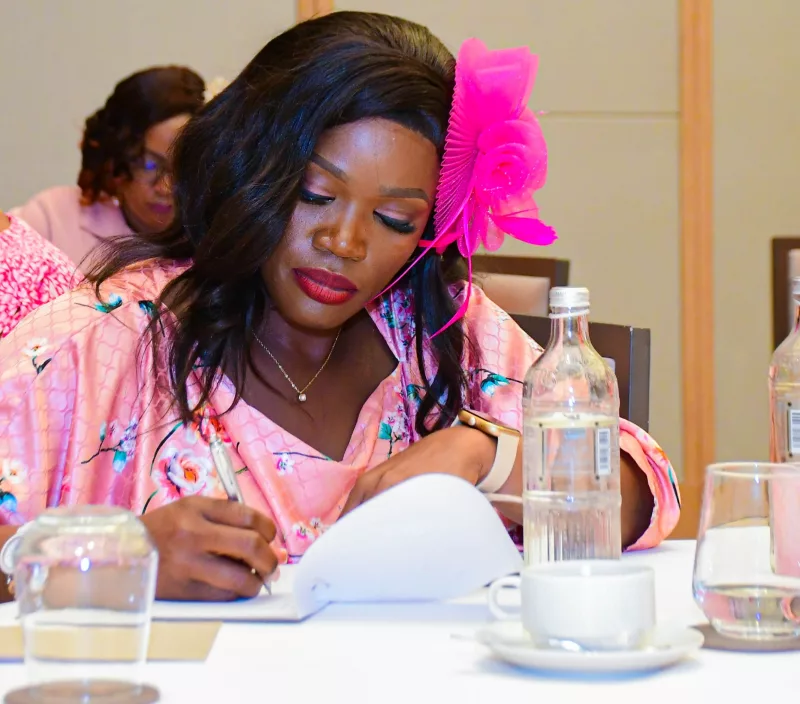

I recently took part in a side event at the Africa Food Systems Forum in Kigali on African adapted crops, hosted by the Africa Adaptation Crops Initiative, the Food Action Alliance, AGRA, TechnoServe and Bain & Company.
I was encouraged by the subject: millet, sorghum, fonio, Bambara groundnut and other crops long dismissed by formal systems are finally being recognised for their nutrition, resilience and contribution to food security.
But the discussion soon returned to a familiar script: raising productivity, formal seed systems, mechanisation, aggregation, private investment and links to large buyers.
There is nothing inherently wrong with research, improving crops, processing food, building markets or enabling farmers to earn better incomes. African farmers need all of these.
My concern is with the model that can emerge when crops created and conserved by African communities over generations are treated primarily as new commercial opportunities.
If the objective becomes to genetically improve a few crops for large-scale production, organise farmers around commercial seed and input systems, and connect them to value chains whose direction is determined mainly by large buyers and investors, we risk repeating an old agricultural model with different crops.
That is the contradiction at the heart of the current enthusiasm for African adapted crops. We may change the crop without changing the system.
The question that should therefore sit at the heart of every policy paper, investment proposal and research programme is: who kept these crops alive while formal research, policy and markets neglected them?
The answer is African farmers, especially women, who selected, planted, exchanged, improved, cooked and passed on these seeds for generations. They protected diversity even when agricultural policy overwhelmingly favoured a narrow group of commodity crops.
Now that climate change and nutrition concerns have revealed the value of these crops, we must not allow the people who conserved them to become spectators in their commercialisation. Africa’s indigenous crops do not need to be rescued from African farmers.
They need investment that strengthens the farmer-led systems, knowledge and diversity that made them valuable in the first place.
Much of the new enthusiasm around these crops begins with a familiar diagnosis: yields are too low. We are told that productivity must rise, breeding must accelerate, mechanization must expand, aggregation must improve and private investment must be “de-risked”. Some of this may be useful. African farmers deserve excellent research, appropriate technologies, better storage, processing facilities, infrastructure and fair markets. But there is a crucial difference between supporting African crops and re-engineering African agriculture around them. When we say millet, sorghum or fonio is “not productive enough”, what exactly are we measuring? Productivity cannot simply mean tonnes of a single commodity per hectare. A field containing millet, cowpea, vegetables, trees and livestock may produce less of one marketable crop than a monoculture, while producing more food diversity, nutrition, soil fertility, ecological resilience and livelihood security. That distinction matters. Agricultural performance must be judged across the whole farm and food system, not merely through the yield of a single crop. Nutrition, biodiversity, resilience, soil health, farmer income, cultural value and independence from costly external inputs must count too. Otherwise, we risk improving crops while weakening the food systems that made them valuable in the first place.
The language used to describe these crops also deserves scrutiny. They are often called “forgotten”, “orphan”, “neglected” or “underutilized”. Forgotten by whom? Certainly not by the communities that continued growing, eating and conserving them. They were neglected by agricultural policy, research funding, extension systems and formal markets, not by farmers. Correcting that historical neglect is overdue. But it must not become an excuse for taking crops from farmers’ fields, improving them elsewhere, protecting new varieties through intellectual property systems and then selling their descendants back to the communities that sustained them. That would turn recognition into appropriation.
The central issue is seed. Who will control it? Africa already has sophisticated seed systems. They are farmer-managed, rooted in knowledge, culture, experimentation and biodiversity. Across much of sub-Saharan Africa, these systems supply the overwhelming majority of seed used by small-scale farmers and allow communities to select, save, exchange, adapt and reproduce seeds from one season to the next. That is why debates about plant breeders’ rights and frameworks such as UPOV 1991 cannot be treated as technical footnotes. Intellectual-property regimes that strengthen exclusive breeders’ rights can restrict customary practices around saving, exchanging and selling protected seed. If investment in African crops produces varieties over which farmers progressively lose control, we will have increased the commercial value of African crops while reducing African food sovereignty. That would be a remarkable contradiction.
This is not an argument against science. It is an argument for science that serves farmers and food sovereignty. Africa needs far greater investment in agricultural research. But the question is: what science, controlled by whom and directed towards what objective? Plant breeding has always existed in African agriculture. Farmers are plant breeders. Every season, they observe differences, select desirable characteristics and adapt crops to local environments. Modern science can strengthen that work through participatory plant breeding, farmer-led research and collaboration between public institutions, universities and farming communities. Such collaboration can improve drought tolerance, pest resistance, nutritional quality and yield while maintaining diversity and farmer control. The alternative is a model in which markets decide what traits matter, breeders develop uniform commercial varieties, companies multiply the seed and farmers become customers. That may create a seed market. It does not necessarily create food sovereignty.
Africa’s strength is diversity. Yet commercial investment naturally gravitates towards crops, varieties and markets that can scale quickly and deliver predictable returns. If the adapted-crops agenda concentrates investment on millet, sorghum and fonio because they are attractive to processors, breweries, exporters or large food companies, what happens to the hundreds of other locally important crops? What happens to indigenous vegetables, pulses, roots, tubers, fruits and locally specific varieties that may never become globally traded commodities? Africa does not need another agricultural model that selects a handful of commercial winners. We need policies that protect diversity precisely because we cannot know which crops and varieties communities will need under future climatic conditions.
The claim that the “missing piece” is demand also needs rethinking. Demand already exists, but much of it is invisible to conventional market analysis. A mother buying millet in a territorial market is demand. A school purchasing beans and indigenous vegetables from nearby agroecological farmers is demand. A family eating sorghum, teff, cassava, cowpea or traditional leafy vegetables is demand. A street vendor selling traditional food is part of a value chain. African food systems should not become visible only when a multinational brewery, supermarket chain or commodity trader enters them. Large companies can play a role, but they should not decide which African crops survive and which disappear. Governments can create powerful demand through public procurement. African schools, hospitals, universities and other public institutions could source significant proportions of their food from local farmers producing indigenous and adapted crops. That would create markets while improving nutrition, supporting rural economies and rebuilding African food cultures.
We often hear that women should be “at the centre” of new value chains. They absolutely should. But the phrase means little unless it includes power, ownership and control. Women have already been at the centre. Across Africa, they have conserved seeds, maintained food knowledge, processed crops, traded food and transmitted culinary traditions across generations. The challenge is not simply to give women access to new commercial value chains. It is to ensure that commercialisation does not dispossess them of resources and knowledge they already hold. Women must have decision-making power over seeds, land, research priorities, processing, finance and markets. They should be owners and knowledge holders, not merely suppliers of raw materials to someone else’s value chain.
Reliable markets matter. Farmers need decent incomes, and examples of farmers supplying sorghum to breweries or processors can show real economic opportunity. But Africa should not build agricultural policy backwards from the purchasing requirements of large corporations. The first questions should be: what do communities need to eat? What protects farmers’ livelihoods? What crops strengthen ecological resilience? What maintains dietary diversity? What keeps wealth circulating within territorial economies? What strengthens farmers’ control over land, seed and knowledge? Only then should we ask how markets can support those objectives. Otherwise, we risk replacing the old Green Revolution model, centered on a few crops, purchased inputs and external technologies, with a new version built around African crops but governed by the same economic logic. Changing the crop without changing the system is not transformation.
Million is the General Coordinator of the Alliance for Food Sovereignty in Africa, a continental network of networks advocating for agroecology, food sovereignty and the rights of African communities. He is also a member of the International Panel of Experts on Sustainable Food Systems (IPES-Food) and a founder of MELCA-Ethiopia, an indigenous organisation working on agroecology, intergenerational learning, forest conservation and the livelihoods of local communities.