

Newsrooms need to listen more closely to communities if they are to produce climate journalism that reflects the realities and solutions of the people affected by climate change, journalists have been told.
Solutions Journalism Network Africa Initiative Manager Caroline Karobia said meaningful audience engagement should begin with listening to communities before journalists decide what issues to pursue or how to frame their stories.
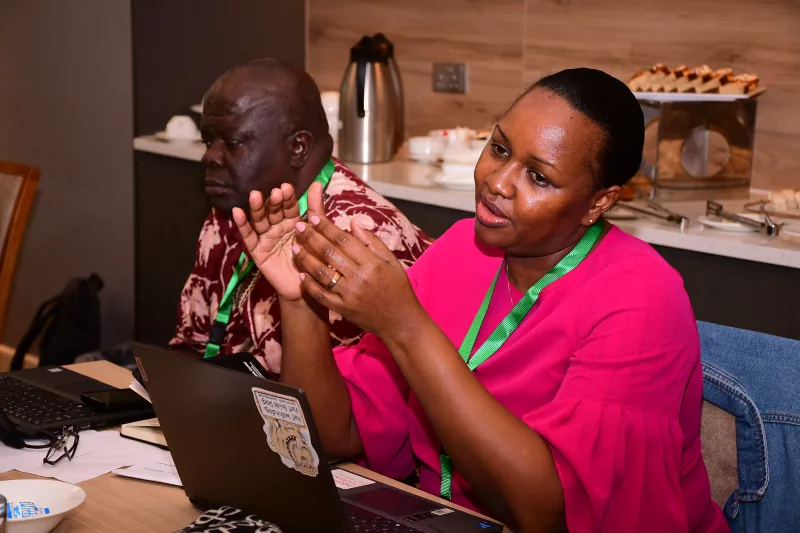
Karobia was speaking to editors and journalists from different African countries who were attending the Climate Beacons Newsroom Initiative inception meeting in Nairobi.
The meeting took place between September 29 and 30th.
She said audience engagement should demonstrate that a newsroom is listening and cares about the community it serves.
“People do not care how much you know until they know how much you care,” Karobia said.
She said journalists should not assume they already understand the problems facing a community.
Instead, they should spend time listening to people affected by an issue and understanding what matters to them.
“Communities always know the challenges they face. They always know the most pressing issues to them,” she said.
Karobia said communities should also be viewed as an important source of knowledge about possible responses to the problems they face.
“Communities also have solutions to their issues. Listen to that,” she said.
She challenged journalists to ask communities what their most pressing concerns are and to consider whose voices are being heard in the process.
This, she said, can help journalists identify responses that are already being tested by communities and determine whether they could work elsewhere.
The approach requires journalists to define the problem with communities, identify possible responses and then discuss whether those responses could work in other settings.
Journalists should also ask what may be missing from their understanding of an issue.
Karobia urged reporters to “listen first, listen deeply” and establish what communities value, what outsiders may be missing and how communities understand and describe their own experiences.
The approach is particularly important in solutions journalism, where reporting goes beyond describing a social problem to examining responses to it, the evidence behind those responses and their limitations.
SJN says solutions journalism focuses on how people are responding to social problems and what can be learned from those responses.
The approach also seeks to provide evidence of whether a response is working and to place it in context by examining its limitations.
Audience engagement, therefore, is not simply about publishing a story and waiting for readers, viewers or listeners to react.
It can help journalists identify people affected by a problem, understand different perspectives and discover responses that may otherwise remain outside the newsroom's field of view.
Karobia said community management should similarly go beyond moderating comments on a newspaper website or social media platforms.
It involves building and maintaining a continuing relationship between the newsroom and the people it serves.
This includes responding to questions and useful feedback, facilitating constructive discussions, encouraging participation and ensuring that voices that are often underrepresented are heard.
Conversations with audiences can also provide story leads and help journalists identify issues that require further reporting.
The approach is at the centre of the Africa Climate Beacons Newsroom Initiative, which is being implemented by the Media for Environment, Science, Health and Agriculture (MESHA) in partnership with SJN.
According to MESHA, the programme was created to help newsrooms move from problem-focused climate reporting towards reporting evidence-based responses to climate challenges.
Six newsrooms from five African countries were selected from 133 applications for the inaugural programme.
They are The Star/Radio Africa Group from Kenya, Water Journalists Africa and Media Challenge Initiative from Uganda, Social Voices from Nigeria, Habitat Media from Tanzania and Zodiak Broadcasting Station from Malawi.
The seven-month programme includes solutions journalism training, coaching, audience and community engagement training and impact tracking.
The initiative seeks to strengthen the capacity of participating newsrooms to report on climate change while examining how communities, institutions and other actors are responding to the challenges they face.






