

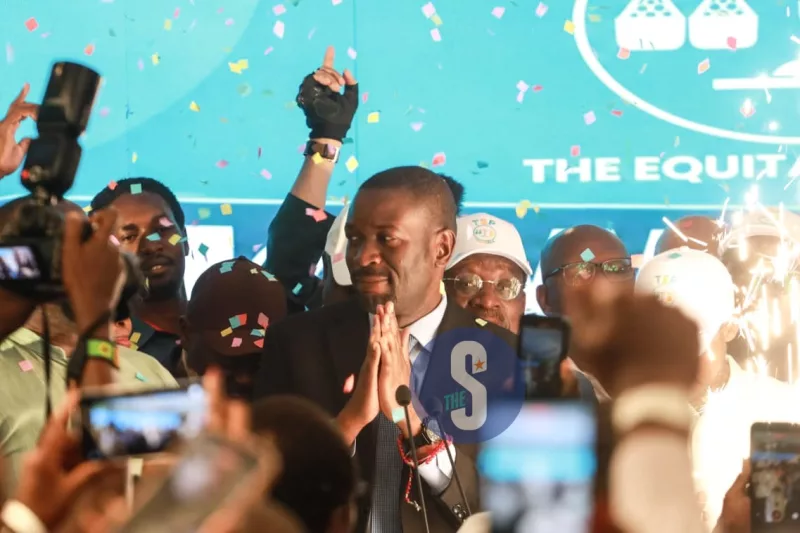
 Nairobi Senator Edwin Sifuna during the unveiling of his Equitable Party on October 4, 2026 / ENOS TECHE
Nairobi Senator Edwin Sifuna’s Sunday unveiling of The Equitable Party (TEP) as his 2027 presidential vehicle was less a change of heart than a calculated response to Kenya’s unforgiving electoral calendar.
While the Political Parties Disputes Tribunal (PPDT) had just ordered the Office of the Registrar of Political Parties (ORPP) to reserve the Linda Mwananchi Movement name, the math of registration timelines made it clear that waiting for full registration of Linda Mwananchi would have locked Sifuna out of the 2027 General Election.
ORPP guidelines show that full registration of a political party in Kenya can take up to 270 days.
With the Linda Mwananchi name only formally reserved on October 1, 2026, the earliest possible date for full registration would be June 28, 2027, after a mandatory 180-day provisional period.
That date alone disqualifies Linda Mwananchi from the 2027 race. The Independent Electoral and Boundaries Commission (IEBC) has scheduled presidential candidate nominations between May 29 and June 11, 2027.
A party registered on June 28 would be formed after that window closes. Further, parties must submit authorised persons and specimen signatures between October 7 and 15, 2026.
Had Sifuna waited for Linda Mwananchi’s full registration, the movement would still be in the provisional phase by mid-October, technically ineligible to file the required documents.
Other key deadlines compound the problem: Party primaries and related disputes must conclude by May 8, 2027 while certified membership lists and details of primary candidates must be submitted by March 16, 2027.
Against this backdrop, continuing to push solely for Linda Mwananchi’s registration was not a viable path to the 2027 ballot.
The Equitable Party, by contrast, was already registered and could immediately meet IEBC’s October 15 deadline for authorised persons and signatures.
At the Sunday launch, Sifuna was formally declared TEP’s party leader, with founding leaders stepping aside to clear the way.
Sifuna told the crowd that TEP would in coming days be rebranded to the Linda Mwananchi Movement, as resolved by the movement’s principals and supporters who had helped build its political identity.
“So, in the coming days, and as has been resolved by the principals of Linda Mwananchi, who you see here, we shall be seeking to rebrand this party, The Equitable Party, to the Linda Mwananchi Movement,” Sifuna said.
He added that if the rebranding encountered administrative hurdles similar to those that dogged earlier attempts, TEP would contest the 2027 election under its current name.
The decoy narrative
While Sifuna’s team frames the move as a timeline-driven contingency, allies have floated a more strategic explanation.
Kakamega Senator Boni Khalwale said that reports of various leaders launching separate parties were part of a deliberate decoy plan to throw the Ruto camp off balance.
He said the flurry of party names like National Liberal Party, UDP, and others linked to Linda Mwananchi principals was meant to confuse state machinery and political rivals about which vehicle Sifuna would ultimately use.
“We told Ruto Orengo has his party called National Liberal Party – decoy. We told him Babu Owino has his party called Mwananchi – decoy. We told him George Natembeya has his party UDP – decoy,” Khalwale said.
With TEP now publicly unveiled and Sifuna installed as its leader, Khalwale argued the first hurdle was now cleared, and the battle will shift to countering what he described as “cooked opinion polls” and other forms of political propaganda.
Why Linda Mwananchi still matters
Despite the pivot to TEP, the Linda Mwananchi brand remains central to Sifuna’s political identity.
The PPDT ruling last week overturned ORPP’s earlier refusal to reserve the name, giving the movement a 90-day window to secure provisional registration.
Sifuna’s plan is to use that window to meet ORPP’s requirements, including recruiting at least 1,000 registered voters in more than half of Kenya’s 47 counties (at least 24), complying with gender and regional diversity rules, and establishing physical branch offices.
If successful, TEP can be formally rebranded to Linda Mwananchi before the 2027 polls, aligning the party’s legal identity with the movement that has rallied his base.
But if the rebranding stalls, TEP remains the fallback – a fully registered vehicle that can contest the 2027 General Election without further name-related legal battles.
While the timelines set by ORPP and IEBC leave little room for last-minute party formation for a presidential bid, securing TEP now and keeps the Linda Mwananchi rebrand as a parallel track, ensuring Sifuna’s team has hedged against both regulatory delays and political sabotage.
Whether the party ultimately goes to the ballot as The Equitable Party or Linda Mwananchi Movement, the strategic objective is the same: ensure Sifuna’s name appears on the 2027 presidential ballot, regardless of administrative or legal headwinds.






