 Ahadi Kenya CEO Stanley Kamau addressing Mathioya residents during an alcohol sensitisation meeting on October 3, 2026/ ALICE WAITHERA
Residents of Mathioya, Murang’a County, have recounted the devastating impact of alcoholism on families as authorities and community groups step up efforts to curb the consumption of second-generation alcohol.
Some women said they had lost husbands and sons to alcohol-related illnesses, while others narrated how addiction had left families struggling to survive after breadwinners spent their earnings on alcohol.
Jane Wangui, a resident, said her husband’s addiction left her to shoulder the responsibility of raising their children after he spent almost everything he earned on alcohol.
“My husband was an alcoholic. He would not support us as a family because everything he got, he would spend on buying alcohol,” Wangui said.
She was forced to engage in casual labour to support the children. She expressed relief at the renewed efforts to tackle alcoholism, saying she feared children from affected families could grow up and follow the same path.
Her husband died in January this year after years of excessive drinking.
“One day he drank, came home, fell asleep and did not wake up,” she recounted.
Another resident, Rebecca Njeri, said she lost her husband after he collapsed and died while in Nairobi, leaving her with four children.
Njeri explained that her husband worked as a casual labourer in the city and would return home every two weeks.
Although he was not violent, she said he would often head to a shopping centre to drink shortly after arriving home.
She was later informed that he had collapsed and died at Gikomba. A postmortem showed that he had liver cirrhosis.
His death, she noted, was a major blow to the family because he had been actively supporting their children.
Jecintah Wambui, another resident, said Kanjama and other parts of Mathioya had been grappling with serious alcoholism, with many young men struggling to establish families or become economically independent.
She observed that some young men had become dependent on their families after losing the ability to work productively because of alcohol.
The residents spoke at Kanjama shopping centre during a sensitisation forum organised by Ahadi Kenya CEO Stanley Kamau, who called for tougher enforcement of alcohol regulations, particularly against outlets operating outside permitted hours, near schools or without licences.
Kamau noted that some outlets were opening as early as 8am, exposing residents to alcohol throughout the day.
He also raised concern over cases where alcohol-dependent people allegedly exchanged household items and livestock for alcohol.
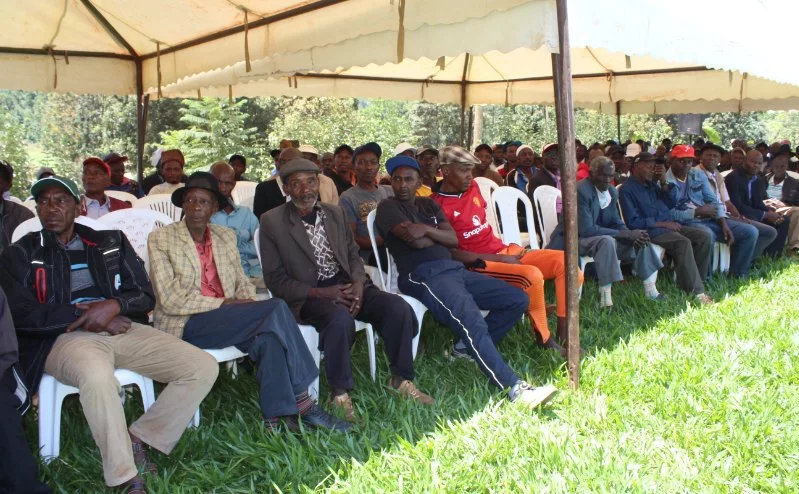 Mathioya residents during an alcohol sensitisation meeting held at Kanjama, organised by Ahadi Kenya Trust on October 3, 2026/ ALICE WAITHERA
“It is really sad when a man takes a chicken and utensils, and picks coffee in exchange for alcohol,” Kamau said.
He urged the provincial administration to ensure bars and other alcohol outlets operate strictly within existing regulations.
Kamau also called on the National Authority for the Campaign Against Alcohol and Drug Abuse (Nacada) to combine enforcement with public education so communities can identify harmful and unsafe alcoholic products.
He further called on political leaders seeking elective positions to make alcohol and substance abuse a priority, arguing that communities cannot achieve meaningful development while young people continue to lose their health and livelihoods to addiction.
Kamau pledged to work with local youth and authorities to identify unlicensed outlets, businesses operating near schools and traders involved in illicit alcohol sales.
Mathioya Deputy County Commissioner Riungu Laikera said the area’s major challenge was not chang’aa but second-generation alcohol.
He noted that Mathioya has about 168 bars, arguing that authorities must work closely with those responsible for licensing to reduce the accessibility of alcohol.
Laikera also warned of the wider health consequences of excessive drinking, including mental health problems and deaths.
He urged residents, particularly young people, to seek alternative sources of income through farming, livestock keeping and available government projects.
Senior Principal Chief Sammy Mwangi similarly called for sustained public education on the effects of alcoholism, including liver cirrhosis and premature deaths.
He encouraged parents to support the ‘boy child’ to engage in farming, noting that crops such as nappier grass could provide an income, while livestock keeping could also offer an alternative livelihood.
Mwangi also urged families to ensure young men access education and technical skills through institutions such as TVETs to improve their economic prospects.
Meanwhile, Peter Maina, a local youth and reformed bhang and brews peddler, urged those involved in selling second-generation alcohol and drugs to abandon the trade.
Maina, who has completed a jail term over drug-related offences, said he had never consumed alcohol but acknowledged that his activities had contributed to exposing others to substance abuse.
“Those who sell these second-generation alcohol and drugs, let’s just stop because the damage has been immense,” he urged.
Last week, bar owners challenged the county and national governments to work with them to eradicate counterfeit liquors, which they said had put their businesses and public health at risk.
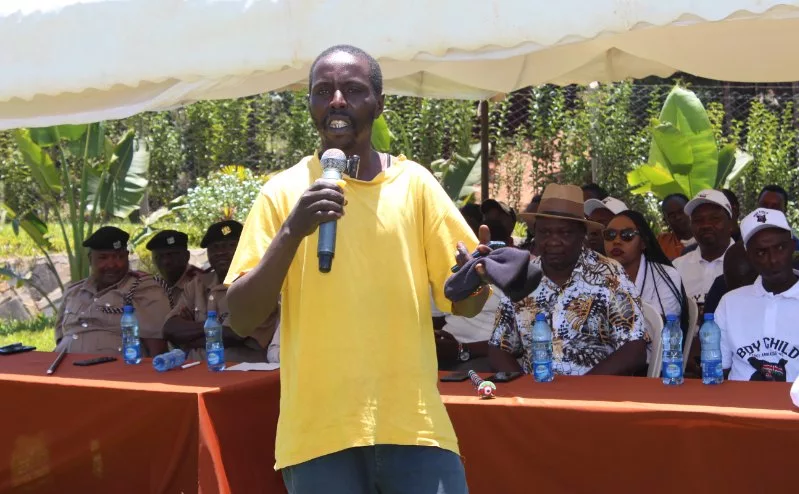 Peter Maina, a reformed peddler, addressing Mathioya residents during an alcohol sensitisation meeting at Kanjama on October 3, 2026/ ALICE WAITHERA
 Mathioya DCC Roungu Laikera addressing an alcohol sensitisation meeting at Kanjama on October 3, 2026/ ALICE WAITHERA