
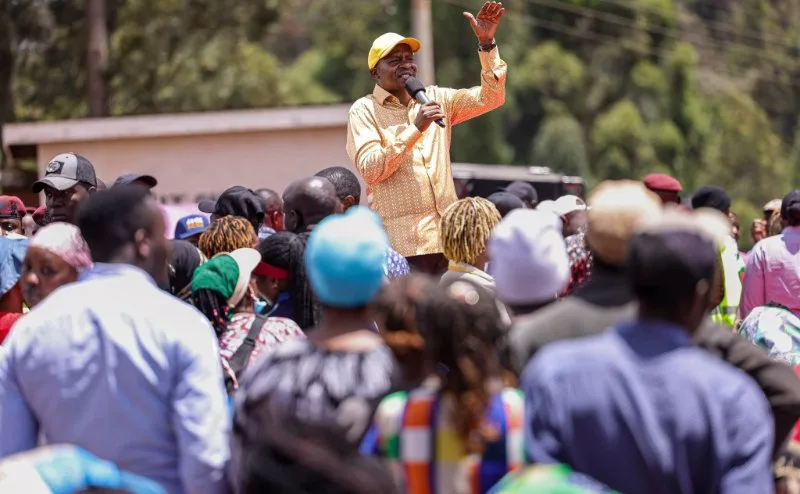
The government will subject all alcohol manufacturers to fresh inspections as it moves to tighten the fight against illicit and counterfeit alcoholic drinks across the country.
Deputy President Kithure Kindiki said even manufacturers holding valid licences would be vetted afresh to establish whether their products meet required health and quality standards.
“We will inspect all manufacturers of alcohol afresh and give them another clean slate. Those who pass the various health and quality standards will be allowed to continue,” Kindiki said.
He added that manufacturers found producing alcoholic drinks harmful to consumers would have their businesses shut down as the government moves to seal loopholes in the industry.
Kindiki said the products being targeted were those that pose health risks to consumers, including drinks that could cause deaths and affect reproduction.
The fresh inspections come amid intensified efforts to tackle illicit and counterfeit alcohol in the Mt Kenya region, where authorities have stepped up raids on manufacturers, distributors and outlets dealing in unlicensed and suspected substandard drinks.
In Murang’a, police seized suspected counterfeit liquor from residential premises and bars, including an operation in Maragua where dozens of cartons of alcoholic drinks were confiscated two weeks ago.
In Nyeri, a multi-agency operation earlier this year found that sampled alcoholic beverages from Gatitu town failed to meet required safety standards, raising concerns over the quality of drinks reaching consumers.
Kiambu has also intensified its crackdown, with authorities recently seizing hundreds of litres of illicit alcohol and suspected counterfeit brands in Ruiru on September 22, while several unlicensed pubs were shut down.
A similar nationwide vetting exercise was conducted in March 2024, after the government suspended licences, permits and authorisations for second-generation alcohol manufacturers and distillers. The exercise examined compliance with security, safety, health, labour, environmental and other legal standards.
All 29 active manufacturers and distillers were vetted, but only two were found fully compliant in the initial exercise and allowed to continue production.
A subsequent re-vetting exercise saw 13 additional manufacturers approved to resume operations, bringing the total number permitted to operate to 15 by July 2024.
The Anti-Counterfeit Authority has said illicit alcohol remains a significant challenge nationally, with counterfeit products involving practices such as falsified labels, misuse of protected brands and refilling of genuine bottles with unsafe contents.
Kindiki said the government would also intensify the fight against drug abuse, particularly among young people, and appealed to parents, churches and other adults to help those struggling with alcohol and drug addiction.
“We cannot run a country on the basis of young people who are drunk or young people who are taking drugs. Young people, we love you so much. We cannot allow you to destroy your future,” he said.
He said the government was expanding rehabilitation centres to support young people already affected by substance abuse, while urging communities to play a greater role in helping them recover.
Kindiki noted that he had recently met elders from the region, including the Kiama Kia Ma, Kikuyu Council of Elders, Njuri Ncheke and elders from Embu and Mbeere, who had urged him to help calm political tensions.
He asked the elders to reach out to their counterparts in Nyanza, Western, North Eastern, Rift Valley and Coast regions to establish a wider network of elders who could work together to address social problems affecting communities.
“I told the elders that the task I am undertaking is not an easy one, but I will try it in collaboration with my colleagues. Let us work together to help our young people, remove drugs and poisonous alcohol from our communities, and also eliminate the violence brought about by politicians,” he said.
The Deputy President reiterated that the government would continue working with communities and other stakeholders to address alcohol and drug abuse, and protect young people from harmful products.






