In 1776, America declared independence. In 1783, it secured it. In 1789, France abolished the monarchy. In 1792, it dared to become a republic. After 1918, Germany’s Hohenzollern dynasty collapsed with the Kaiser’s abdication, birthing the Weimar Republic. Many elites and monarchists expected, even worked for, its swift collapse and monarchical restoration.
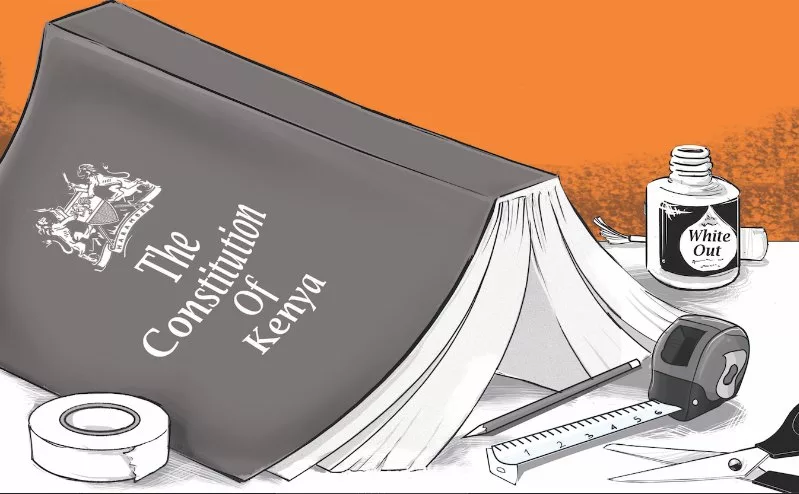
Declarations are fireworks; republics are long, contested construction projects. Kenya’s 2010 constitution boldly proclaimed the country a Sovereign Republic. The question we must confront is whether we have truly built one, or merely renamed the old mansion.
What does it mean to be sovereign? The term evokes the supreme ruler, the indivisible source of authority. In a monarchy, that sovereign is a person. In a genuine republic, sovereignty resides in the people, exercised through a constitution that no individual can embody or permanently capture. Who, then, is sovereign in Kenya today: the people, the constitution, or the holder of State House?
A republic, properly understood, is not merely the absence of a king. It is the public thing, Latinised as res publica: power exercised in the open, for the public good, by accountable servants of the people rather than masters. It rejects the imperial fusion of state and one man’s will. Have we achieved this, or do we still tolerate a presidency that too often feels imperial in instinct, if not always in law?
There is a reason Kenyans chose to place “sovereign” before the republic; in the same manner, there are Islamic republics and federated or federal republics. Kenyans must provide the definition in practice as opposed to relying on non-localised conventions to categorise the nature of its republic. The Sovereign Republic is not an inadvertent descriptor.
History warns us that proclamations alone are fragile. When American colonists declared independence in 1776, they ignited a revolution but faced years of war, weak confederation, and fierce debates over centralised power.
Only the 1787 Constitutional Convention and subsequent ratification created durable republican institutions with checks, balances and popular sovereignty. Even then, the republic evolved through crisis, civil war and reform.
The French case is more sobering. Abolishing the monarchy in 1789 did not instantly birth a stable republic. It took the formal declaration of the First Republic in 1792, followed by the Terror, repeated instability, Napoleon’s dictatorship and multiple republics across centuries. Revolutionary language confronted counter-revolutionary forces and the persistent allure of strongman rule.
Post-1918 Germany offers a sobering parallel: the Hohenzollern collapse created a federated republic, yet conservative elites, industrialists and monarchist remnants actively undermined Weimar, expecting and helping engineer its failure so the monarchy could return. Republics face determined enemies who prefer familiar hierarchies.
Kenya stands in this tradition. The 2010 constitution was a deliberate rejection of the imperial presidency forged after Independence—a system where amendments concentrated power in one office, weakened Parliament and the Judiciary, and fused party, state and ethnic patronage.
Through the Constitution of Kenya Review Commission (CKRC) process and the referendum, Kenyans declared popular sovereignty in Article 1 and a sovereign Republic in Article 4. They demanded devolution, separation of powers and leadership bound by integrity.
Yet powerful beneficiaries of the old order have acted as continuous saboteurs of this aspiration. These political and economic elites, across regimes and ethnic lines, thrive on centralised patronage, discretionary appointments and a presidency that remains the ultimate prize in a winner-takes-all game.
They resist full devolution because it dilutes their access to national resources. They undermine independent institutions when those bodies dare exercise oversight. They manipulate ethnic coalitions and campaign finance to preserve personalised power rather than build programmatic parties.
Their sabotage is rarely overt treason; it is death by a thousand procedural delays, selective implementation, informal networks and constitutional amendments disguised as reforms. They benefit from the imperial residue; the cultural expectation that the president is father, provider and sovereign, even as they mouth republican slogans.
This betrayal of the sovereign people is Kenya’s deepest democratic wound. It perpetuates a republic in form but an empire in habit.
Kenya cannot wait for the Sovereign Republic to usher itself in. We must define it proactively in both text and lived reality. This requires relentless civic pressure to fully implement Chapter Six on leadership integrity, protect devolution from recentralisation, strengthen parliamentary and judicial independence, and enforce public participation requirements without exception.
It demands constitutional patriotism that transcends ethnic loyalty and personality cults. Citizens must exercise their sovereign power directly through participation, vigilance and, where necessary, referendums.
We should ask ourselves uncomfortable questions: If sovereignty belongs to the people, why does so much power still revolve around one office and its appointees? If Kenya is a Sovereign Republic, why do election cycles still feel like contests for a throne rather than selections of public servants?
The American, French and German experiences teach that republics are forged in struggle against those who prefer the comfort of old hierarchies. Kenya’s 2010 moment was our 1776, 1789 or 1918. Now comes the harder work of consolidation against saboteurs. The beneficiaries of imperial presidency will not yield power willingly. The sovereign people must claim it consistently, institutionally, and culturally.
Only then will Kenya move from declaring a sovereign republic to truly becoming one. The constitution gave us the text. The sovereign will of the people must breathe life into it through action.
Social impact adviser, a social consciousness theorist, trainer and speaker, an agronomist consultant for golf courses and sportsfields and author of 'The Gigantomachy of Samaismela' and 'The Trouble with Kenya: McKenzian Blueprint'