Postpartum haemorrhage can kill within minutes, but most deaths from the complication can be prevented through timely care, adequate blood supplies and early detection, health experts in Murang’a have said.
The warning came as health workers and community members in the county joined the third International End PPH Run, dubbed Run For Her, to raise awareness about excessive bleeding after childbirth and mobilise blood donations.
World Medical Association (WMA) president Dr Jacqueline Kitulu said women should not approach childbirth fearing they could die from preventable complications, stressing that the fight against postpartum haemorrhage must begin before a mother reaches the delivery room.
“Postpartum haemorrhage is actually a fully preventable condition. So every woman who gives birth should not fear giving birth due to the risk of dying at the point of delivery,” she said.
Kitulu said prevention required coordinated action by policymakers, health workers and communities to ensure mothers receive adequate antenatal care and that risks are identified and managed before delivery.
Anaemia, she said, could worsen the impact of excessive bleeding, making proper nutrition, iron-rich foods and appropriate antenatal interventions important in preventing maternal deaths.
Health facilities also need trained personnel, medicines, equipment and adequate blood to respond to emergencies, particularly because the condition can deteriorate rapidly once heavy bleeding begins.
“Postpartum haemorrhage can kill in minutes. So you need trained professionals of all levels to deal with the emergency that it is,” she warned.
The campaign was held at Murang’a County Referral Hospital and included a 10-kilometre run followed by a blood donation drive aimed at strengthening public understanding of PPH while encouraging communities to support blood collection efforts.
Health workers highlighted the critical period immediately after delivery, when rapid recognition of excessive bleeding and access to emergency treatment can determine whether a mother survives.
PPH is one of the leading causes of maternal deaths in Kenya and accounts for about 40 per cent of maternal deaths, according to the Ministry of Health. Kenya’s maternal mortality ratio remains at 355 deaths per 100,000 live births.
Dr Simon Kigondu, an obstetrician-gynaecologist and coordinator of the campaign, said Murang’a recorded 26 maternal deaths out of about 18,000 deliveries in 2025, according to county maternal and perinatal death surveillance and response data.
He said the county had achieved skilled birth attendance in 96 per cent of deliveries, giving health workers an opportunity to identify complications early and respond before excessive bleeding becomes fatal.
Kigondu emphasised the importance of voluntary blood donation, noting that women suffering severe bleeding could deteriorate rapidly when blood was not immediately available.
“Without blood, a mother with postpartum haemorrhage can easily die,” Kigondu said, urging residents to routinely participate in voluntary blood donation to strengthen supplies at the county blood transfusion unit.
The blood collected in Murang’a supports facilities across the county, making access to supplies central to the response, especially during emergencies when delays can turn severe bleeding into a fatal complication for mothers.
Kigondu said similar runs were being conducted in other counties, including Kiambu, Laikipia, Meru and Nyeri, to increase awareness of PPH and promote measures that can prevent deaths.
The campaign by the Kenya Obstetrical and Gynaecological Society (KOGS) Central Branch, Murang’a county government, EndPPH Foundation and the Ministry of Health is part of efforts to turn awareness of postpartum haemorrhage into community action.
Maternity nurse Anne Leah urged expectant women to attend regular antenatal clinics, where they can receive supplements and undergo checks to identify conditions that could complicate delivery.
“PPH is preventable and we want to end it completely because it causes needless loss of mothers,” she said.
Leah also urged expectant mothers to deliver in health facilities where skilled workers can identify excessive bleeding early and initiate treatment without delay.
She underscored the role of communities in encouraging women to seek skilled maternity care and ensuring they do not delay seeking help when complications arise.
The World Health Organization has identified postpartum haemorrhage as a major cause of maternal deaths globally and emphasises that many of these deaths can be prevented through quality antenatal care, early detection and timely access to appropriate treatment.
Instant analysis
Postpartum haemorrhage remains a major threat to maternal survival despite being largely preventable. The Murang’a campaign highlights the importance of acting before an emergency occurs through antenatal care, skilled birth attendance and early detection of complications. But prevention alone is not enough. When severe bleeding starts, survival can depend on whether trained health workers, essential medicines, equipment and blood are immediately available. Strengthening these systems could save mothers.

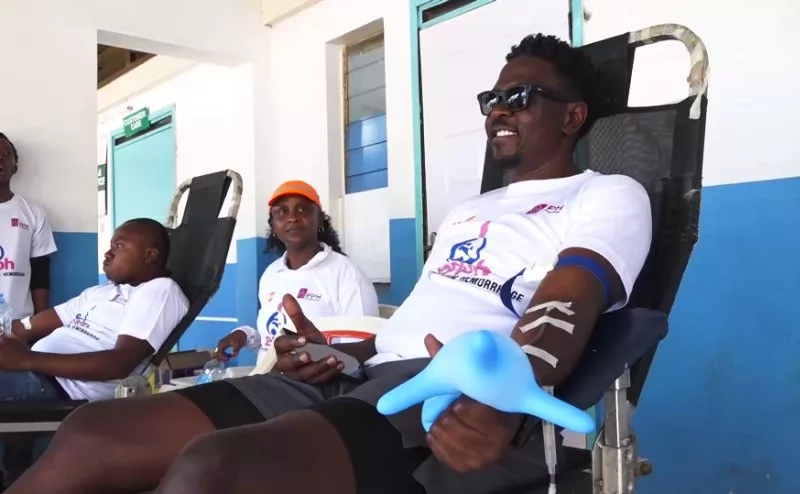 Murang'a residents donating blood during a drive organised by health workers at Murang'a County Referral Hospital on September 27, 2026 /ALICE WAITHERA