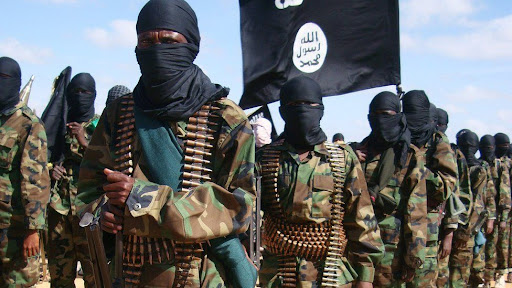
This month alone, several alShabaab attacks targeting security forces and their camps in Garissa, Mandera and Lamu counties have been reported.
On September 19, militants targeted KDF teams in Garissa and a KDF camp in Lamu in what security agencies called probing attacks. No casualties were reported.
These incidents are the latest in a surge in alShabaab attacks that northeastern Kenya and Lamu have seen since June. Armed Conflict Location & Event Data recorded at least 25 incidents involving alShabaab in Mandera, Garissa, Wajir and Lamu counties in June and July.
It reported that the group carried out more attacks in Mandera in June and July than it did between January and May combined.
The recent attacks follow one of the deadliest incidents in the region. On July 28, five Kenyan security personnel were killed in an al-Shabaab ambush near Wantey Dam in Mandera county.
The militants also planted an explosive thereafter targeting a reinforcement team, destroying an armoured police vehicle, although no one in the vehicle was killed.
Attacks in northeastern Kenya and Lamu do not receive the same national attention as those witnessed in major urban centres, such as the 2013 Westgate attack or the 2019 Dusit D2 Riverside attack.
But for residents of Garissa, Wajir, Mandera and Lamu, especially those living near the border, insecurity has been part of their lives for the better part of 15 years.
The numbers demonstrate the scale of the problem. Kenya's State of National Security report, submitted to Parliament in November last year, recorded 61 terror-related incidents across Mandera, Wajir, Garissa and Lamu between September 2024 and August last year. Mandera alone recorded 38 incidents.
The report recorded 20 IED attacks, nine kidnappings and 15 active-shooter incidents across the four counties.
This is not to say that the government has done nothing. Kenya has made progress since 2011 in preventing the kind of large-scale attacks that previously targeted major urban centres, and the government and security agencies deserve recognition for that progress.
But continuing attacks in northeastern Kenya and Lamu show that a significant security challenge remains.
The impact on communities is also much wider than those killed or injured. Insecurity has disrupted livelihoods and local economies, affected education and healthcare sectors, and resulted in teachers and health workers leaving unsafe areas.
Attacks have also damaged critical infrastructure, including communication networks, and disrupted public services and development projects such as Lapsset and roads.
The question is whether the current approach has been sufficiently preventive. The government and security agencies need to reassess how they counter alShabaab in northeastern Kenya and Lamu, with greater emphasis on preventing attacks rather than responding after they happen.
Repeated attacks in the same areas suggest that the strategies of previous years have not fully worked.
One major challenge has been effectively involving communities in preventing attacks. Communities living along the border often have a better understanding of their local environment and can play a major role in promoting stability and protecting themselves.
The government and security agencies need to build greater trust with citizens in these areas, as their cooperation is essential. This would strengthen intelligence gathering and enable security forces to act on information provided by communities in time.
Recently, the ATPU, which was rebranded as the Counter-Terrorism Bureau, launched Kenya’s Counter-Terrorism Hotline and Online Reporting Portal to strengthen public participation in national security efforts.
The platform provides secure and confidential channels for reporting suspicious activities and security threats. This is a welcome move, but the hotline should be popularised and deployed in affected areas, rather than being stationed in Nairobi.
Many citizens are reluctant to collaborate with security agencies because they fear they will not be adequately protected. The government should strengthen protection for those who provide security-related intelligence, including through agencies such as the Witness Protection Agency.
This could encourage more civilians to come forward. The county governments should also be given a greater role, as they have a stronger local presence and understanding of conditions on the ground.
I know the challenge is big. The government and security agencies are dealing with a difficult actor using different tactics, including guerrilla and asymmetric warfare, along a long and porous Kenya-Somalia border. AlShabaab deploys small cells who cross the border undetected.
But citizens of northeastern Kenya and Lamu, who have lived with this threat for more than a decade, deserve better protection.
They, like the rest of Kenyans, deserve to live in peace, travel safely, educate their children, run their businesses and access essential services without constantly living under threat. Protecting citizens should not be an afterthought but a priority.
The writer is a security expert and research fellow at Horn International Institute for Strategic Studies. He can be reached at [email protected]