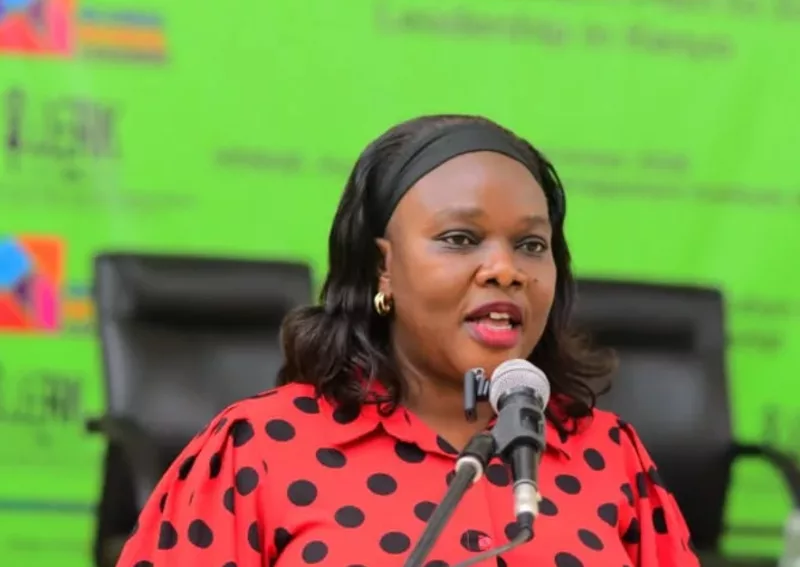
“Wear diapers, delay your period” This was Dr Amakove Wala’s advice for female political aspirants as a tip to survive the ongoing 2027 campaign trails.
What started as a simple ambition to vie for the Vihiga woman representative position would send her to write a long post on her Facebook page, advising women newcomers in the political space on what to expect on the campaign trail.
Her accounts of campaigning in Kenya revealed a lot of physical risks women politicians face, like fighting for space on the dais and fighting for the microphone, being lifted by strangers and navigating crowded convoys, while depending on the security teams of other established politicians for safety.
While Dr Wala kept documenting her stories on her social media pages and especially the violence she experienced in Homa Bay county, it’s the comments that caught my attention — people asking her why she participated in the campaigns knowing how much of a risky affair it was.
For female politicians, the abuse goes beyond the physical campaigns. While men will be judged through their ideologies and leadership manifestos, a woman might be called immoral or unfit to lead.
While a woman politician could be physically crowded out of a political space, online networks reproduce the same exclusion at scale. People will record a moment of vulnerability at a rally and circulate it without context.
Nominated Senator Millie Omanga knows this too well after a gust of wind lifted part of her dress at a political rally briefly, exposing her thighs and making her trend online.
Images and videos of the same were circulated online, attracting comments about her appearance and clothing rather than the issues she was addressing, which turned a moment of political discourse on the dais into personal humiliation.
Women politicians are routinely judged through their bodies, clothing and sexuality in ways that male politicians are not. When users deliberately circulate footage to invite mockery or the incident insinuates that the person is immoral or unfit for leadership, then it becomes technology-facilitated gender-based violence (TFGBV).
VULNERABILITY NORMALISED
In both Dr Wala’s and Senator Omanga’s cases, the women are denied control of their physical space. And on social media, they clearly lose control of the narrative created around them.
The danger in all this is that online ridicule normalises the physical vulnerability women face offline. It also shifts the public debate away from policy and leadership and rubberstamps the message that women’s bodies are legitimate targets in political competition.
This takes a toll. According to the UN women, online abuse has been associated with psychological and emotional harm among women politicians.
Coalition on Violence Against Women executive director Fridah Wawira says there’s also weak accountability from tech companies because major digital platforms often lack sufficient local context and language capacity, such as understanding slang or coded language. An example is a popular term — “Asalimiwe?” — which would ideally be a normal greeting but in the Kenyan context, it means an attack of a targeted person, and in most cases involves public sharing of their contact details.
Kenya has legal and regulatory mechanisms that touch on digital spaces and gender rights. These include the Data Protection Act (2019), which regulates the processing of personal data, and the ‘Computer Misuse and Cybercrimes Act (2018), which covers offences like harassment, cyberstalking and unauthorised distribution of intimate images.
However, enforcement and implementation of these acts remain a great challenge. Lack of a statutory definition of TFGBV and limited forensic capacity, lack of training as well as delayed case processing are some of the gaps yet to be addressed.
Meanwhile, more women continue to opt out of running for office or deliberately censor their social media presence to protect their mental and physical well-being.