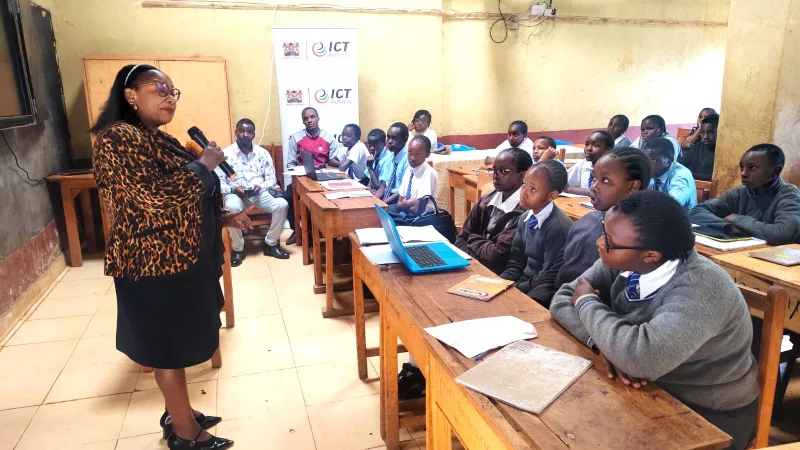
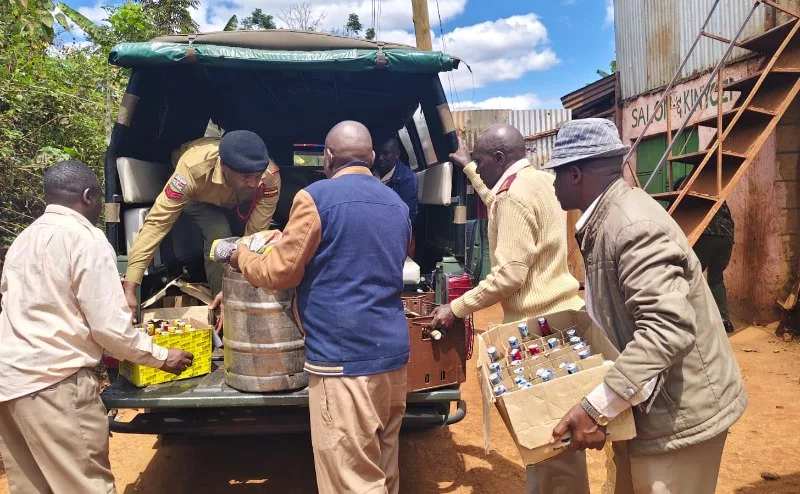
 Security officers confiscated alcohol suspected to have been counterfeited in Maragua, Murang'a, on September 23, 2026 /ALICE WAITHERA
Police in Murang’a have seized dozens of cartons of alcoholic drinks suspected to be counterfeit.
This was during a crackdown on illicit alcohol in Maragua, after two people allegedly fell ill after consuming drinks bought from a local bar.
The operation, led by county Administration Police commander Pauline Njeri, followed intelligence that the outlet was involved in the suspected counterfeiting and distribution of alcoholic drinks.
She said officers moved in after receiving reports two people had fallen ill after consuming alcohol purchased from the bar, with one admitted to hospital while the other was later discharged.
“It’s through the intelligence that we were called and we visited here. There was a complaint the two individuals became unwell after taking alcohol from here,” Njeri said.
Officers recovered 28 cartons of vodka, 40 bottles of 50ml vodka, brandies and other assorted alcoholic products, as well as cigarettes, during the operation.
The products were taken to a police station as officers sought the assistance of the Kenya Revenue Authority (KRA) and Kenya Bureau of Standards (Kebs) to establish whether they met the required standards and whether the tax stamps affixed to them were genuine.
The commander said the products were found stored in poor and unhygienic conditions at a residential premises, raising further concerns over their safety.
“We found the alcohol kept in a very dirty place. We did not expect anything that can be consumed by a human being to be stored in such a place,” she said.
Police also recovered equipment suspected to have been used in handling or processing the drinks, including a tap and what appeared to be a blow dryer, as investigations continued into the source and distribution of the products.
The owner of the bar was arrested and remained in police custody as investigators awaited reports from KRA and Kebs on the authenticity and compliance of the seized products.
Njeri said officers also found discrepancies in the liquor licence displayed by the outlet, with a scan showing the document was still awaiting approval despite carrying effective and expiry dates.
She called for stronger verification of liquor licences by the county government and other licensing agencies to ensure outlets operating in the county are properly authorised.
The crackdown came amid a wider national fight against counterfeit and illicit alcohol, with the Anti-Counterfeit Authority (ACA) reporting alcoholic beverages have one of the highest rates of counterfeiting among the sectors it surveyed.
The ACA’s 2025 firm-level survey found an average of 18 per cent of products were reported as counterfeited, with alcoholic beverages recording a 19 per cent prevalence. Gin and vodka were identified among the alcoholic products most affected.
The authority has also warned that counterfeit alcohol can involve falsified labels, misuse of protected brands and the refilling of genuine bottles with unsafe products, making the trade a consumer-safety concern as well as an economic one.
In its latest enforcement figures, the ACA told Parliament that it had seized counterfeit goods worth more than Sh563 million between the first and third quarters of the 2025-26 financial year, while goods held in custody were valued at about Sh1.78 billion. Alcohol and beverage-related seizures in the third quarter were valued at about Sh10 million.
The ACA has separately estimated that Kenya loses more than Sh153 billion annually to counterfeit trade, with the losses affecting businesses, government revenue and consumers.
Njeri urged residents to report suspected cases of illicit alcohol production and sale, saying timely information could help authorities intercept potentially harmful products before they reach consumers.
“We are really calling upon Murang’a residents to make prompt reports when they encounter products they suspect to be fake because these drinks are destroying so many lives, especially among the youth,” she said.