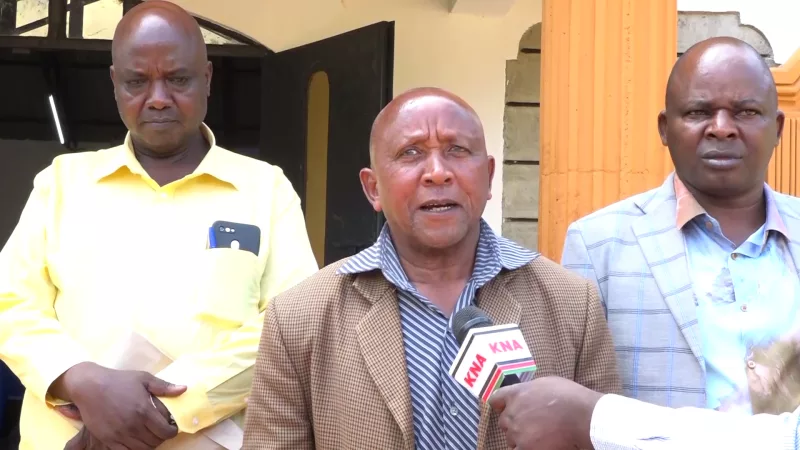
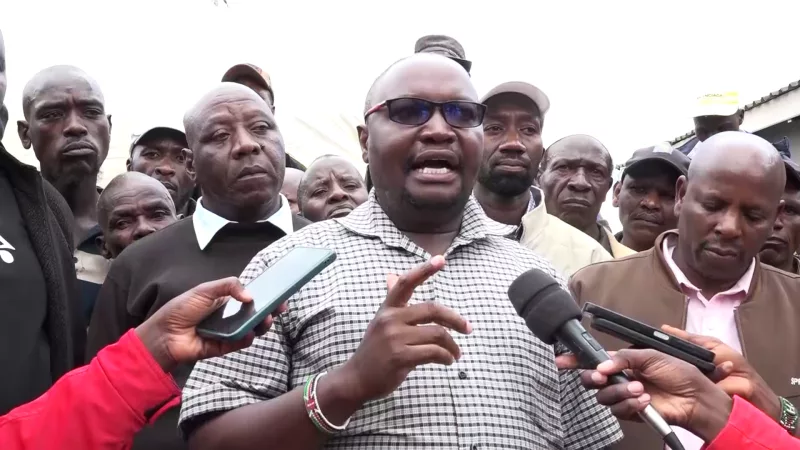
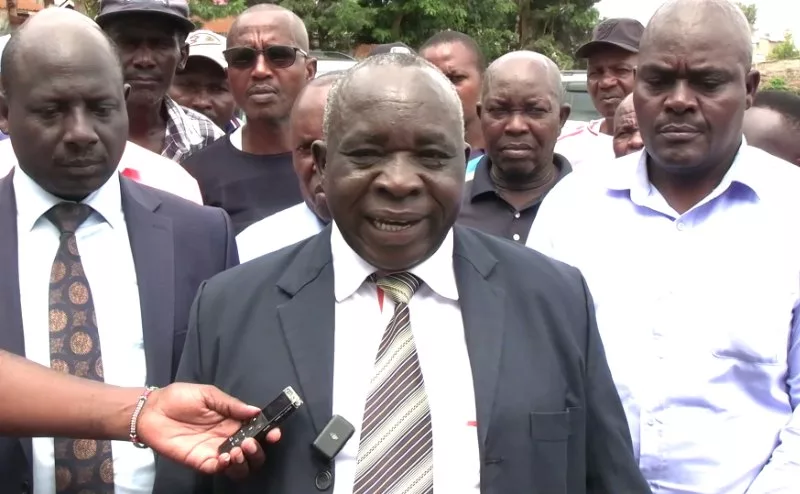
 Mwea Rice Growers Multipurpose Cooperative Society (MRGM) chairperson Ndege Muriuki during an AGM held on September 23, 2026/ ALICE WAITHERA
Rice farmers in Mwea, Kirinyaga county, have urged the
government to address a raft of challenges they say are threatening their
livelihoods.
Farmers from Wamumu and Thiba said the poor state of on-farm roads has made it difficult to transport rice, fertiliser and other farm inputs, especially during the rainy season.
They also questioned why murram from Ndurumo Kenda Quarry in their area is being transported elsewhere while roads serving rice farms remain in poor condition.
“We have a lot of murram there, which is loaded onto trucks and taken elsewhere. Why can’t it be used to improve our roads? We need the roads to be graded because we are farmers and we need to transport our rice,” farmer Robert Wangai said.
The farmers warned that poor roads would worsen their losses during the rainy season by making it difficult to move harvested rice from farms to homes and storage facilities.
They spoke on Wednesday during the annual general meeting of the Mwea Rice Growers Multipurpose Cooperative Society (MRGM), where they also raised concerns over delayed payments for rice bought by the government through the Kenya National Trading Corporation (KNTC).
Farmers said they had been forced to borrow money to meet household and farm expenses while waiting for payment for their produce, only for interest on the loans to continue accumulating.
MRGM chairperson Ndege Muriuki said farmers traditionally expected to receive payments around May.
However, under the government-backed purchase programme, they waited for months before the Sh210 million payment was released in September.
The payment followed a marketing crisis that had left farmers struggling to find buyers for their rice.
KNTC eventually purchased more than 25,000 bags of rice worth Sh210 million under the arrangement. However, the delayed payments left many farmers facing financial difficulties.
Muriuki said the society had struggled to market farmers’ rice before government intervention, but the payment came after many farmers had already incurred additional costs.
Simon Ndungu Kamau, chairperson of Lainisha Rice Farmers Sacco, said delayed payments had worsened farmers’ debt burden because interest on loans continued to accumulate while they waited for their money.
“The problem is the delayed payout. Farmers should be paid immediately because when the money comes late, the interest has already grown and the entire payment can be swallowed by the loan,” he said.
Kamau said some farmers were now seeking help from the Sacco after receiving little or nothing from their payouts because of outstanding loans.
The farmers also raised concerns over irrigation water shortages, saying the little water reaching their farms from Thiba Dam is inadequate to sustain production.
Rice farmer Elijah Njoroge said farmers had expected Thiba Dam to ease water shortages but were still struggling with inadequate supplies.
“The challenge we are facing is water. The dam was constructed to provide water that would benefit rice farmers, but we are still experiencing shortages,” Njoroge said.
The farmers called on the government to fast-track construction of the proposed Nyamindi Dam to increase water availability and support rice production in the scheme.
They also complained about difficulties accessing subsidised fertiliser, saying some farmers were forced to spend hours queuing at National Cereals and Produce Board (NCPB) stores to obtain the inputs.
National Irrigation Authority chairman Gilbert Maluki assured farmers that the government was working on measures to address the challenges affecting rice production in Mwea.
Maluki called for closer coordination among government agencies involved in the rice sector, particularly on marketing, saying locally produced rice should be absorbed before the country allows more imports.
He said the authority would work with KNTC, the Ministry of Education and other government agencies to improve the uptake of locally produced rice and provide farmers with a more reliable market.
A week ago, Deputy President Kithure Kindiki announced the government would disburse Sh1 billion to KNTC to purchase locally produced rice before imports are allowed, saying the state would prioritise rice from Mwea and other producing areas.
The Mwea irrigation scheme accounts for more than 60 per cent of Kenya’s domestic rice supply.
INSTANT ANALYSIS
Farmers from Wamumu and Thiba said poor on-farm roads have made it difficult to transport rice, fertiliser and other farm inputs, especially during the rainy season. They also raised concerns over delayed payments for rice bought through KNTC, saying the delays pushed many farmers into debt as interest on their loans continued to accumulate while they waited for their money.