More
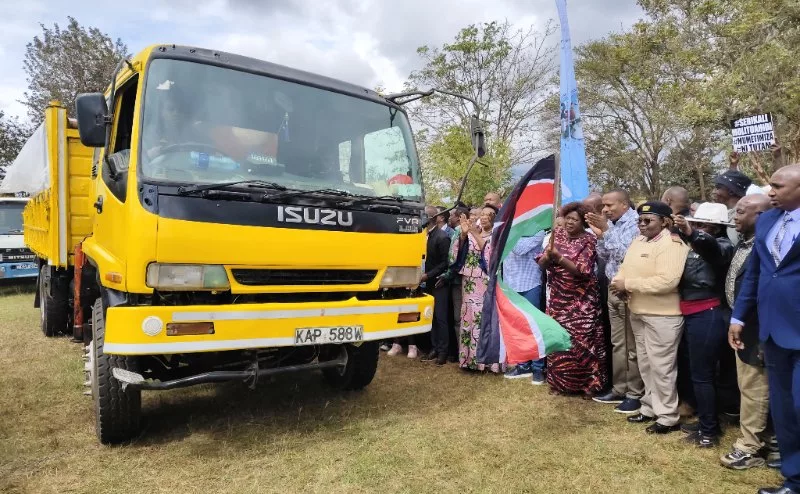
than 18,500 dairy farmers from Murang’a county have benefited from 12 new bulk milk coolers installed by
the national government to reduce post-harvest losses and improve earnings.
The coolers, valued at Sh87.94 million, are expected to save about 13.5 million litres of milk annually from post-harvest losses, translating to an estimated Sh661.75 million worth of milk.
Livestock DevelopmentPrincipal Secretary Jonathan Mueke said the government was expanding support to dairy farmers to increase production and ensure they benefit from the growing demand for milk.
“There is a huge market for milk in Kenya that we cannot even satisfy. That is why we are asking farmers to increase their production. There is a market locally and abroad that cannot be satisfied,” Mueke said.
He said the 12 coolers were part of a wider government programme, with five already delivered and seven handed over to farmers in Murang’a.
Mueke said the government planned to distribute an additional 650 coolers under a presidential directive, with cooperatives and local leaders urged to identify farmers who require the equipment.
“The government has so far given out 230 coolers to farmers, and because this project has had a big impact, the President announced in June that more coolers will be provided,” he said.
He urged dairy cooperatives to ensure farmers receive better returns for their milk, warning that poor prices could discourage production and worsen the country's milk shortage.
Mueke said some farmers were already shifting to informal markets in search of better prices, adding that cooperatives needed to work with processors to ensure farmers earned enough to invest in feeds and maintain production during dry periods.
The government is also subsidising livestock vaccination, with farmers required to pay Sh50 for a foot-and-mouth disease vaccine that costs Sh150, while the state covers the remaining Sh100.
Mueke said the government was also promoting sexed semen technology to increase the chances of farmers producing female calves that can later enter the dairy herd.