
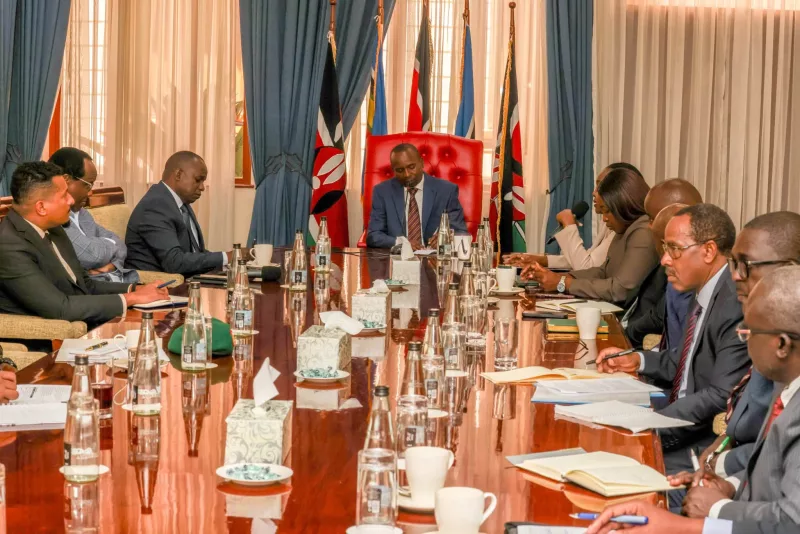
The planned East Africa Oil Refinery in Lamu is expected to create 50,000 jobs and reduce Kenya’s reliance on imported petroleum products, Deputy President Kithure Kindiki has said.
The DP said preparations for the launch of the refinery had been finalised ahead of the September 30 event, which President William Ruto is expected to host in Lamu.
He said the project would provide petrochemical refinery services while supporting industrial operations in Kenya and the wider East African region.
“We have finalised our routine meeting on preparations for the launch of the East Africa Oil Refinery project, which is going to take place on September 30, 2026 in Lamu,” Kindiki said on Tuesday.
“This is a very, very important project for our country and for the region,” he said after chairing what was deemed the final meeting to prepare for the ground breaking of the Lamu refinery.
The refinery will position Kenya and East Africa as a key petro-chemical industrial hub and a competitive energy logistics centre.
"This landmark project will unlock the economy of Lamu and the Coast region, create jobs and boost Kenya’s industrialisation quest," the DP said.
Kindiki said the government was putting in place final arrangements to ensure the launch meets the required protocol, security and logistical standards.
He said several heads of state and government from the region are expected to attend the event, alongside residents of Lamu and other local communities.
“We are expecting President William Ruto to host a number of heads of state and government from the region. We are also expecting the local community to be part of the launch, and the event is on course,” he said.
Kindiki said the refinery would form part of the greater industrial ecosystem expected to transform Lamu, the Coast region and the wider East African economy.
He said one of the key benefits would be reducing pressure on Kenya’s foreign exchange reserves by cutting the amount of money spent importing oil and petroleum products.
“This project will reduce pressure on our foreign exchange because we spend a lot of money importing oil,” Kindiki said.
The government also expects the project to generate thousands of employment opportunities, particularly for residents of Lamu and the wider coastal region.
“We are very optimistic that this project will help us create 50,000 jobs in the region,” Kindiki said.
He said the project would also open up opportunities for local communities beyond direct employment, including businesses and other economic activities expected to emerge around the refinery.
“We are also excited because this project is going to empower the communities in Lamu and the coastal region in terms of job creation and other opportunities,” he said.
The refinery is also expected to support Kenya’s emerging domestic oil industry, with Kindiki linking the project to the anticipated start of local oil production.
He said the government expects Kenya’s own oil production industry to begin operating towards the end of this year.
“We are looking forward to this project supporting our own oil production industry, which we expect to start operating towards the end of this year,” he said.
The project is therefore being positioned by the Ruto administration as part of an integrated oil and petroleum value chain, linking domestic production, refining and industrial activity.
Kindiki said the expected benefits would extend beyond Lamu and Kenya, with the refinery serving the wider region.
“This is an ecosystem that is going to change Lamu, the Coast, Kenya and the wider region,” he said.
The launch preparations come as the government seeks to present Lamu as a major industrial and energy hub under its development agenda for the Coast.
Kindiki said security and logistics arrangements for the event were being finalised, with officials working to ensure visiting dignitaries and members of the public receive the required reception.
“All preparations are in place, and further communication will be provided during the course of this week,” he said.
The project is expected to provide refining and petrochemical processing capacity, reducing reliance on imported refined petroleum products.
It is also envisioned to help in creating opportunities for storage, transportation and other downstream oil activities.
Its development is also linked to plans to commercialise crude oil production from the South Lokichar Basin in Turkana.
Energy Cabinet Secretary Opiyo Wandayi earlier spoke to the government's plans to establish an integrated petroleum value chain from production to processing and export.
The Lamu project is expected to benefit from the infrastructure around the Lamu port, and is a key component of the Lamu Port-South Sudan-Ethiopia Transport corridor.






