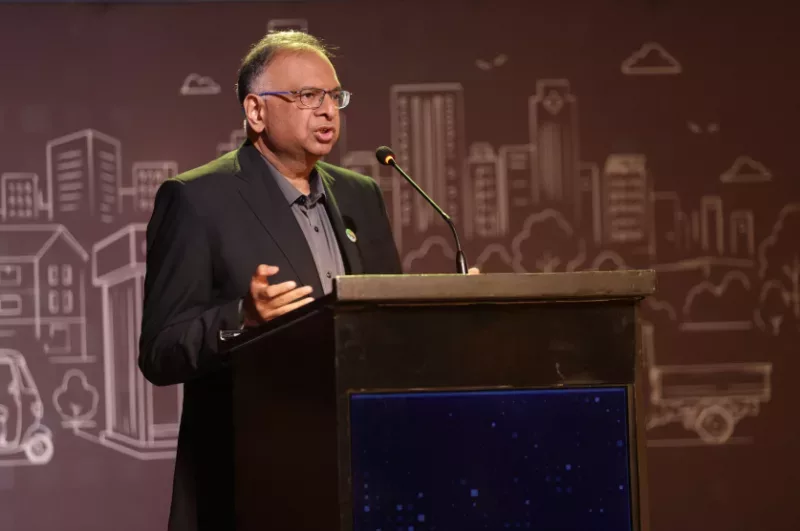
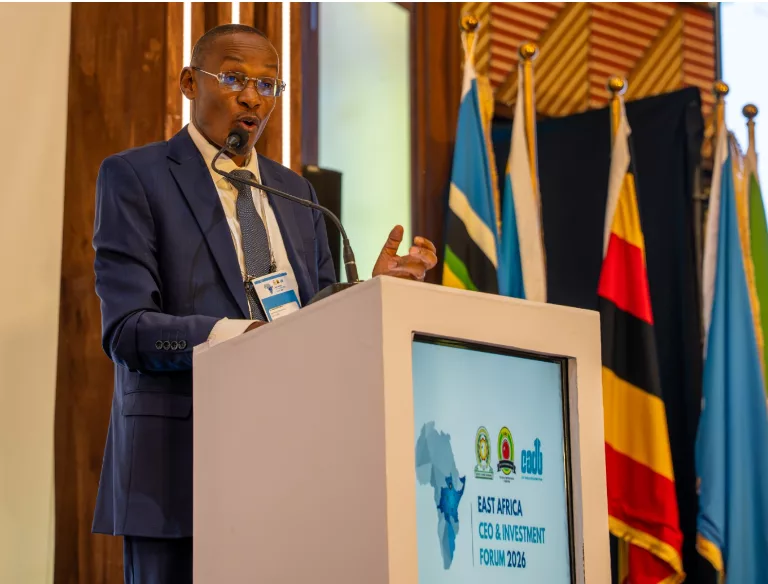
 East African Development Bank acting director general Benard Mono/ HANDOUT
EAST Africa needs to mobilise more capital into manufacturing, infrastructure and productive sectors if the region is to accelerate industrial growth and expand intra-regional trade, the East African Development Bank has said.
The development finance institution said limited financing, infrastructure gaps and low levels of industrialisation continue to constrain the region’s ability to move up the value chain and retain more economic value from its natural and agricultural resources.
EADB acting director general Benard Mono said the bank is seeking stronger partnerships with governments, private investors and other development finance institutions to crowd in capital for projects capable of transforming the regional economy.
“I would like to assure you that EADB is open for partnership. We stand ready to co-finance and scale high-impact investments across East Africa,” Mono said.
EADB was also part of the just-concluded East Africa CEO & Investment Forum in Nairobi.
Mono said the bank had built extensive experience in development financing across the region and established financing structures capable of supporting both large-scale projects and grassroots enterprises.
“We maintain strong liquidity, a robust funding pipeline and the institutional capacity required to efficiently deploy capital where it is needed most,” he said.
The push comes as East African countries seek to deepen regional integration and increase the volume of goods and services traded within the bloc while reducing dependence on exports of raw commodities.
EADB’s 2024-2028 Strategic Plan identifies industrialisation and manufacturing, particularly through industrial parks, as one of its key focus areas.
The bank notes that industrialisation remains low in the region, with many products, especially agricultural commodities, still exported in raw form, limiting the value earned by local economies.
EADB says it will support industrialisation through direct financing of private-sector projects as well as wholesale funding to small-industry promotional agencies in member states to support emerging businesses.
The bank is also looking to work with the EAC Secretariat and national development agencies to develop solutions that support industrial growth and regional connectivity.
Mono said EADB’s interventions were already generating jobs and supporting exports across several sectors.
In manufacturing, the bank has invested more than $15 million (Sh1.94 billion) in projects that have collectively created over 12,000 jobs.
One beneficiary is East Africa Medical Vitals, a medical consumables manufacturer and the region’s only surgical medical gloves manufacturing plant, producing more than 40 million pairs annually.
Tourism projects have received more than $7 million (Sh906.2 million) from EADB, creating jobs while generating foreign exchange and opening markets for locally sourced products and services.
In agriculture, more than $1 million (Sh129.5 million) has been disbursed to projects that have generated over 400 jobs and earn more than $4 million annually through exports.
The bank has also provided more than $3 million to Strathmore University for construction of an eight-storey student block, creating over 200 jobs and expanding enrolment capacity.
Beyond industrial financing, EADB has identified infrastructure as another major constraint to regional economic growth. The bank says East Africa still lags in areas including ICT, power, roads and railways, limiting connectivity and raising the cost of doing business.
Under its strategic plan, EADB intends to support infrastructure that promotes regional connectivity, including through partnerships and public-private partnerships.
The bank is also prioritising agriculture and agro-processing, social services, renewable energy, transport and logistics, as well as climate-related investments.
Mono said collaboration would be critical in closing the region’s financing gap.
“Development requires collaboration,” he said, adding that EADB would work alongside governments, private investors and development finance institutions to mobilise the capital required to unlock East Africa’s investment potential.
The bank’s strategy is therefore centred on using development finance to attract additional private capital into productive sectors, with the aim of strengthening regional resilience, industrial capacity and intra- and extra-EAC trade.