
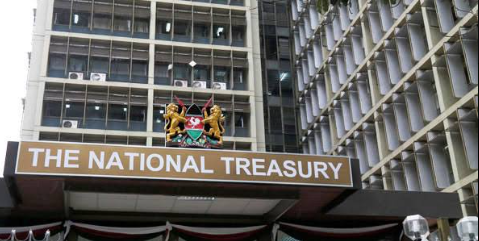
 National Treasury
The team is expected to help the government review staffing levels and clean up payroll systems as the exchequer seeks to contain rising recurrent expenditure.
Treasury has agreed to consider formally involving certified human resource management practitioners in wage bill reviews, job evaluations and staff establishment audits across government agencies.
The move follows proposals by the Institute of Human Resource Management (IHRM) during consultations on the 2026 Budget Review and Outlook Paper.
IHRM had proposed that Treasury work with the Public Service Commission and Salaries and Remuneration Commission to engage certified HR professionals.
Treasury responded that it would consider the proposal.
“The National Treasury will consider engaging the Public Service Commission, Salaries and Remuneration Commission and qualified HRM practitioners in wage bill reviews, job evaluations and staff-establishment audits,” it said.
The objective, Treasury added, would be to strengthen professional human resource planning and promote wage bill sustainability.
The proposal comes as the country’s public sector wage bill hits a record Sh1.287 trillion in the year to June 2026.
In the intervening period, the combined payroll costs of the national and county governments rose by about Sh40 billion.
The figure represents a 30 per cent increase over five years, from Sh988 billion in 2020-21, according to data from the Salaries and Remuneration Commission.
The rising cost of the public payroll has put pressure on government finances even as Treasury seeks to create room for development spending.
SRC has repeatedly flagged the need to contain the growth of the wage bill and link remuneration to productivity and performance.
In its wage bill analysis, the commission estimated public service wage payments at Sh1.17 trillion in 2023-24, up from Sh1.04 trillion in 2021-22.
The latest figures show the wage bill has continued to grow despite efforts to contain it, with recruitment in critical sectors such as teaching, healthcare and security contributing to the increase.
Salary adjustments and implementation of Collective Bargaining Agreements have also contributed to the rising payroll costs.
The commission has stressed that controlling the wage bill is not simply about reducing salaries, but also revving up productivity and performance.
The latest data puts the public wage bill at about 41 per cent of ordinary revenue.
Although this represents an improvement from 55 per cent in 2020, when the ratio was considerably higher, it remains above the statutory 35 per cent limit.
Treasury’s Budget Review and Outlook Paper (BROP), however, puts the national government wage-to-revenue ratio at 24.6 per cent in 2025-26, against the 35 per cent ceiling prescribed under the PFM regulations.
Treasury says the national government ratio is expected to remain within the prescribed limit over the medium term.
The difference in the figures reflects the different measures used, with SRC’s broader assessment covering the combined national and county public sector wage bill.
Despite compliance by the national government, concerns are rife the absolute cost of public salaries has affected resources available for development and other government priorities.
National government recurrent expenditure reached Sh3.2853 trillion in 2025-26, although this was Sh115.4 billion below the target.
To mitigate the pressure, IHRM wants government to subject staffing structures to independent scrutiny, particularly in counties where the wage burden is more pronounced.
The BROP notes that county governments spent 44.2 per cent of their total revenue on employee compensation during the first nine months of 2025-26.
The problem is even more widespread when measured against the statutory ceiling, with 42 of the 47 counties reported to have exceeded the 35 per cent limit on personnel spending.
Some counties have recorded particularly high personnel costs, with Homa Bay and Taita Taveta spending as much as 63 per cent of their total revenue on employee compensation.
IHRM proposed independent human resource audits and staff establishment reviews in affected counties.
It said the reviews should be undertaken by or in consultation with the professional body to support lawful and orderly rationalisation of county staffing.
Treasury responded that necessary action would be taken in consultation with relevant stakeholders to address the high county wage bill and strengthen staff establishment controls.
Treasury says in the BROP that high expenditure on wages and benefits in most counties had constrained fiscal space available for operations and development.
The wage bill challenge is therefore not only about the amount paid to public servants but also the structure and management of the workforce.
Treasury says it is leveraging digital payroll controls to deal with the problem.
A Human Resource Information System has since been deployed to help rid the payroll of ghost workers.
IHRM backed the strengthening of HRIS-Ke to automate payroll processing and management of pension contributions as well as statutory deductions.
The experts asked to be formally involved in the design, configuration and rollout of the system.
They further proposed that officers administering HRIS-Ke at national and county levels be certified HR professionals.
Treasury said all relevant stakeholders would be involved in the implementation of the expenditure reforms.
The government is implementing HRIS-Ke in phases, including its rollout to counties, configuration to automate salary processing and statutory deductions and integration with IFMIS.
The move to bring professional HR managers into the wage bill review comes as the government faces the difficult task of balancing recruitment in essential services with the need to keep public spending sustainable.
INSTANT ANALYSIS
The decision to bring professional HR managers into wage-bill reviews puts scrutiny on how government staffs, pays and manages its workforce. With the public wage bill hitting Sh1.287 trillion and 42 counties breaching the statutory personnel spending limit, independent audits could expose bloated structures and weak controls, while forcing government to balance essential recruitment with fiscal discipline and accountability.






