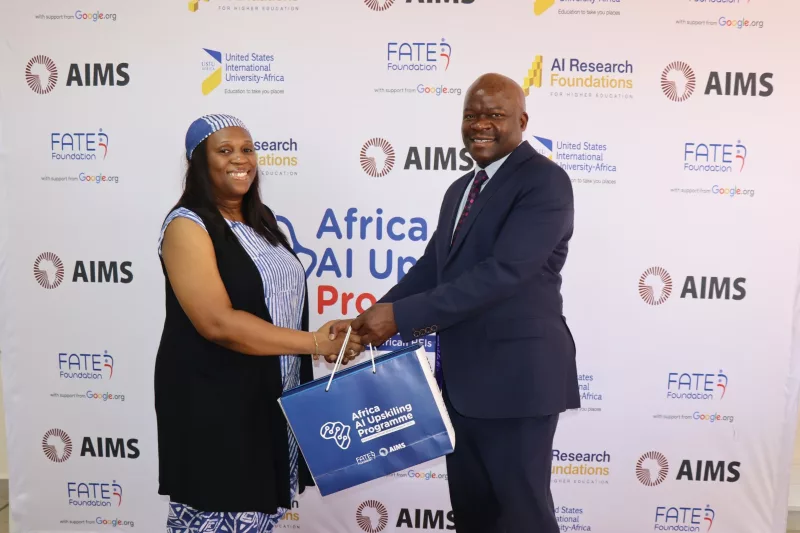
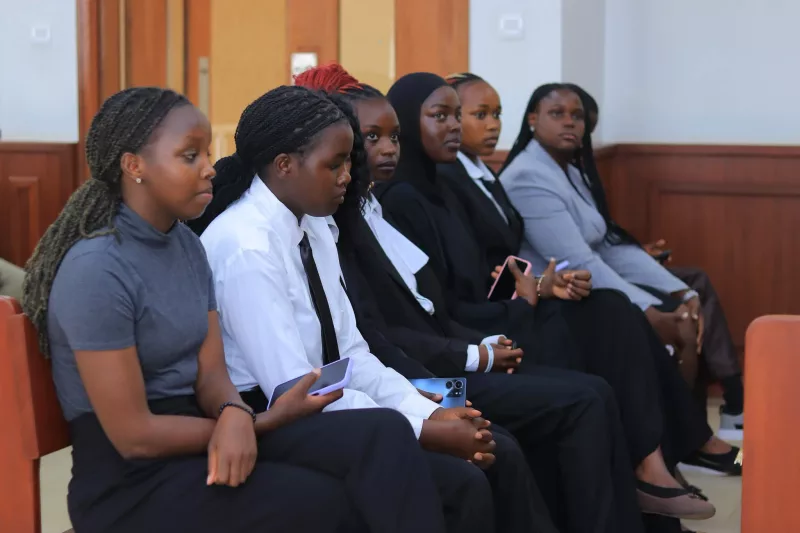
 Laws students at Zetech University.
Law students must be tech-savvy because legal technology and artificial intelligence are rapidly reshaping professional practice, changing employer expectations and redefining basic legal competence.
Stakeholders in the legal and education sectors maintain that law students must also be entrepreneurial, since the modern legal market requires business acumen, adaptability and client-focused innovation, rather than traditional legal theory alone.
They aver that remaining abreast of the latest technological advancements will enable students to leverage data analytics upon completion of their studies.
They quipped that contracts are increasingly viewed as data points rather than just text, adding that understanding data reporting tools helps lawyers make quantitative decisions for clients.
The stakeholders, led by former Chief Justice Dr Willy Mutunga, Zetech University Vice Chancellor Prof Njenga Munene and the university’s Dean of the School of Law, Dr Eric Kibet, concurred that being tech-savvy will enable legal trainees to meet client expectations, noting that most clients demand cost-effective, tech-enabled services and streamlined communication.
They spoke at the institution while awarding three needy students full sponsorships to study for Bachelor of Laws degrees under the university’s TechSheria Sponsorship Programme.
“Emerging tools help simplify research and draft large amounts of text, but students must learn their ethical limitations and risks to retain independent analytical judgment. Legal bodies increasingly view technological competence—understanding the benefits and security risks of digital tools—as a core requirement of ethical representation,” said Prof. Munene.
He observed that tech literacy empowers future lawyers to design innovative solutions that make legal advice more affordable and accessible.
“Students should be encouraged to see technology not merely as something to regulate, but also as a tool that can transform legal practice and improve access to justice,” he noted.
The don noted that technology will continue to transform how legal services are delivered and how society interacts with the law, adding that the future legal professional will need to understand both the rules that govern technology and the technologies that can transform the practice of law.
“We are well positioned to contribute to this emerging field because of its longstanding emphasis on technology, innovation and entrepreneurship. The TechSheria scholars have an opportunity to be part of this journey from its early stages,” the VC said.
On his part, Dr Kibet reiterated that entrepreneurship is equally important because legal professionals increasingly work alongside businesses, innovators, start-ups, governments and technology enterprises.
He averred that practising law is running a service business, adding that understanding marketing, pricing structures and financial management helps lawyers avoid financial struggle and build sustainable practices.
“Clients want creative, value-driven solutions instead of just billable hours and obstructionist advice. Thinking like an entrepreneur helps lawyers anticipate client needs and say "here is how" instead of just "no",” he said.
He noted that having an entrepreneurial mindset will give law students career independence, quipping that the legal landscape shifts rapidly and traditional employment paths are more competitive.
“An entrepreneurial mindset equips graduates to create their own opportunities, launch solo practices, or design niche services,” he highlighted.
Dr Kibet reiterated that the students will have better commercial awareness, noting that most corporate clients rely on founders and businesses that deal with intellectual property, compliance and financing.
“Knowing how businesses operate allows lawyers to speak the language of their commercial client,” he noted.
He at the same time challenged students, as well as the beneficiaries of the sponsorship programme, to make full use of the opportunities available at the university, not only in the classroom but also through research, innovation, technology, moot court, entrepreneurship, leadership and other co-curricular activities