The World Bank Group mobilised a record $112 billion (about Sh14.51 trillion) in private capital for developing economies in the financial year ended June 2026, the global lender has announced.
This, as it steps up efforts to channel investment into businesses and projects capable of creating jobs.
The record mobilisation, more than three times the $35 billion (Sh4.53 trillion) raised in 2022, comes as countries such as Kenya grapple with the challenge of generating enough productive employment for a rapidly growing working-age population.
Across Africa, private capital mobilised by the World Bank Group rose from about $9 billion (Sh1.17 trillion) in financial year 2022 to $22 billion (Sh2.85 trillion) in FY2026, an increase of nearly 150 per cent.
According to World Bank, the growth reflected efforts over the past three years to make it easier for private investors to participate in development projects through guarantees, local-currency financing, equity tools and reforms aimed at improving the investment environment.
The Group also issued more than $25 billion (Sh3.24 trillion) in guarantees during the year, exceeding its target of $20 billion (about Sh2.59 trillion) in annual issuance by 2030 four years ahead of schedule.
For Kenya, the increased focus on private capital is significant because the World Bank identifies weak job creation and low private-sector investment as structural constraints to faster and more inclusive growth.
The Bank's latest Kenya economic overview estimates that the economy will grow by 4.7 per cent in 2026, while employment growth declined from 4.4 per cent in 2023 to 3.9 per cent in 2024. It also puts the share of formal jobs at only about 15 per cent.
In 2024, Kenya created about 782,300 jobs, but 90 per cent of them were in the informal economy, according to the World Bank.
According to the Kenya National Bureau of Statistics (KNBS) Economic Survey, Kenya created 822, 100 new jobs in 2025, but still, majority are in the informal sector.
The Bank has said pro-competition reforms in sectors such as electricity, telecommunications and fertiliser could help unlock stronger productivity and potentially support up to 400,000 additional jobs a year at the average wage.
This places the World Bank's global push to mobilise private capital directly in Kenya's development debate, particularly as the country seeks to attract investment while dealing with fiscal pressures, high financing costs and the need to expand productive employment.
The World Bank is already a major development financier in Kenya. As of March 2026, its International Development Association and International Bank for Reconstruction and Development portfolios covered 32 active projects worth $7.03 billion (about Sh911 billion).
The International Finance Corporation, the group's private-sector arm, had a $1.3 billion (Sh168.4 billion) investment portfolio in Kenya as of February 2026, led by financial institutions and followed by manufacturing, agribusiness, services and infrastructure.
Recent IFC investments include $100 million (Sh13.0 billion) in AA Kenya Upsize II, $25 million (Sh3.24 billion) in ATK Debt II and $5 million (Sh648 million) in Arc Ride, according to World Bank financing data.
The Bank Group also provided Kenya with a $750 million (about Sh97.2 billion) Development Policy Operation in June to support reforms in governance, public finance and social protection. The Bank said the reforms are intended in part to establish the regulatory certainty required to attract private investment and create jobs.
Globally, the World Bank said the increase in private capital mobilisation was broad-based.
Capital mobilised for lower-middle-income countries increased from $14 billion (Sh1.81 trillion) in FY2022 to $37 billion (Sh4.79 trillion) in FY2026, while mobilisation for upper-middle-income economies rose from $12 billion (Sh1.55 trillion) to $50 billion (Sh6.48 trillion).
In low-income countries, where attracting private investment remains particularly difficult, mobilisation was maintained at about $3 billion (Sh389 billion).
Combined with the World Bank Group's own financing, total financing and mobilisation in developing economies exceeded $200 billion (about Sh25.91 trillion) during FY2026.
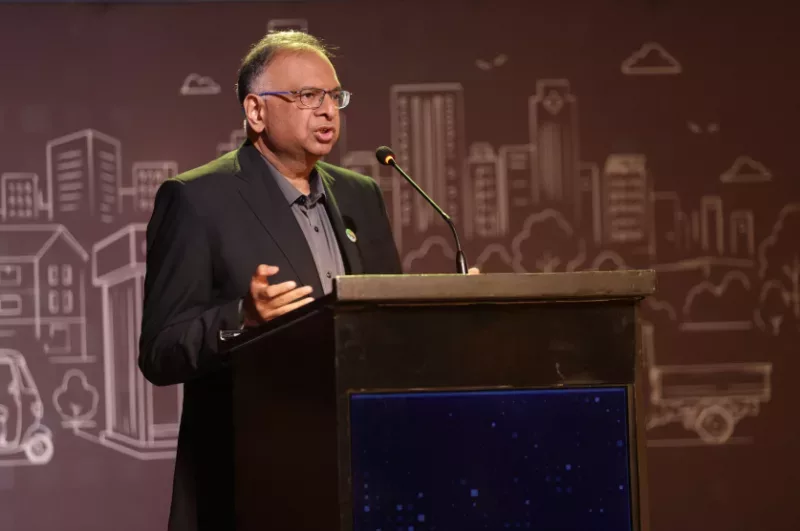
World Bank Group president Ajay Banga said the scale of mobilisation would ultimately be measured by whether the money reaches businesses and projects that generate economic opportunities and employment.
“The number only matters if the capital goes where it can create opportunity and jobs,” Banga said, adding that the institution would continue removing investment barriers and expanding the pool of investors.*
The jobs challenge is particularly significant for developing economies.
The World Bank estimates that 1.2 billion young people will reach working age over the next 10 to 15 years, while only about 420 million jobs are projected to be created.
The private sector accounts for nine out of every 10 jobs in developing economies.
The institution is therefore concentrating its jobs strategy on three areas: investment in physical and human infrastructure, creation of business-friendly regulatory environments and scaling up private-sector investment.
Five sectors have been identified as particularly important for job creation which are infrastructure and energy, agribusiness, healthcare, tourism and value-added manufacturing.
In FY2026, 55 per cent of the World Bank Group's total financing and mobilised capital went into these sectors.
The sectors are also relevant to Kenya, where the World Bank's current portfolio includes significant investments in energy, agriculture, transport, finance, competitiveness and innovation, manufacturing-related activity and digital development.
The Bank's Kenya strategy has similarly placed faster job creation and stronger private-sector productivity at the centre of the country's development challenge.