 NeuroReach Africa Delivers Epilepsy Awareness Books to Lusigetti Primary and Junior School /HANDOUT
A survey across 54 primary schools in Kikuyu subcounty revealed all teachers polled believed a spoon should be placed in the mouth of a child having a seizure.
The finding exposes potentially dangerous gaps in their understanding of how to respond to epilepsy.
The week-long school visits found that most teachers also believed epilepsy was contagious, while their usual response when a pupil suffered a seizure was to call the child’s parent.
The spoon practice, however, can cause serious injuries—including broken teeth and jaw damage—and may obstruct the airway.
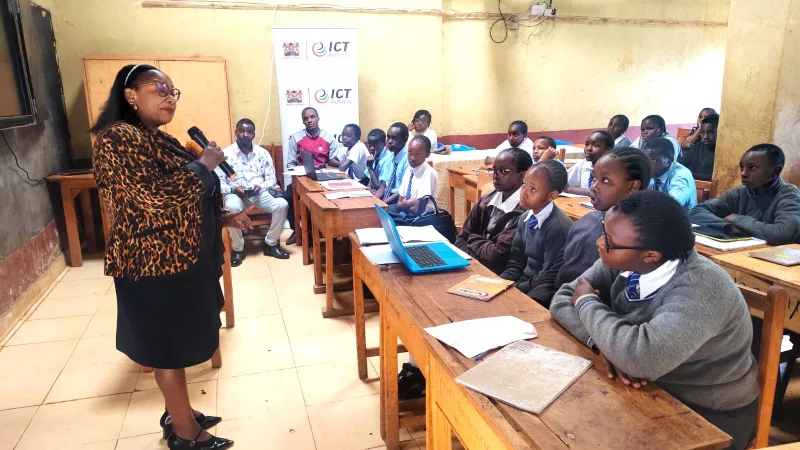
The findings emerged during an outreach campaign by NeuroReach Africa that combined the distribution of a children’s book on epilepsy with basic seizure first-aid sessions for teachers.
The KCB Foundation-funded drive reached 54 schools with a combined enrolment of 54,099 pupils between September 7 and 11.
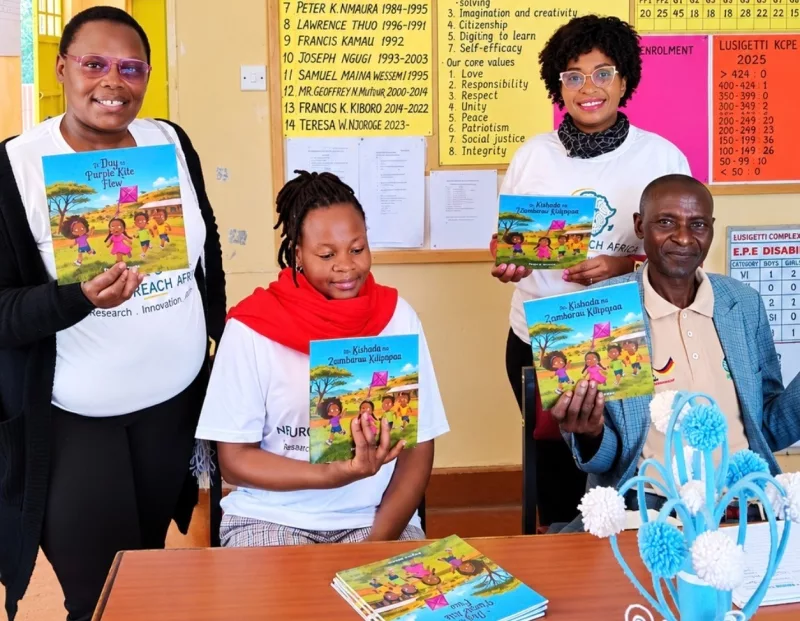
Five hundred copies of The Day the Purple Kite Flew, published by NeuroReach Africa, were distributed in English and Kiswahili to help pupils and teachers understand epilepsy, respond safely to seizures and challenge myths surrounding the condition.
Kevin Mungai, NeuroReach Africa’s community engagement and field coordinator, said the response from teachers showed the problem was largely a lack of knowledge.
“In school after school, the teachers were honest with us: they had never been shown what to do,” Mungai said.
“Once we walked them through the four steps, you could see the relief. It is a simple thing to teach, and it changes what happens the next time a child has a seizure in class.”
Phyllis Kimani, the pharmacist who founded NeuroReach Africa and wrote the book, said teachers were willing to help but had not been equipped with the correct information.
“Every teacher we met wanted to do the right thing, but nobody had ever shown them what the right thing is,” Kimani said.
The book teaches a four-step response known as Stay, Safe, Side and Saidia.
Teachers are advised to stay with the child and time the seizure, move sharp or hard objects away and cushion the head, turn the child onto their side when possible and seek help if the seizure lasts longer than five minutes, occurs in water, or if the child does not regain consciousness.
The outreach also sought to dispel beliefs that epilepsy is a curse, a form of demonic possession or a contagious condition.
Alongside the school visits, community health promoters trained by NeuroReach Africa went door to door identifying people living with seizures, discovering cases across all five wards of Kikuyu subcounty.
Residents also requested more information about epilepsy and guidance on where to access ongoing medication.
NeuroReach Africa estimates that up to two million Kenyans live with epilepsy, many of whom remain undiagnosed or untreated due to social stigma.
The organisation the children are particularly vulnerable, as a poorly managed classroom seizure can reinforce fear and stigma, often resulting in a child being withdrawn from school.
The initiative was implemented with support from the KCB Foundation and the Kiambu subcounty public health team.
NeuroReach Africa stated it is currently seeking partners to extend the model to other subcounties.
Instant Analysis
The Kikuyu survey underscores a critical failure in teacher emergency training, where widespread myths—like forcing spoons during seizures—endanger pupils. Equipping educators with basic medical protocols is an urgent public health imperative; unaddressed stigma and improper classroom handling directly fuel school dropouts among the estimated two million Kenyans living with epilepsy.