Kenya’s public health infrastructure has long
run on empty promises, sustained primarily by the exploited goodwill of its
nursing workforce. However, a major breakthrough this week proved what is
possible when healthcare workers stand firm.
On Wednesday September 9, 2026, the grueling 43-day nationwide strike that paralysed public hospitals across all 47 counties officially came to a victorious end.
The signing of a monumental return-to-work formula marks a historic triumph for frontline health workers, restoring vital services while delivering hard-fought concessions.
Yet, as nurses triumphantly return to the bedside, they must recognise that this victory is only the first step. Clinical dedication can no longer be weaponised against nurses.
Nurses must leverage this powerful momentum to break the intergovernmental gridlock permanently and claim their rightful seat at the policy table. This is not a polite request for a seat at the table. It is an urgent activist call for raw policy leverage and structural power.
Nurses hold the ultimate keys to Kenya's social stability, yet they remain systematically locked out of the executive rooms where health budgets and workforce policies they are expected to operationalize are decided.
The Peril of Internal Fragmentation: A House Divided
While external bureaucratic forces work against us, the nursing profession must look inward and confront its most critical vulnerability: Unlike our colleagues in medicine who rally under a singularly focused banner, Kenyan nursing is structurally fractured into distinct silos that dilute our collective leverage. Today, our representation is scattered across multiple entities with overlapping or competing mandates:
· Kenya National Union of Nurses and Midwives (KNUNM): Serving as the primary collective bargaining and labor rights vehicle.
· National Nurses Association of Kenya (NNAK): Operating primarily as the premier professional association promoting clinical and academic excellence.
· Kenya Progressive Nurses Association (KPNA): Functioning as a separate national professional voice focused heavily on social welfare and scientific research.
This separation of labor welfare from professional development has historically bred unhelpful rivalries and allowed the state to apply "divide-and-rule" tactics.
During this very strike, we witnessed a stark contrast: while KNUNM drove the frontline walkouts, professional bodies like NNAK and KPNA held separate press conferences highlighting the devastating impact of the strike on student training and patient care.
If Kenyan nurses were consolidated under a single unified body, mirroring powerful global models like the American Nurses Association (ANA) or the Australian Nursing and Midwifery Federation (ANMF) in the USA and Australia respectively, the impact would be extraordinarily effective.
Global healthcare labor metrics consistently show that nations with singular, consolidated nursing bodies secure up to 35% higher healthcare budget allocations and boast drastically lower instances of policy backsliding.
A singular institution combining robust labor militancy with rigorous professional standards would command absolute control over healthcare policy in Kenya, making it impossible for the state to ignore our demands.
The Toxic Friction of Devolution: CoG vs. Autonomous County Bosses
The latest crisis has exposed the deepest fracture lines within devolved healthcare: the toxic friction between the collective Council of Governors (CoG) and individual county executives. While the CoG negotiates broad frameworks in Nairobi, its decisions shatter when they collide with local political agendas and fiscal mismanagement.
This bureaucratic shell game plays out in three damaging ways:
· The "Duress" Escape Clause: Even as a return-to-work agreement is signed, the CoG leadership continues to dismiss historical obligations, claiming the landmark 2017 Collective Bargaining Agreement (CBA) was signed under political pressure. Governors use this collective stance as a shield to avoid local implementation, leaving nurses trapped in an endless loop of unfulfilled promises.
· Local Financial Starvation: While national structures debate uniform allowances, individual governors routinely divert devolved health funds to high-visibility capital projects like county headquarters. Nurses in counties like Kisumu, Kisii, West Pokot, and Nyandarua watch promotions freeze and statutory deductions vanish because local county executives operate with financial opacity.
· The UHC Breakdown: Even when top-tier intergovernmental interventions occur such as directives to absorb Universal Health Coverage (UHC) nurses, individual county leaders usually push back. They claim they lack local budget lines, exposing a complete disconnect between national and county policies.
Nurses are trapped in a calculated blame game. The national government points at the counties, the CoG points at the Treasury, and individual governors point at the Salaries and Remuneration Commission (SRC).
Solidarism and the Power of Defensive Unionism
For too long, Kenyan political mobilization has relied on a damaging, identity-driven formula: our community, our candidate, our turn. This logic forces voters to line up behind regional elites while systemic institutional collapse is ignored. For nurses, this passive tribal alignment has become an immediate threat to their livelihoods.
Traditional unionism, however, just found a fierce new life. The tipping point that broke the government's stubborn resolve came when the Kenya Medical Practitioners, Pharmacists and Dentists Union (KMPDU) declared unwavering solidarity.
Overburdened by the collapse of county health units, doctors issued a strict 7-day ultimatum to join the nurses on the streets. This unified front of medical professionals threatened a total healthcare shutdown, accelerating emergency boardroom negotiations and forcing the CoG to the table.
Through this coordinated pressure, nurses secured immediate, game-changing financial victories.
The hard-won return-to-work formula successfully boosted health risk allowances from Ksh 3,850 to Ksh 8,000, uniform allowances by an additional Ksh 5,000, and elevated Ksh 1.8 billion annual fiscal injection delivering an immediate Ksh 13,000 monthly allowance spike into the upcoming payroll.
This translates to an aggregate specifically earmarked to honor nursing welfare and get close to matching the out-of-control national inflation. The CoG’s commitment to immediately employing UHC nurses on permanent and pensionable terms is another win.
This resulted in the union’s resolve, led by Secretary-General Seth Panyako, to suspend the strike and direct members to return to work within 24 hours. However, a return-to-work formula is not a final treaty; it is a temporary ceasefire. To fix the root cause, nurses must transform this massive victory into a vehicle for targeted, permanent political transformation.
A Call to Action: The 45-Day Countdown- High Stakes
The signing of this return-to-work formula opens a critical 45-day window to finalise a comprehensive legally binding CBA and the clock is ticking. This 45-day period cannot be a time for passive celebration; it is an urgent call to action for every nurse across the 47 counties. We call upon the leadership of KNUNM, NNAK, and KPNA to immediately form a Joint Nursing Steering Committee. To ensure the state does not exploit our structural fractures during these negotiations,
This unified coalition must present a single, unyielding front at the negotiating table, ensuring that labor rights and professional standards are fought for as one indivisible agenda.
We must use this exact window to aggressively lobby county assemblies, audit local budget lines, and maintain absolute vigilance. If the CoG tries to backslide or weaponize bureaucratic delays before the 45 days expire, we must be ready to unleash our collective numbers once again.
Also, before a single vote is cast in the upcoming county and national polls in 2027, nurses must weaponize this momentum to force political candidates into public, documented cross-examinations:
1. Will you sign a binding commitment to fund and execute all outstanding nursing CBAs?
2. What specific budgetary mechanisms will you introduce to stop the diversion of health personnel funds?
3. Will you support salary increase for Nurses as they are significantly underpaid as compared to their colleagues in the rest of the world?
4. Will you champion legislative protections to safeguard patients from unsafe staffing ratios?
5. Will you support structural centralization such as an independent Health Service Commission to insulate health workers from county-level political interference?
A Direct Target: Impending Healthcare Policy Milestones
The timeline for passive waiting has expired. Crucial national transitions including the final integration of the Social Health Authority (SHA) framework and upcoming county fiscal planning deadlines are moving forward right now. If nurses do not aggressively inject themselves into these processes, healthcare policy will continue to be drafted by desk-bound administrators who have never managed a chaotic ward or faced a critical drug or consumable shortage.
True nursing leadership must move beyond the hospital hierarchy. It must be measured by how many nurses actively challenge the SRC, draft healthcare legislation, run for office, and unseat politicians who fail public health.
Nurses hold the public trust, the professional expertise, and a direct line to millions of citizens. It is time to convert that social capital into sustained policy control. We must break free from petty tribal allegiances, move past the polite language of corporate compliance, and step up to rewrite the system from the ground up. If we are the ones keeping this nation alive, we have every right to decide how it is run.
About the Authors:
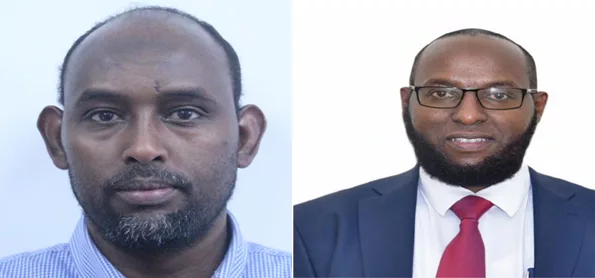
Dr Abdi Osman is a health policy specialist, clinical researcher, and consultant on devolved healthcare systems in East Africa. He writes extensively on health equity, public finance tracking, and institutional accountability in public health systems.
Dr Osman is a Senior Lecturer/Researcher- Victoria University, College of Sports, Health & Engineering. Senior Research Nurse- Austin Health, Emergency Department, Melbourne. Senior Honorary Fellow, University of Melbourne, Department of Critical Care.
Ahmed Dagane RN, BA, BSN, MBA-Healthcare Management is a veteran nursing leader, healthcare administrator, and clinician with over a decade of frontline experience in Kenya’s public health sector. He focuses on strategic health workforce advocacy, labor relations, and healthcare legislation; Is a former Chief Executive Officer, Kenyatta University, Teaching, Referral and Research Hospital (KUTRRH). Currently offers Senior Healthcare consultancies across various firms and is a Board of Director Takween Africa.