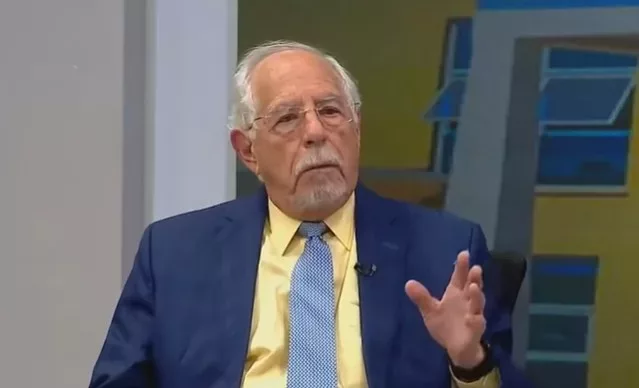
Renowned Kenyan cardiologist Dr David Silverstein treated presidents and powerful African figures in a storied career spanning more than four decades.
Dr Silverstein died yesterday at the age of 82.
Among the high-profile personalities he treated were former President Daniel arap Moi, former South African President Nelson Mandela and former Attorney General Charles Njonjo.
Former Baringo Senator Gideon Moi announced Silverstein’s death and described him as a dedicated physician whose care and friendship were deeply valued by the Moi family.
Gideon said Silverstein left a lasting impression on the people he treated, particularly through his attention to detail and empathy.
“Dr Silverstein left a lasting impression on those he treated and we witnessed firsthand his attention to detail and empathy,” he said.
Gideon said Silverstein regarded his responsibility to Moi as more than a conventional doctor-patient relationship, taking time to listen to and understand the former President.
“To him, Mzee Moi was not merely a client. He was a human being whose health, dignity and well-being mattered deeply to him,” he said.
Silverstein’s connection with Moi began in 1977, when he was introduced to the then Vice President at Kenyatta National Hospital.
Silverstein later recalled that Moi’s secretary contacted him and asked whether he could attend to the Vice President at KNH. He agreed.
That meeting marked the beginning of a relationship that would last for more than four decades.
When Moi became President following the death of founding President Jomo Kenyatta in 1978, Silverstein’s role became increasingly significant. In 1983, he was appointed Moi’s personal physician.
He accompanied the President on numerous foreign trips and continued to oversee Moi’s health during his retirement.
“The exciting part is that I got to travel with him all around the world,” Silverstein said in an interview.
“Whenever the head of state travelled overseas, I would go too. I was in the Great Hall of the People in China during Deng Xiaoping’s time,” Silverstein recalled.
His work with other prominent figures also placed him at the centre of significant moments in African history.
In July 1990, Silverstein attended to Nelson Mandela after the former South African president fell ill with pneumonia while visiting Nairobi.
He was also involved in the medical care of Justice Minister Njonjo and was among those who attended to him before his death in 2022.
Apart from his famous patients, Silverstein played a significant role in the development of cardiology in Kenya.
He obtained his medical degree from the University of Chicago before undertaking internal medicine residency and cardiology fellowship training at the University of Washington.
He became a Fellow of the American College of Cardiology and a Fellow of the American College of Physicians.
After joining the University of Nairobi Medical School, Silverstein helped establish the region’s first cardiac catheterisation laboratory at Kenyatta National Hospital.
He later headed the KNH cardiology unit and served as chief cardiothoracic physician for the Kenyan government.
He also spent decades practising at The Nairobi Hospital, where he helped develop and expand of its Intensive Care Unit.
His long career was not without controversy.
In early 2026, Silverstein became embroiled in a governance dispute at The Nairobi Hospital after board members accused him and fellow senior consultant Dr Martin Wanyoike of operating private clinic. They allegedly competed with the hospital by performing similar medical procedures.
Silverstein, together with other doctors under the Admitting Staff Association, rejected the accusations. They blamed the institution’s challenges on what they called systemic mismanagement, financial opacity and controversial changes to the hospital’s governance structures.
The doctors’ faction sought the intervention of President William Ruto to help resolve the leadership dispute.
Silverstein had also faced professional scrutiny earlier in his career.
In January 2000, the Medical Practitioners and Dentists Board issued an inquiry notice concerning the care and standard of treatment of Justice Zaccheus Richard Chesoni. He died at The Nairobi Hospital in September 1999.
Preliminary complaints included an allegation of a delay in making a timely and appropriate diagnosis. The matter subsequently underwent professional and legal scrutiny.
Despite the controversies, Silverstein’s career was largely defined by his contribution to medicine and his service to generations of patients.