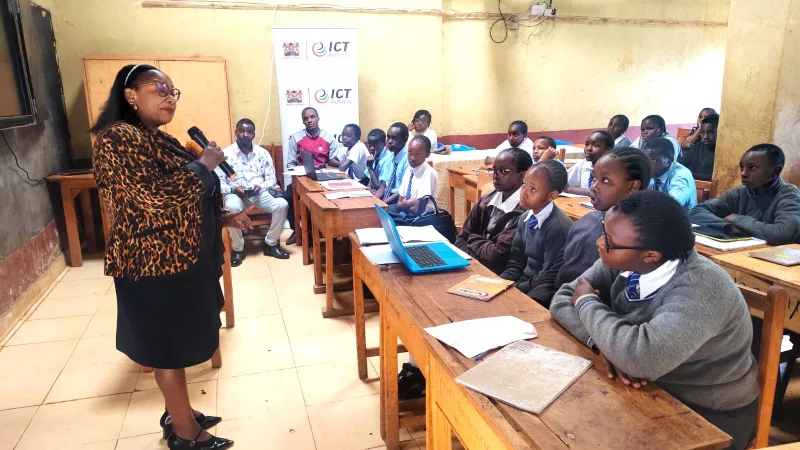
For 60-year-old Gladys Muthoni, epilepsy was once a condition surrounded by fear, myths and stigma.
Like many in her community, she believed epilepsy was caused by a curse or witchcraft. The misconception shaped how families treated people living with the condition, often subjecting them to contempt and isolation.
After undergoing training as a community health promoter (CHP), Muthoni says her perspective has changed.
She is preparing to take the lessons from the training to villages across Kiambu county, where she hopes to help communities understand epilepsy and support those living with the condition.
“As a community, we thought epilepsy was a curse or witchcraft and consequently, we treated patients with contempt," Muthoni said.
"We have since learned the facts, and we are ready to navigate our villages to educate our people on how to manage, care for, and live with epileptic patients.”
Muthoni is among more than 100 CHPs being trained in Kiambu to tackle the stigma surrounding epilepsy and help close Kenya’s treatment gap for the condition, which is estimated at 80 per cent.
The initiative comes amid concerns that ignorance and deeply rooted misconceptions continue to prevent many people with epilepsy from seeking or accessing treatment.
Health experts are equipping the CHPs with knowledge to educate communities and emphasise that epilepsy is a treatable medical condition.
The promoters will also receive government stipends to strengthen their grassroots outreach.
Dr Phylis Kimani of Neuroreach Africa said taking epilepsy care closer to communities was critical in addressing the gap.
“We have decided to train health promoters to work closely with patients in their communities. We have also seen the need to bring epilepsy management down to the primary care level, specifically dispensaries and health centres,” she said.
Kimani noted stigma remained a major contributor to the high treatment gap, manifesting in ways that affect both patients and how institutions treat those living with epilepsy.
“We see two main types of stigma: personal stigma, where a patient does not accept the reality of their condition and institutional stigma, where patients are mistreated in schools and workplaces,” she explained.
Kimani said many people lack information about the possible causes of epilepsy, which can include prenatal complications, prolonged labour, birth trauma and head injuries.
For some families, the consequences of misinformation go beyond discrimination.
“Families hide a diagnosis for years and children are withdrawn from school. Yet, the medicine that controls epilepsy has existed for decades, is inexpensive and works for most people,” she said.
Kimani emphasised that the greatest challenge was often not the seizures themselves, but the misconceptions surrounding them.
The new programme seeks to change that by placing trained health promoters at the centre of efforts to educate communities, support patients and encourage families to seek treatment.
Kimani said the initiative is being implemented in partnership with the Kiambu county department of health services and through existing government health structures.
For Muthoni, the training has offered an opportunity to confront beliefs she once held herself—and to help ensure people with epilepsy are treated with understanding rather than fear.
According to the World Health Organization (WHO), epilepsy is a chronic disorder of the brain characterised by recurrent seizures caused by abnormal electrical activity in the brain.
It affects people of all ages and is not contagious. WHO estimates that about 50 million people globally live with epilepsy, with nearly 80 per cent of them in low- and middle-income countries.
The organisation says up to 70 per cent of people with epilepsy could become seizure-free if they are properly diagnosed and receive appropriate treatment.
However, access to treatment remains a major challenge, particularly in low-income countries, where WHO estimates about three-quarters of people with epilepsy do not receive the care they need.
The causes of epilepsy vary and can include brain damage around birth, congenital or genetic conditions, severe head injuries, stroke and brain infections such as meningitis and encephalitis. WHO states the cause remains unknown in about half of epilepsy cases globally.
Stigma and discrimination are also significant challenges. WHO notes that those affected can face barriers to education, employment and participation in community life.
In Kenya, the Ministry of Health launched the National Guidelines for the Management of Epilepsy in 2014 to help demystify the condition, reduce the treatment gap, improve access to epilepsy medicines, and strengthen awareness and advocacy.
WHO also recommends strengthening epilepsy services at the primary healthcare level, as the condition can often be diagnosed and treated without sophisticated equipment.
Training primary healthcare workers is considered a key strategy to reducing the treatment gap.
Furthermore, WHO notes that some epilepsy-related deaths are potentially preventable, including those resulting from drowning, burns, falls, and prolonged seizures.