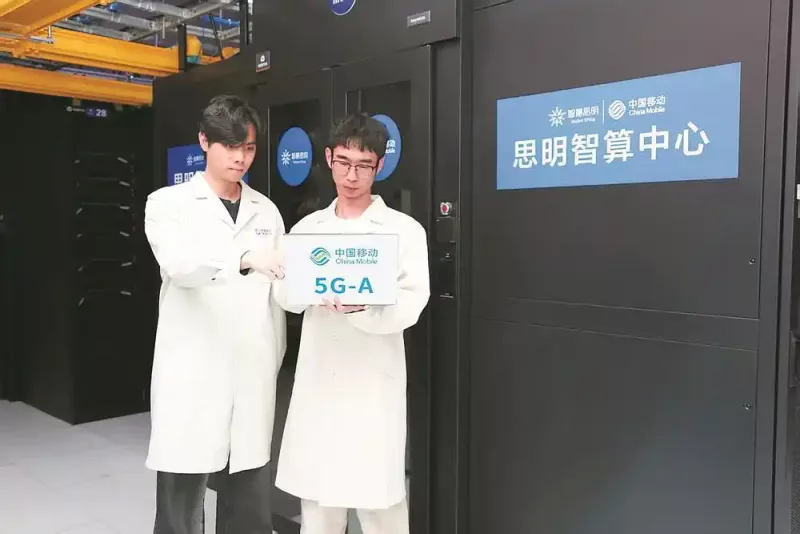
 China Mobile network engineers from Fujian monitor the operating status of intelligent computing equipment in the server room of the Siming Intelligent Computing Center in Xiamen./HANDOUT
The Chinese city of Xiamen has launched a new AI programme called ‘Token Going Global’, opening a way for African businesses, including those in Kenya, to access Chinese artificial intelligence and computing power.
The project recently completed its first major deal, supplying 2.7 billion AI tokens to a cross-border e-commerce livestreaming business in Ethiopia.
The successful implementation marks the establishment of a viable and compliant model for AI digital services going global from Xiamen.
It is also envisioned to go a long way in establishing a new channel for African enterprises to access high-grade processing infrastructure.
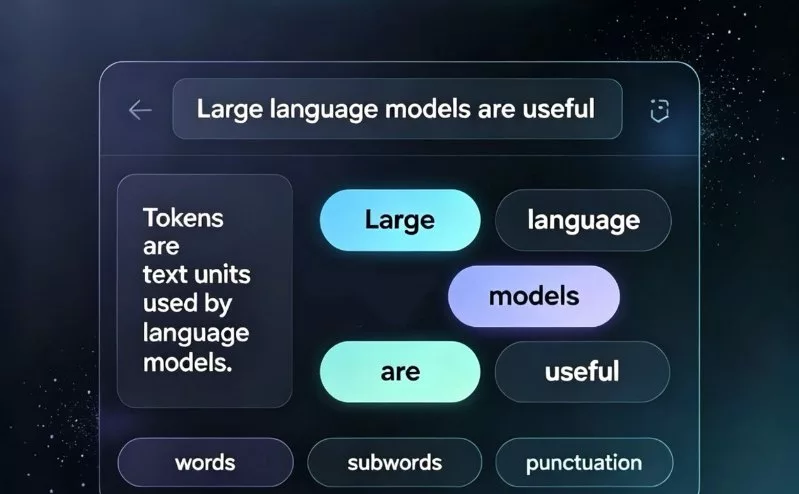
A token is the smallest computational unit used by large AI models to process text, speech and images and is also a globally recognised unit for measuring and billing computing resources.
It serves as the standard international metric for measuring and billing computing usage, often called the ‘new oil’ and core currency of modern digital commerce.
The Token Going Global programme focuses on supporting cross-border e-commerce livestreaming across Africa through end-to-end intelligent content generation.
Driven by Chinese AI architecture, the system manages scriptwriting, translation, voice cloning, and dubbing, allowing a single script to be translated and deployed across multiple languages and markets.
According to official briefings, the setup delivers standardised AI tools to overseas firms, catering to the needs of Kenya’s e-commerce, media, and multilingual content creation industries.
It is envisioned that the collaboration will go a long way to establishing a closed-loop framework for international digital trade.
Overseas companies connect to Xiamen’s AI models over application programming interfaces (APIs), accessing computing power located in a physically isolated zone.
The AI inference operates entirely within a secure, compliant environment, measuring overall usage via token consumption before transmitting translated audio, video, and text back to the client.
Companies settle payments based on actual usage through a flexible pay-as-you-go model.
Xiamen describes it a sustainable commercial model featuring “pay-as-you-use, continuous settlement and rolling payment collection”.
It is hailed as one that could provide compliant, measurable and cost-effective digital solutions for small and medium-sized digital enterprises overseas, including those in Kenya.
This framework is backed by Xiamen’s expanding technological base, which boasts 118 deep-synthesis algorithms, 64 industry-specific AI models, 126 AI agents, and over 3,000P of public computing capacity.
It has brought together more than 500 core AI enterprises, forming an ecosystem covering AI research and development, production, application and global expansion of AI services.
The initial commercial order has been hailed as proof of the viability of the model, offering practical experience to deepen China-Africa digital trade.
By reducing the tech and cost barriers of multilingual content creation, the platform helps smaller businesses scale without buying expensive infrastructure.
For Kenya, as it builds its digital economy, the initiative offers affordable access to Chinese AI power to reach global markets.
The system covers script creation, multilingual translation, voice cloning and multilingual dubbing, enabling ‘one script, multiple languages and distribution across multiple countries’.
The first commercial order has given Xiamen valuable practical experience for further deepening China-Africa digital economic and trade cooperation.
Through the model, Xiamen can help businesses lower technological and cost barriers associated with multilingual content creation and cross-border communications.
This is while supporting the upgrading and development of local digital economies and cross-border industries.
For Kenya, the opportunity could extend across e-commerce, advertising, entertainment, education and other digital services where companies need to communicate with consumers in multiple languages.
The model could allow smaller firms to use advanced AI capabilities according to their actual needs instead of investing heavily in computing infrastructure and specialised systems.

Intelligent Computing Center. Image generated by AI.
Xiamen’s initiative also points to an expanding dimension of China-Africa cooperation, moving beyond hardware and telecommunications infrastructure towards AI-powered digital services and computing resources.
The Xiamen Municipal Bureau of Industry and Information Technology will next organise a special promotional event on Token Going Global.
It is set to conduct a series of regular promotional activities to expand the scope of opening up cross-border digital services.
Meanwhile, the Xiamen Airport Economic Zone will accelerate development of a public service platform for cross-border data.
It is being positioned to provide compliant, efficient and professional full-process digital service support, thereby deepening practical cooperation with African countries in the digital sector.
The arrangement is positioned as contributing to what Xiamen described as the ‘high-quality development of China-Africa digital trade’, the Ethiopia transaction serving as a test case.
For Kenya, the initiative could provide another channel for businesses to tap Chinese AI capacity while expanding access to African and international markets.