
Creators’ earnings are set to take centre stage when the Performing and Audio-Visual Rights Society of Kenya (PAVRISK) holds its Annual General Meeting next Tuesday, September 15.
The meeting is expected to provide members with an update on royalty collections and payments, as the copyright industry moves towards a more digitised system of collecting and distributing earnings from the use of creative works.
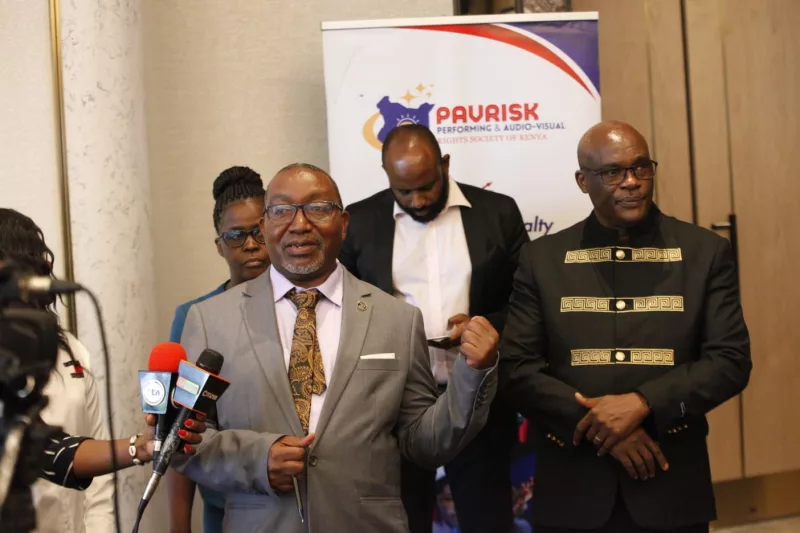
PAVRISK Board Chairman Edwardo Waigwa said the society had completed its migration to the government’s eCitizen platform, which allows users of music and audio-visual works to obtain the Unified Copyright Licence online.
Waigwa said the digital system would strengthen accountability in royalty collection while reducing revenue leakages and improving the efficiency of distributing earnings to copyright holders.
“The new platform will ensure transparency, reduce revenue leakages, streamline collections, and facilitate more efficient distribution of royalties to copyright holders,” Waigwa said.
Members are also expected to receive updates on PAVRISK’s financial performance, royalty collections and distributions, alongside measures being implemented to improve accountability in the management of creators’ earnings.
The AGM comes a year after PAVRISK made its first general royalty distribution following its rebranding in 2025.
The society paid more than Sh24 million to members, representing 70 per cent of collections realised during the 2024/25 financial year.
Waigwa described the payout as a major milestone for the society and rights-holders, saying it demonstrated the impact of investments in governance and collection systems.
“This distribution is a moral and institutional milestone. It proves that investments in systems and governance yield results for rights-holders,” he said.
PAVRISK is now seeking to widen licensing and royalty collection among businesses and institutions that use copyrighted works, including broadcasters, hotels and other hospitality establishments, supermarkets, banks, hospitals and shopping malls.
The society is also exploring real-time media monitoring and analytics to track the use of creative works more accurately and ensure royalties correspond with actual usage, particularly across digital and streaming platforms.
The reforms come as Kenya seeks to improve the administration of copyright in an increasingly digital creative economy, with creators pushing for stronger systems to ensure they are fairly compensated whenever their works are used.
The AGM will therefore offer members an opportunity to oversight the society’s royalty collections and distributions while assessing whether ongoing reforms are translating into better and more transparent returns for creators.






