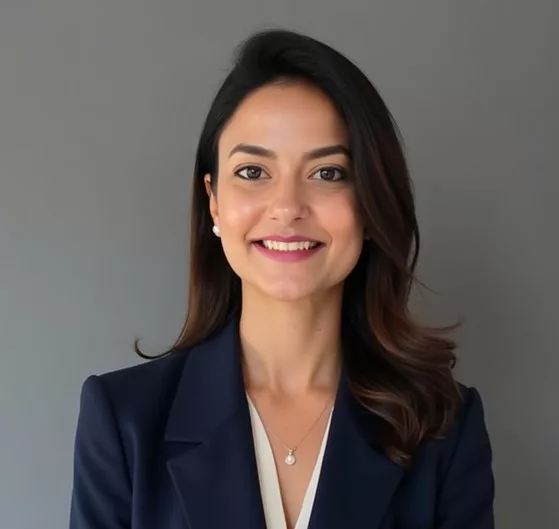
 Chief Executive Officer and Executive Director of Victoria Wealth Management Sital Borkhataria / HANDOUT
In August, Kenyan investors submitted Sh460.4 billion in bids for three infrastructure bonds, against a Sh150 billion target.
This is more than three times what was on offer. It was correctly reported as a sign of abundant liquidity and strong investor confidence.
However, we have to ask ourselves what happens when a growing pool of private wealth becomes increasingly content to earn returns without taking on productive investment risk.
Government securities, particularly infrastructure bonds with their tax advantages, are a rational choice.
They are income, liquidity, and a government counterparty, all wrapped into a single instrument.
A wealth manager is likely to advise a client to hold some, and this behavior is sound. But this is a pattern, aggregated across an entire investing population, that deserves scrutiny.
Kenya does not appear to have a shortage of wealth.
High-net-worth numbers grew sharply in 2026, aided by a shilling that has strengthened meaningfully.
The Treasury put the average rate at roughly KSh129.4 to the dollar in July, against a peak of KSh160.8 in January 2024, and by capital markets that have grown steadily deeper and more liquid.
What Kenya appears to have, instead, is a wealth-allocation gap. There’s a large and growing stock of private capital gravitating toward the safest, most liquid instrument on the shelf, almost by default.
That default is worth naming honestly.
Fixed income is not passive in the pejorative sense; it funds government activity, and infrastructure bonds in particular fund the roads, power, and water systems the economy needs.
But an economy also needs private capital willing to sit further out on the risk curve; in equities, in corporate credit, in the businesses and infrastructure projects that don't come with a government guarantee attached.
If an increasing share of Kenya's growing wealth pool settles permanently into the safest instrument available, the businesses and projects that depend on risk-bearing capital will have to look elsewhere for it, or not get built at all.
This is where the conversation with wealth management clients needs to shift.
The question that dominates most portfolio discussions in Kenya today is some version of "what will give me the best return?" It is a reasonable, but incomplete one.
The question to ask is what role should this capital play in my broader financial life, and where, across the full spectrum of government securities, corporate bonds, listed equities, REITs, private businesses, and increasingly regional or offshore opportunities, can it do more than simply sit and earn?
Fixed income, which will and should remain a core building block of most Kenyan portfolios, should not be the entire portfolio.
There is a meaningful difference between holding government securities because they have weighed the alternatives and chosen a defensive allocation because of a lack of knowledge of what else is available and why it might matter.
That distinction is, in many respects, the real test facing Kenya's wealth management industry over the next few years.
Most firms can source the best-yielding instrument, since most instruments are available across most institutions.
But, the firms that can help clients think past yield toward genuine portfolio construction that balances liquidity against growth, domestic exposure against currency diversification, today's income against a decade-long horizon are future-proofing their clients.
Kenya's capital markets have done real work to widen the menu with new unit trusts, multi-asset and dollar funds, alternative investment vehicles, and a deeper Nairobi Securities Exchange, all of which are more accessible than they were even two years ago.
The infrastructure for a more sophisticated allocation conversation exists.
What remains is the harder, less headline-grabbing work of having that conversation, client by client, so that Kenya's wealth grows and gets put to work.
At Victoria Wealth Management, our own product roadmap is built around exactly that principle, giving clients the full range of onshore and offshore instruments so the allocation decision is theirs to make, not one narrowed by what happens to be easiest to sell.
Kenya isn't short of capital. It needs more of its capital asking harder questions of itself.
The writer is Chief Executive Officer and Executive Director of Victoria Wealth Management Limited, the CMA-licensed investment banking subsidiary of Victoria Commercial Bank PLC