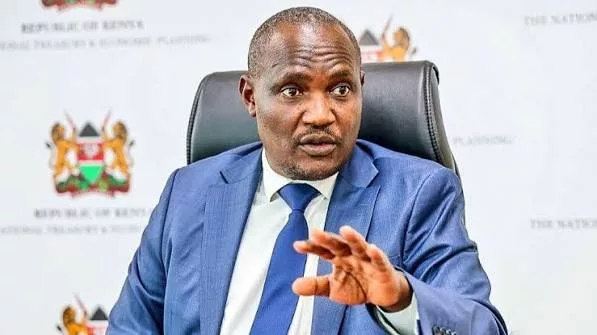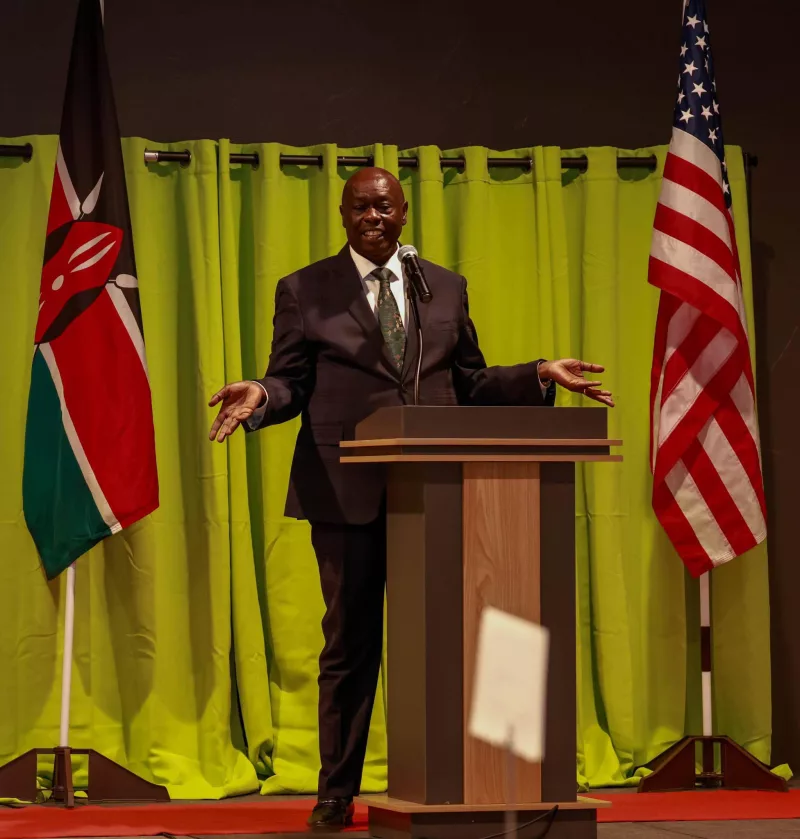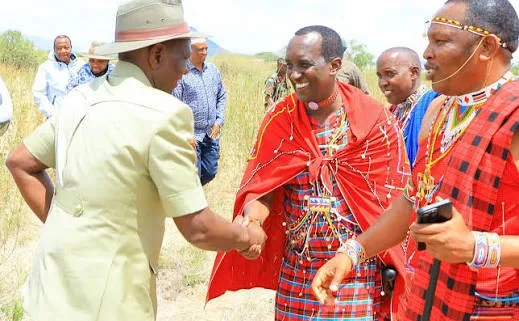
President William Ruto in Samburu /HANDOUT
President William Ruto has declared that the government will no longer allow the exportation of raw materials for processing abroad.
Declaring the move a government policy, the head of state said the government will force investors to add value locally and create jobs for millions of young people.
Ruto said the policy would apply to all minerals, including soda ash, gold and lithium, as his administration moves to overhaul the way Kenya manages its natural resources.
“We have taken a policy decision that we will no longer export raw materials. We are going to process all minerals available in Kenya,” the President said.
He said it was economically for Kenya to export resources, create jobs and generate wealth in other countries while local youths remained unemployed.
He said the government was working with investors to establish refineries in the country, including a planned refinery in Lamu and facilities for processing gold and other minerals.
“We are working with [Nigerian billionaire Aliko] Dangote so that we can have a refinery in Lamu so that we can have refineries of all our minerals in Kenya.”
The President was speaking in South Horr, Samburu county, during a thanksgiving ceremony for Devolution Principal Secretary Michael Lenasalon on Sunday.
Ruto defended his decision to close down Tata Chemicals in Magadi, Kajiado, linking the move to what he termed an exploitative contract.
He said the previous arrangement allowed investors to take minerals out of the country, leaving the country with only a small portion of the value while most processing and wealth creation happened abroad.
“People took away our minerals, leaving us with five per cent and process 95 per cent abroad, and then we go and buy the finished product expensively,” Ruto said.
He said the government would advertise the resource afresh and allow several companies to bid, rather than having one firm dominate exploitation.
“We will advertise afresh. Many companies will bid, four, five or six or 10, so that they can use that mineral to create jobs, add value and create wealth,” he added.
The President also defended his decision to securitise the Road Maintenance Levy Fund to finance construction.
He questioned why the fund, which has existed since 1999, had not previously been used to deliver adequate roads in areas such as Samburu.
“Haven’t the RMLF funds been here since 1999? What was it doing? Until I came and securitised it to build roads in Samburu? Was that money not going elsewhere? What is the role of RLMF? Is it not for building roads?” he said.
On politics, the President said that the 2027 general election will bury and eliminate the politics of tribalism, hatred and insults.
“The way we were united in 2022 and walked together and voted freely, this coming election in 2027 will be the apex of eliminating all politics of insults, tribalism and seclusion,” he said.
The head of state said his deal with former ODM leader Raila Odinga that birthed the broad-based government marked the end of politics of exclusion and tribalism.
Ruto added that his partnership with the former Prime Minister was aimed at uniting the country and ending “the politics of insult and tribalism.”
He said the appointment of Lenasalon as PS demonstrated the benefits of political cooperation across ethnic and regional lines.
“We don’t have a chance for politics of division and tribalism,” he said, adding that Kenyans should elect leaders based on their plans, agenda and vision rather than ethnicity or region.
He directed the provincial administration and village elders in Samburu to enlighten the residents on the importance, saying it was the only way the country would ensure equity and equality.
“A child of a parent here in South Horr and a child in Muthaiga will be equalised if they learn,” Ruto said.
The President said his administration would continue implementing development projects across the country, insisting that equity and equality would remain central to its agenda.
INSTANT ANALYSIS
Ruto’s raw-material pledge marks a significant shift towards resource nationalism and local industrialisation. By insisting on domestic processing, the President is targeting the economic leakage from exporting minerals while importing expensive finished products. However, implementation will determine whether the policy delivers jobs and revenue or scares away investors. His defence of Magadi also signals tougher scrutiny of extractive contracts, with the 2027 political message reinforcing his anti-tribalism agenda.