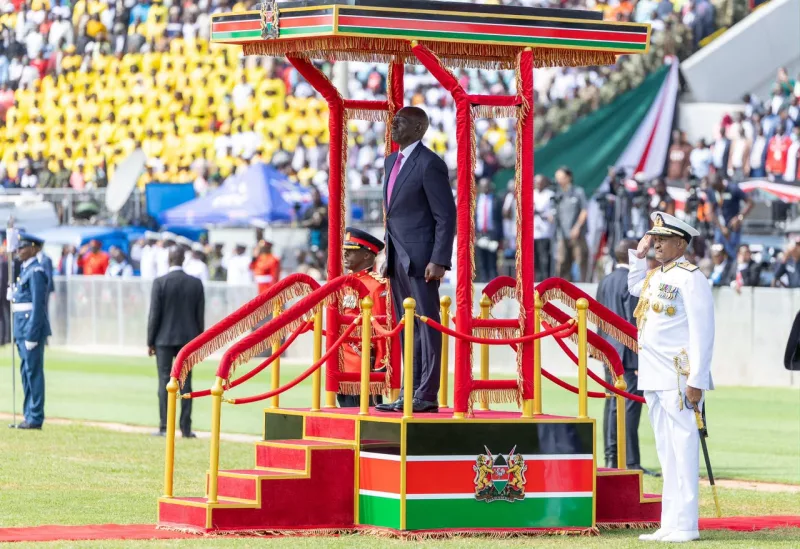
 President William Ruto in Magadi, Kajiado, on September 6, 2026/PCS
President William Ruto has ordered a fresh tender for mineral exploitation in Magadi, Kajiado County, opening the resource to multiple investors and requiring them to process the minerals locally.
Ruto said the move was aimed at ending what he described as nearly a century of exploitative extraction in the area, while ensuring that minerals from Magadi generate jobs, industries and wealth for Kenyans.
The President said the new tender would not be limited to a single company, arguing that the mineral resources in Magadi were sufficient to support several investors.
“We are going to advertise afresh so that other companies, not one company, other companies, five, six, 10 companies, can apply because the resource we have in Magadi is big enough to sustain more than one company,” Ruto said.
He said the new contracts would contain strict conditions requiring investors to undertake value addition in Kenya rather than exporting raw materials for processing abroad.
“This time round the contract is going to be firm on making sure that value addition of our minerals of the resource in Magadi is not going to be done abroad. Value addition is going to be done here in Kenya,” he said.
Ruto specifically cited the establishment of manufacturing plants as part of the Government's plans for the area.
“A glass factory will be done here in Kenya. A chemical factory will be done here in Kenya to hire Kenyan workforce, to use Kenyan resources so that we can grow well and we can create value from the available products,” he said.
The President also announced plans to reduce the amount of land that can be occupied by a mining company in Magadi.
He said no investor would be allowed to occupy the entire 240,000 acres of land associated with the mineral resource.
“No company will occupy 240,000 acres of Kajiado land. They are going to occupy maybe 20, maybe a maximum of 30 per cent. Seventy per cent of that land will come back to the people of Kajiado County,” Ruto said.
The land, he added, could be used for other economic activities and to benefit local communities.
Ruto's remarks came amid criticism from some groups over the Government's decision to end the existing arrangement involving Tata Chemicals at Magadi.
He hit back at his critics, accusing them of using the rule of law to defend what he termed an exploitative arrangement.
“There is no rule of law that sustains extractive, exploitative conduct that undermines the interests of the nation or the interests of the people of Kenya,” he said.
“You cannot use the rule of law to protect criminals and characters who are exploiting our citizens and our country.”
The President said Kenya could not claim to be creating jobs while continuing to export raw materials without processing them locally.
“You cannot say in the same sentence that you want us to continue exporting raw materials and at the same time say that we are creating jobs. If you are exporting raw materials, you can never create any jobs,” he said.
Ruto maintained that ending the existing arrangement was necessary to give Kajiado residents and the wider Kenyan economy a greater share of the benefits from the country's natural resources.
“We have made the right decision to end the exploitative and extractive contract for Tata Chemicals in Magadi, Kajiado County,” he said.
“For nearly 100 years, Kenyans, especially the people of Kajiado, have not received their fair share of the benefits from the minerals extracted from their land. That era is over.”
He said the fresh tender would create greater participation while making local value addition, manufacturing and employment central requirements for successful investors.