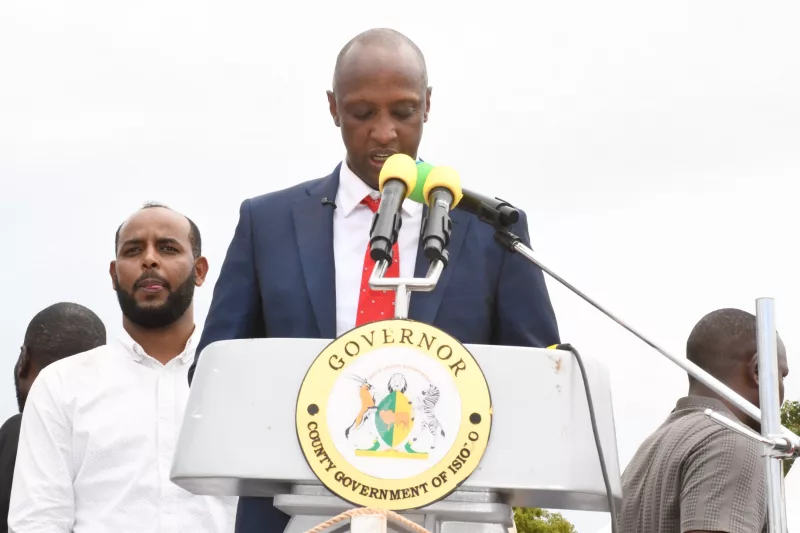
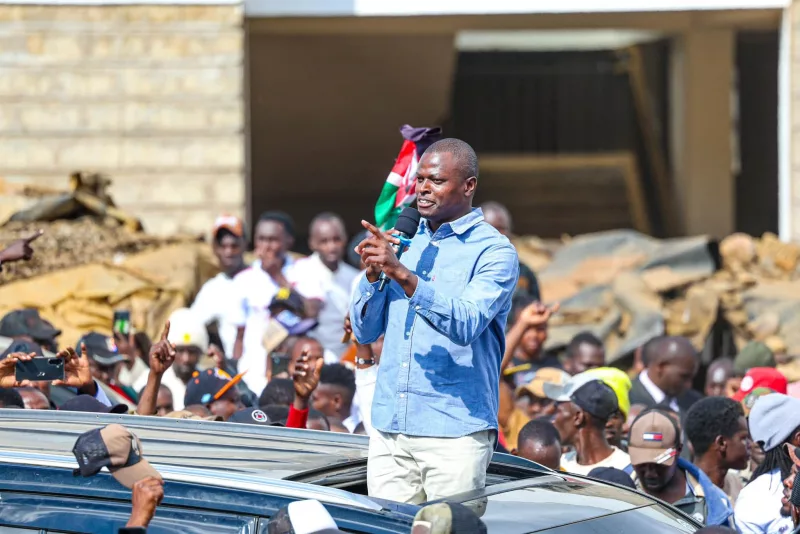
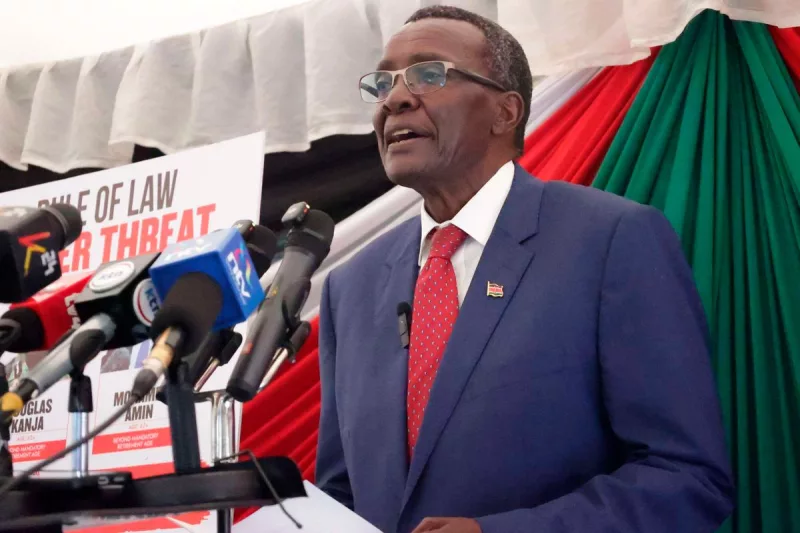
 Former CJ and presidential aspirant David Maraga releases long-awaited report of the task force on police reforms on August 31, 2026.
The National Police Service Taskforce chaired by former Chief Justice David Maraga recommended a major overhaul of police pay, arguing that the remuneration of officers did not adequately reflect the demands, risks and responsibilities of policing.
The taskforce said the review was necessary to enhance professionalism, efficiency and effectiveness in the Service, while addressing concerns over low morale, poor working conditions and the ability of the NPS to retain skilled personnel.
A particularly stark finding in the report was the perception that endemic corruption and bribery within the Service was linked to low salaries and poor living and working conditions of officers.
“There is a perception that low salaries and deplorable living and working conditions of NPS officers are directly linked to the endemic corruption and bribery that afflicts the Service,” the taskforce said.
The report said written and oral submissions received from officers and members of the public had repeatedly raised poor pay and working and living conditions as major concerns.
They were also cited as factors contributing to low morale, depression and other mental health challenges among officers.
In arriving at its recommendations, the taskforce considered submissions from the National Police Service Commission (NPSC), Salaries and Remuneration Commission (SRC), National Treasury, Kenya National Commission on Human Rights, Independent Policing Oversight Authority, the NPS and other institutions.
It also considered the country’s prevailing economic circumstances and the sustainability of any proposed remuneration changes, alongside previous reports and recommendations on police pay.
Why the taskforce rejected the existing pay structure
The taskforce traced the origins of the police salary structure to 1902, when police pay was linked to basic skills considered to be only slightly above those of manual labour.
It said those historical considerations had little relevance to a modern and professional police service.
The taskforce cited an earlier Ransley report which had found that police officers were remunerated at levels comparable to the lowest cadres in the wider public service.
The NPSC proposed a substantial review of police pay, including a 79 per cent increase in the basic salary of constables, from Sh20,390 to Sh36,450.
It also proposed a salary structure distinct from that used in the mainstream Civil Service, arguing that the nature of police work warranted recognition of the Service’s unique responsibilities.
The Inspector General and senior police officers went further, proposing a 180 per cent increase in basic salary, which the taskforce subjected to further evaluation.
The taskforce assessed the remuneration system against the responsibilities of police officers, their pay in comparison with other disciplined services and the wider public service, as well as the range of allowances attached to their jobs.
It noted that NPS officers were generally remunerated within the same broad job-group framework as Civil Service employees despite significant differences in their duties, responsibilities and working conditions.
Police work could not be compared with ordinary Civil Service jobs
After reviewing the scope of police responsibilities, the taskforce said the NPS could not be precisely matched to a single Civil Service job group.
Its reasoning was rooted in the nature of policing itself. The taskforce said officers were responsible for “keeping safe an open democratic society”.
The report painted a picture of a profession in which officers are required to confront situations most members of society would avoid.
They are “asked to go where others fear to tread” and remain “always on call”.
That reality, the taskforce said, had to be reflected in remuneration and benefits.
It therefore recommended a stand-alone salary scale for each police rank to eliminate overlaps in salary increments.
It also recommended separate job groups for inspectors and senior sergeants.
The taskforce further recommended harmonising NPS pay with that of other national security organs, arguing that the existing structure did not adequately reflect the unique challenges, powers and privileges attached to police work.
Among other proposals were a leave allowance equivalent to one month’s basic salary, rank-based house allowances, hardship allowances for officers serving in hardship areas and compensation for specific burdens associated with policing.
These included long and undefined working hours, separation from families, handling dangerous equipment, deprivation of conjugal rights, exposure to hazardous materials and situations, prolonged standing and walking, and strenuous training.
What the proposed salary structure would pay
The taskforce proposed a new remuneration structure covering the different ranks of uniformed police officers, with increments ranging from 40 per cent for lowest ranked officers, with the increase progressively reducing to three per cent at the highest level.
At the lowest level, a constable in Pay Grade 1 (PG1) would earn a basic salary of between Sh29,296 and Sh57,700, compared with the existing range of Sh20,390 to Sh38,975.
A corporal in PG2 would earn between Sh36,040 and Sh61,588, up from the existing Sh26,500 to Sh50,330.
For sergeants in PG3, the proposed salary would range from Sh48,114 to Sh67,018, compared with Sh36,450 to Sh53,570 under the existing structure.
Senior sergeants in PG4 would earn between Sh51,546 and Sh71,964, against the existing range of Sh40,270 to Sh58,820.
The proposed salary for inspectors in PG5 would range from Sh53,246 to Sh74,887, compared with Sh42,940 to Sh62,750.
Chief inspectors in PG6 would earn between Sh59,742 and Sh82,880, up from the existing Sh47,290 to Sh68,720.
For assistant superintendents in PG7, the proposed basic salary would range from Sh65,103 to Sh100,503, compared with Sh53,570 to Sh81,120.
Superintendents in PG8 would receive between Sh101,711 and Sh138,115, compared with the existing Sh57,060 to Sh83,890.
Senior superintendents in PG9 would earn between Sh111,906 and Sh148,538, up from Sh68,720 to Sh98,380.
For commissioners in PG10, the proposed salary range would be Sh112,617 to Sh181,531, compared with Sh103,360 to Sh144,090.
Assistant Inspector Generals in PG11 would earn between Sh163,535 and Sh262,020, against the existing Sh151,550 to Sh197,830.
At PG12, senior assistant Inspector Generals would have a proposed basic salary of between Sh204,637 and Sh345,850, compared with the existing Sh189,640 to Sh289,090.
The changes were proposed for implementation in three phases beginning July 1, 2024.
Allowances would also change
The proposed structure would supplement basic salaries with revised allowances.
The taskforce recommended a common national house allowance structure based on rank rather than regional rates and proposed discontinuing the existing housing supplementation allowance.
House allowance would range from Sh14,500 a month for a constable to Sh70,000 for officers in PG12.
Commuter allowance would range from Sh3,250 a month for constables to Sh24,500 for PG12 officers.
Police allowance would range from Sh9,000 for officers in the lower grades to Sh18,000 for PG12.
The taskforce recommended that the SRC harmonise and standardise monthly allowances and review their rates periodically.
Where policing duties created additional burdens, new allowances could be introduced, the report said.
Hardship allowances were proposed for officers serving in difficult operational areas and formed-up units, while other compensatory payments were recommended for the specific demands associated with police work.
The taskforce also recommended that non-uniformed employees of the NPS have their salary scales harmonised with those of uniformed officers.
The remuneration recommendations were presented as part of a broader effort to professionalise the National Police Service rather than simply as a salary increase.
The taskforce said better pay had to correspond with the realities of police work, including the risks officers face, the hours they work, the disruption to family life and the responsibilities entrusted to them.
The report also linked remuneration to the ability of the Service to motivate and retain personnel and improve its effectiveness.
The taskforce’s recommendations were submitted to President William Ruto on October 16, 2023.
However, their contents became public on August 31, 2026, when Maraga released the report.
The recommendations offer a detailed picture of what the taskforce believed police officers should earn and the reasoning behind its proposed shift from the existing remuneration structure.
The central point of the proposals is that a modern police service performing demanding national security and public protection functions should no longer be remunerated based on a structure formulated more than a century ago.