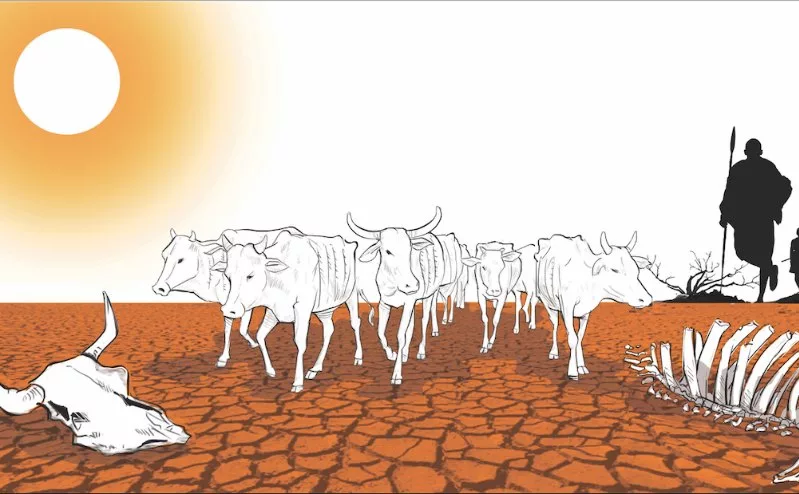
Kenya’s current milk shortage is a reminder of a problem the dairy sector has faced for years: we have not yet learned how to effectively manage the seasonal nature of milk production.
Reports indicate that formal milk deliveries to processors fell by 3.7 per cent, from 84.4 million litres in June to 81.3 million litres in July 2026, with dry and cold conditions affecting pasture and fodder availability.
Yet the irony is that Kenya periodically faces the opposite problem. During periods of good rainfall and abundant fodder, milk production can exceed what processors and the market can immediately absorb.
Historical assessments of Kenya's dairy sector show a recurring pattern of oversupply during wet seasons and undersupply during dry seasons, with milk powder providing an important mechanism for balancing the two periods.
The question, therefore, should not simply be how we increase milk production. It should be how we manage milk production throughout the year.
First, Kenya needs greater investment in milk powder and other shelf-stable dairy products during periods of peak production. Instead of allowing surplus milk to depress farm-gate prices or go to waste, processors should have adequate capacity to convert excess fresh milk into powder. This creates a strategic reserve that can be reconstituted when production falls.
We need to strengthen cold-chain infrastructure and milk aggregation. Investment in cooling centres, efficient collection systems, storage and transport can reduce post-harvest losses and enable processors to collect milk from more producers during high-production periods. The Kenya Dairy Board has already identified milk coolers as part of efforts to strengthen the resilience of the dairy value chain.
Farmers need stronger incentives to invest in fodder conservation. Silage, hay and other preserved feeds should become a normal part of dairy farming rather than an emergency response to drought. Extension services should place greater emphasis on fodder budgeting, water harvesting and climate-smart dairy production.
There is also a cultural issue that we must confront: our perception of milk powder. For many Kenyan consumers, fresh milk is automatically considered superior, while powdered milk is sometimes viewed as a second-class alternative. We need to change this perception.
Properly processed milk powder is a safe, convenient and valuable dairy product. Rather than viewing it as a substitute only during shortages, consumers should recognise its role in ensuring year-round milk availability.
The current shortage should therefore be treated not merely as a crisis, but as a lesson in food-system resilience. When the rains return and milk production rises, Kenya must resist the temptation to simply celebrate abundance. We should use that abundance to prepare for the next dry season.
Our goal should be simple: when farmers have too much milk, Kenya should save it; when farmers have too little, Kenya should have a reserve to fall back on. That is how we can move from reacting to milk shortages to building a truly resilient dairy sector.