Evans Njoroge was a student leader at Meru University if Science and Technology in 2018.
On February 27 that year, he was forced to run for his life after a clash with police.
The students had staged a demonstration to protest against fee hikes. The protest was organised by Njoroge being the secretary general of the Student Council. He was a fourth year student.
As an armed Njoroge ran away, he fell to the ground. He had been shot dead.
For his sisters, Miriam and Monicah, the news that their brother had been killed by police marked the beginning of a painful journey through courtrooms and public hearings in search of justice.
Six years later, the officer accused of his murder remains free on bail.
Njoroge had accused the university’s vice-chancellor of failing to honour a pledge to reduce fees by Sh8,500.
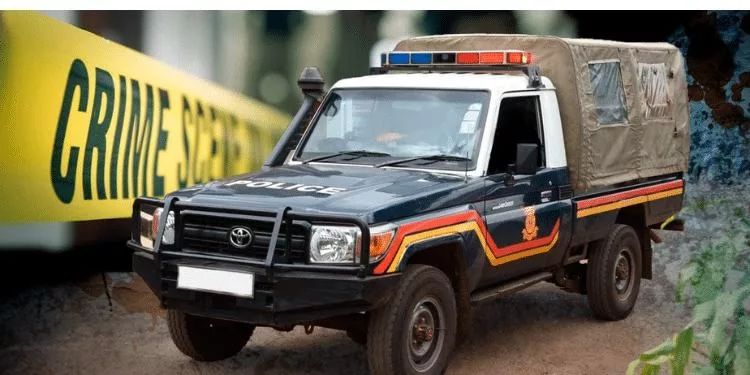
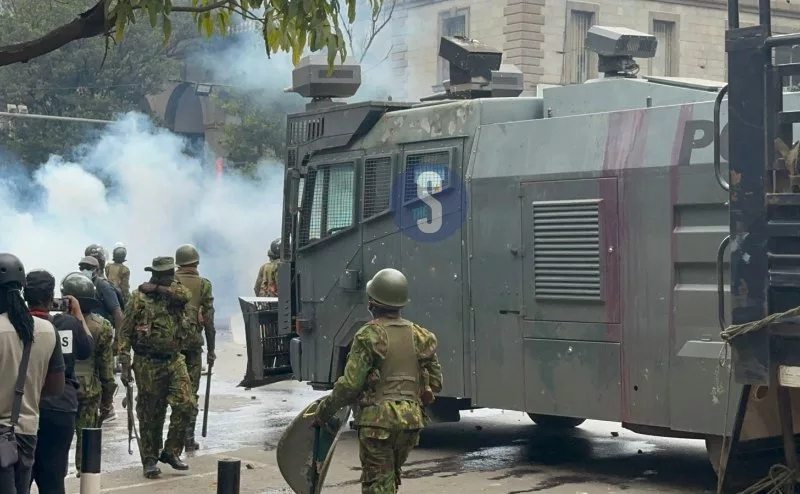
That afternoon, students barricaded the Meru-Maua road, prompting police deployment. The Officer Commanding Nchiru police station split his officers into two groups, with one led by the Tigania West sub-county Administration Police commandant.
Some officers carried rubber bullets. Constable Leakey Maina, however, was carrying a gun loaded with 25 bullets.
Witnesses told the court that a police vehicle pursued fleeing students. Njoroge ran into a farm at Kabebe village in Tigania West.
He was shot at close range, the gun pressed against his head.
A post-mortem examination found that the bullet entered the back of his head and exited through his forehead.
His body remained in the potato farm until about 5pm, when police overpowered protesting students and carried it away.
Following an investigation by the Independent Policing Oversight Authority, the Director of Public Prosecutions charged Maina with murder.
On July 26, 2018, the officer, who was attached to Miathene AP camp, pleaded not guilty before the Meru High Court and was released on Sh200,000 cash bail.
The case remains unresolved.
In August 2024, the Meru High Court visited the crime scene for the second time, six years after Njoroge’s killing.
For his family, the wait for justice has stretched far beyond the day they buried him.
Their father, Peter Gathuri, had expected to attend his son’s graduation later that year. Instead, he found himself attending court hearings and watching the accused plead not guilty as the case began.
Missing Voices, a coalition of civil society organisations says 157 people were killed by police in Kenya in 2020, while another 10 cases involved enforced disappearances. The figure for 2019 was 144.
The government does not keep a formal record of police killings and enforced disappearances.
Veteran activist Irungu Houghton writes in Dialogue and Dissent that the Njoroge family “reminds us that without vigilance, even murders by uniformed officers can evaporate from our public conscience”.
Yet the family’s persistence has ensured that Evans’ death did not simply disappear into the statistics.
The prosecution of Maina remains a rare instance of a police officer facing murder charges over the killing of a civilian, even as the case continues to move slowly through the courts.
Miriam and Monicah have carried their grief into courtrooms and press conferences, keeping their brother’s name alive and demanding accountability.
Their wait is now a measure of how far Kenya has travelled in confronting police brutality and how much further it must go.