Cancer control advocates have come to the defence of Homa Bay Governor Gladys Wanga after she faced criticism online for publicly disclosing that she has lived with cancer for 12 years.
The Kenyan Network of Cancer Organizations (KENCO) said Wanga should be supported rather than criticised for speaking openly about a deeply personal experience.
“Cancer is not merely a medical diagnosis; it affects individuals, families, livelihoods and communities, often bringing significant emotional, social and financial challenges. When leaders, survivors and people affected by cancer choose to share their experiences, they help break the silence, challenge stigma and give hope to countless others who may be walking a similar journey quietly,” KENCO said in a statement.
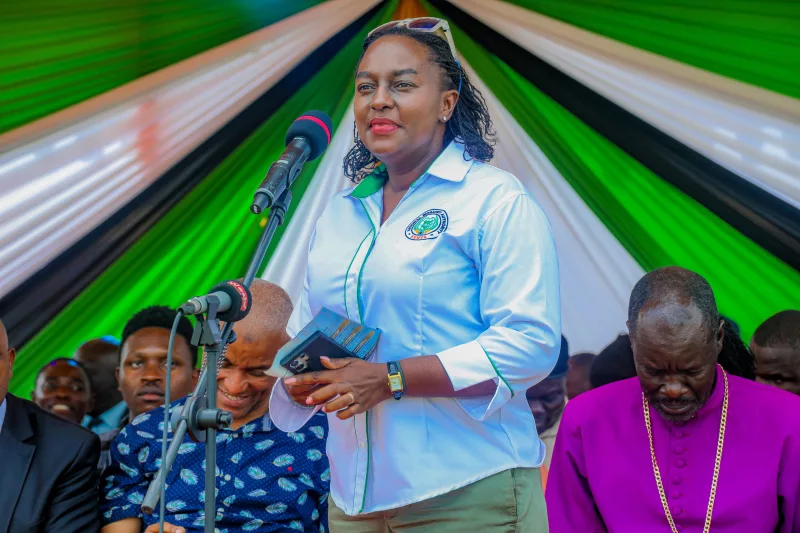
The organisation was responding to a social media backlash after Wanga spoke about her cancer experience during the commissioning of the Phoebe Asiyo Oncology Centre at Homa Bay County Teaching and Referral Hospital on August 27.
Some Kenyans questioned why she had chosen to reveal her illness at an event involving a major county health project, while others accused her of using the diagnosis to gain political sympathy.
The criticism included demands for evidence of her treatment and claims that her disclosure was politically motivated.
But KENCO said the focus should instead be on what Wanga’s experience means for Kenyans living with cancer.
“Governor Wanga’s story is a powerful reminder that behind every cancer statistic is a person, a family and a story. To everyone currently undergoing diagnosis or treatment, to survivors living beyond cancer, to caregivers standing beside their loved ones, and to families remembering those they have lost, KENCO says: you are not alone,” the organisation said.
KENCO is a national network that brings together cancer organisations to promote cancer prevention, treatment, advocacy and support for patients and survivors.
Wanga said she was diagnosed when she was a newly elected MP and recalled the emotional reaction from her family.
“I saw my family members, other people crying everywhere, but I didn’t cry because Senator Beth Mugo told me, it is your mind that will kill you, not the cancer,” she said.
The governor said she remained grateful for the treatment she received.
“12 years later, I am here. I am not going anywhere,” she said.
Wanga’s disclosure was not the first time she had spoken publicly about cancer.
In 2019, while serving as Homa Bay woman representative, she revealed that she had been diagnosed with colorectal cancer. At the time, she said the disease had gone undetected for years.
Her experience has now placed renewed attention on the challenges facing cancer patients in Kenya, particularly the importance of early detection.
The National Cancer Institute lists breast and cervical cancer among the leading cancers affecting Kenyan women, with about 6,799 new breast cancer cases and 3,107 deaths estimated each year.
Survival varies greatly depending on the type of cancer and how early it is detected.
A Kenyan study of patients with metastatic breast cancer, for example, found a five-year survival rate of only 10.7 per cent.
The difference can be much greater when cancer is detected before it has spread.
Kenya’s cancer treatment guidelines give a five-year survival rate of up to 95 to 98 per cent for some patients with stage 1A cervical cancer who receive timely and appropriate treatment.
The figures underline why cancer advocates continue to push for screening, early diagnosis and treatment closer to where people live.
KENCO said Wanga’s experience should strengthen efforts to make cancer care available to ordinary Kenyans.
“We call upon national and county governments, healthcare institutions, civil society, the private sector, development partners and communities to continue working together to make equitable, affordable and comprehensive cancer care a reality for every Kenyan,” the organisation said.
The Phoebe Asiyo Oncology Centre is part of Homa Bay’s effort to bring specialised cancer services closer to patients in the county and neighbouring areas.
For cancer advocates, the controversy surrounding Wanga’s disclosure risks distracting from a bigger challenge: many Kenyans still face delays in discovering they have cancer and difficulties accessing treatment after diagnosis.
Wanga’s story, they argue, should therefore be viewed not simply as a political disclosure, but as an opportunity to confront stigma and keep the focus on early detection, treatment and the lived realities of people battling cancer.