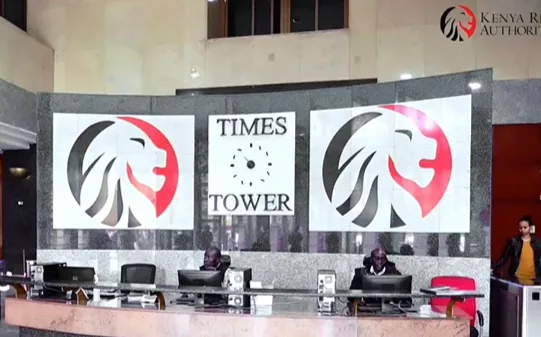
 The Kenya Revenue Authority (KRA) offices at Times Towers in Nairobi/FILE
State suppliers are set to gain a more predictable payment process while facing tighter tax compliance scrutiny following integration of the electronic Tax Invoice Management System (eTIMS) with the Integrated Financial Management Information System (IFMIS).
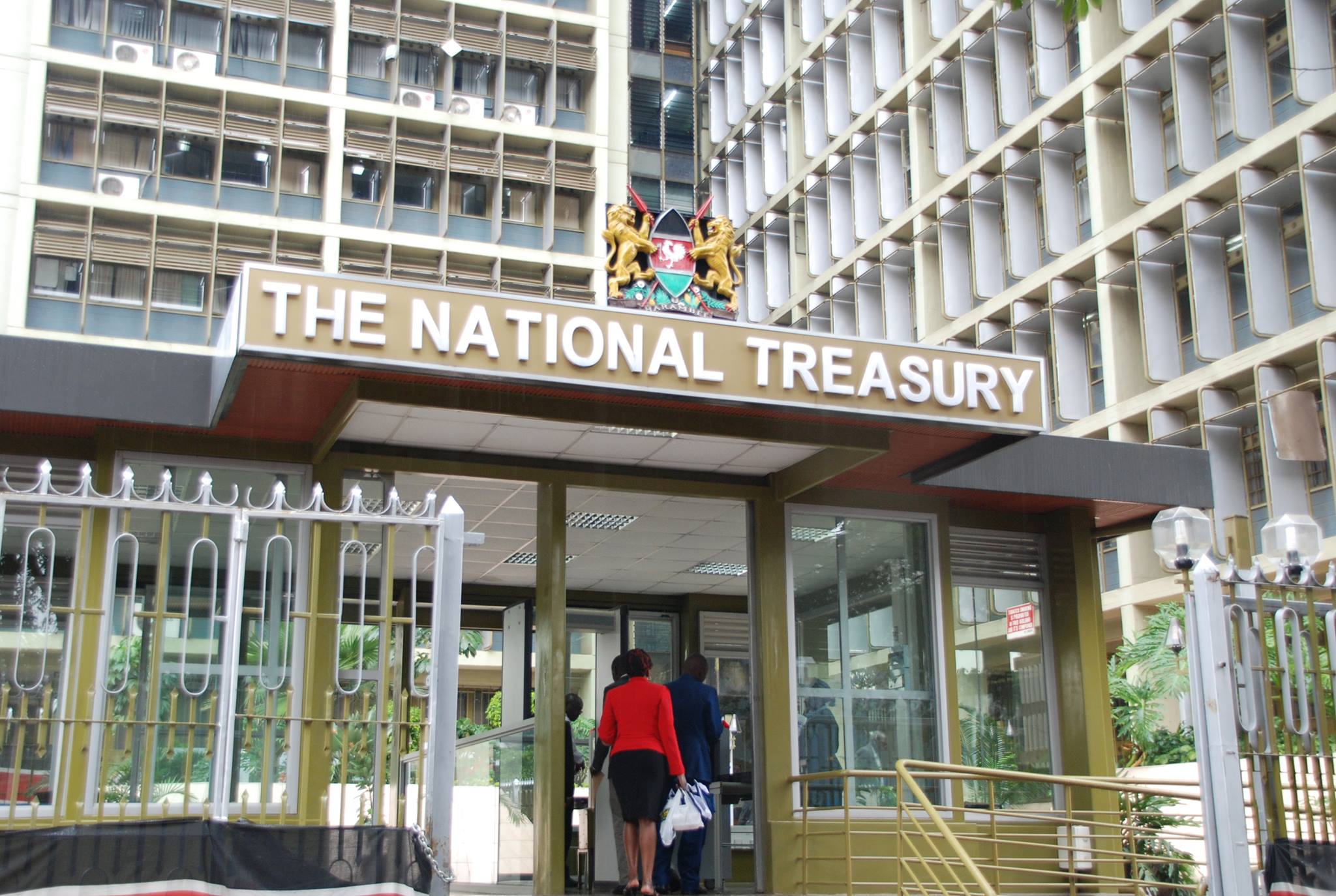
The move announced by the Kenya Revenue Authority (KRA) and the National Treasury creates an automated link between a supplier’s tax invoice and the claim submitted to government for payment.
Suppliers must now generate valid eTIMS invoices before submitting claims through IFMIS, with invoice details required to correspond with records held by KRA.
“The move could address several long-standing problems at once: delayed government payments, weak tax compliance and loopholes in public procurement,’’ KRA told journalists on Monday.
“For businesses, the immediate attraction is the prospect of a cleaner payment trail.”
Government suppliers have for years complained that delayed settlement of public-sector bills strains working capital, forcing otherwise viable businesses to borrow to finance contracts already completed.
The scale of the problem remains substantial.
The National Treasury’s 2026 Budget Statement says the Pending Bills Verification Committee reviewed 91,911 claims valued at Sh637.6 billion.
Of these, 29,885 claims worth Sh235.6 billion were recommended for settlement.
After Sh80.3 billion was settled through securitisation in the roads sector, Sh155.3 billion remained outstanding for other sectors.
The problem is even more pronounced at county level. Treasury data shows that county governments had Sh183 billion in pending bills as at June 30, 2025, including Sh130.8 billion in recurrent bills and Sh52.2 billion in development bills.
Nairobi accounted for Sh86.8 billion, or 47 per cent of the county total. More worrying, Sh85.4 billion of the county bills were more than three years old.
“The new digital link will not, by itself, eliminate the underlying fiscal constraints that cause delayed payments. But it could reduce disputes over the authenticity, value and tax status of invoices by creating a common electronic record before payment is authorised.”
The second gain is tax compliance.
Kenya continues to face a particularly difficult compliance challenge among small and informal businesses.
World Bank research notes that the country has about 1.5 million small businesses, but fewer than 30,000 are registered with the revenue authority and only about half of those registered file taxes regularly.
The World Bank has separately worked with KRA on the problem of low tax compliance among micro, small and medium enterprises, including research involving more than 1,300 formal and informal businesses.
The eTIMS-IFMIS connection therefore gives KRA a particularly valuable source of transaction data: businesses seeking government money will have to leave a verifiable electronic tax trail.
It also comes as KRA tightens the wider e-invoicing regime.
From the 2026 year of income, the authority says declared business income and expenses are required to be supported by valid electronic tax invoices generated and transmitted through eTIMS/TIMS.
It is also expected to safeguard procurement integrity, which remains one of the biggest corruption vulnerabilities in Kenya.
It is estimated that 60 per cent of Sh600 billion lost to corruption in Kenya annually is linked to procurement fraud.
The government has already been moving toward deeper digitisation of procurement.
Treasury’s electronic government procurement system is designed to integrate with KRA, IFMIS and other government databases to improve verification and reduce fraud.
The latest eTIMS-IFMIS integration therefore extends that digital architecture into the final stages of procurement—where an approved contract becomes an invoice and eventually a payment.
Governance experts, however, insist that its success will depend on what happens beyond the technology.
“Digital systems can flag mismatched invoices, but they cannot independently prevent collusion in tender awards, inflated contract prices or politically connected firms from winning contracts.’’ Tom Ambasa from Africa Watch told the Star.