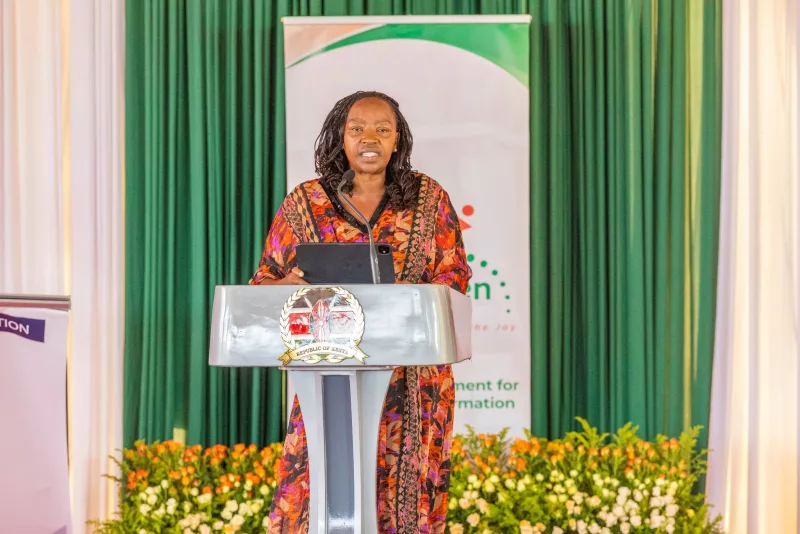
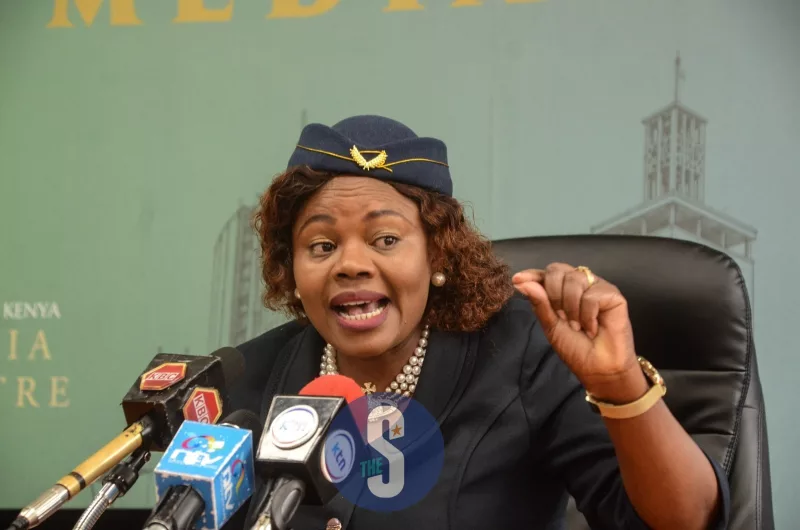
 Githunguri MP Gathoni Wamuchomba addressing journalists at Parliament Media Centre on August 31, 2026. DOUGLAS OKIDDY
Githunguri MP Gathoni Wamuchomba has called for national unity and an end to what she termed growing attempts to balkanise Kenya along ethnic lines.
She regretted that some political leaders are turning cosmopolitan regions into tribal enclaves.
Wamuchomba said leaders have a responsibility to protect the country’s unity and peace, arguing that Kenya’s diversity should be treated as a source of strength rather than used to divide communities.
“As leaders entrusted with the future of our great nation, we bear a sacred responsibility to unite our people, safeguard our peace, and build a prosperous Kenya for generations to come,” Wamuchomba said in a statement.
The MP expressed concern over what she described as a worrying trend of political mobilisation aimed at dividing the country into ethnic territories.
“Lately, we have witnessed a worrying trend of political mobilisation aimed at balkanising our country into ethnic enclaves,” she said.
“I stand today to firmly and unequivocally state that Kenya will not go backward.”
Wamuchomba singled out the Rift Valley, particularly Uasin Gishu County, as an example of Kenya’s cosmopolitan character, saying the region has for years been home to people from different ethnic and cultural backgrounds.
“The Rift Valley region is the heartbeat of our nation's diversity. Uasin Gishu is a cosmopolitan home to millions of Kenyans from every tribe, culture, and walk of life,” she said.
“Our strength lies in this diversity, not in isolation.”
She warned politicians against attempting to draw ethnic boundaries across counties, saying such efforts would undermine national development and cohesion.
“Anyone seeking to draw tribal lines across our counties is an enemy of progress,” Wamuchomba said.
The legislator said Kenya must reject ethnic balkanisation on three key fronts, beginning with national unity.
She said political parties and leaders should not seek to “pocket voters into tribal groupings”, insisting that Kenya remains one democratic nation despite its ethnic and regional diversity.
Wamuchomba also called for a shift towards issue-based politics, saying political competition should focus on the problems affecting Kenyans rather than ethnic calculations.
She cited youth unemployment, economic growth and development as national challenges that affect Kenyans across ethnic and regional lines.
“The challenges facing our youth, unemployment, economic growth, and development-do not have a tribe,” she said.
“Our politics must be defined by ideas, manifestos, and track records, not by ethnic math.”
The MP further urged political leaders to promote peaceful coexistence, particularly in areas where different communities live and work together.
She cautioned leaders against inflammatory rhetoric and the formation of exclusive ethnic political groupings that could threaten cohesion in cosmopolitan counties.