For centuries, Kaya forests along Kenya’s Coast have been sacred sanctuaries where the Mijikenda people prayed, held ceremonies, settled disputes and preserved traditions passed down through generations.
Today, many of these ancient forests are fighting for survival.
From Kwale to Kilifi, the woodlands face growing threats from illegal logging, charcoal burning, land grabbing and what communities describe as political interference.
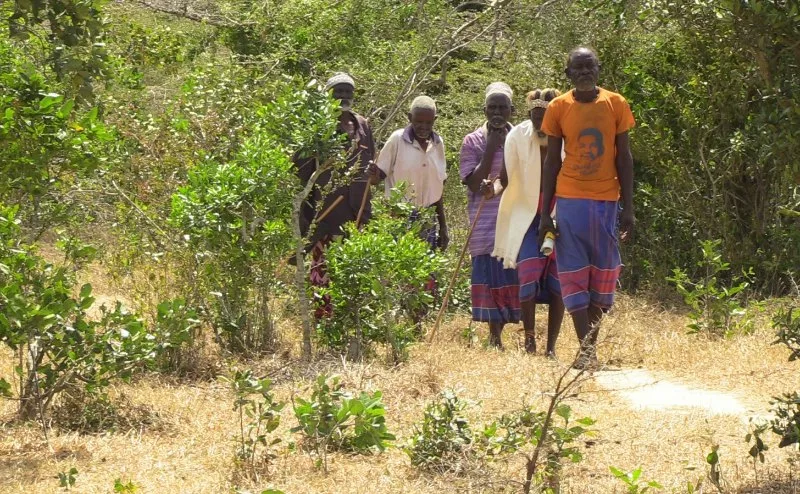
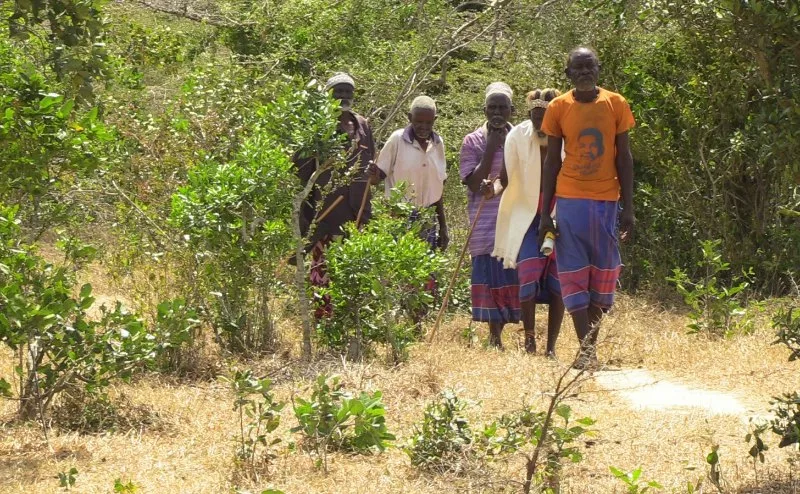
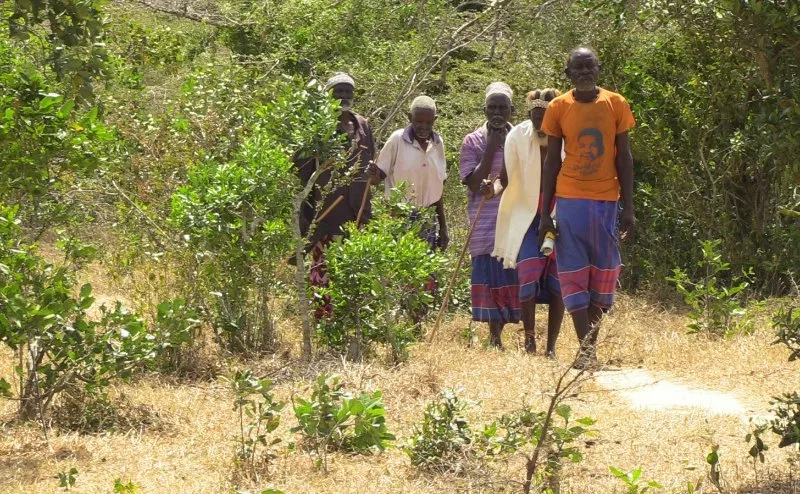
In Kwale, Kaya elders say one of their biggest challenges is that most of the forests do not have title deeds.
They argue the lack of secure legal ownership has created room for encroachers to exploit unclear boundaries, grab land and cut indigenous trees.
Kwale County Kaya Elders secretary Hassan Randani says communities entrusted with protecting the forests have little legal power when confronted by land speculators.
“Our Kayas continue to be destroyed because they do not have title deeds. This is contributing to climate change,” he says.
Randani says some people also question the authority of Kaya elders, arguing they have no legal mandate to protect the forests despite being their traditional custodians for generations.
Without secure ownership, he warns, the forests remain vulnerable to destruction, threatening biodiversity, water catchment areas and local climate patterns.
“The weather is becoming unpredictable and we are witnessing the loss of values that our communities learned from these forests,” Randani says.
For the elders, the destruction goes beyond environmental damage. They fear the disappearance of the forests is eroding cultural values, weakening traditional systems of mentorship and disconnecting young people from their heritage.
Scattered across Kwale, Kilifi, and other coastal counties, the Kaya forests are more than stands of indigenous trees.
They are sacred spaces where Mijikenda communities historically held ceremonies, buried ancestors and preserved oral history.
They are also biodiversity hotspots, supporting rare plant species, birds, insects and wildlife, while helping regulate local temperatures, protect soils from erosion and recharge underground water sources.
Jamii Action Centre representative Wakili Mwatondo says Kaya elders face challenges because they are not formally recognised as the first line of response during forest emergencies.
He says incidents must first be reported through the National Museums of Kenya, which manages Kaya heritage sites, before reaching the Kenya Forest Service.
“The elders cannot directly alert KFS during emergencies. That delays response when illegal activities are taking place,” Mwatondo says.
Through the European Union-funded Kaya Zetu, Rasilimali Zetu project, implemented by JAC and WeWorld, communities are working to bridge the gap by bringing together Kaya elders, government agencies and local communities to strengthen climate resilience and community ownership.
“We want everyone responsible for these forests sitting at the same table so we can find lasting solutions,” Mwatondo says.
He is calling for the immediate demarcation of Kaya boundaries and the issuance of title deeds to prevent further encroachment.
Kwale county acting director of environment Seif Mohamed acknowledges that conservation efforts have suffered from poor coordination among institutions involved in climate and environmental projects.
“We've had coordination challenges but we are now working towards better collaboration,” he says.
More than 100 kilometres away in Kilifi county, Kaya Fungo Giriama presents another troubling picture.
Two weeks ago, the 500-acre sacred forest in Kaloleni subcounty became the centre of accusations over who is responsible for its destruction.
The forest, regarded as the spiritual home of the Giriama community, has survived generations of change. But elders now say chainsaws are replacing sacred chants.
Illegal tree cutting has become so widespread that some community members claim large sections of the forest have disappeared.
Former councillor and Kaya member Fernand Nyale believes the destruction is organised.
He accused individuals posing as Kaya elders of working with influential political and wealthy interests to facilitate illegal logging.
“We've decided to tell the world that this destruction is being spearheaded by brokers masquerading as Kaya elders,” Nyale says.
He estimates that nearly two-thirds of the sacred forest has already been degraded.
But not everyone agrees with his account.
Another Kaya leader, Nguma Charo, dismisses claims that brokers have infiltrated the Kaya institution, instead blaming poverty and unemployment among young people living around the forest.
“We don't have brokers in the Kaya. The problem is that some jobless youths are taking advantage of the vast forest to cut trees illegally,” Charo says.
Chairman of the Kaya Fungo Giriama elders Katana Yaa insists the community remains united despite the disputes.
He says elders have turned to traditional spiritual practices and ancestral sacrifices in an effort to restore harmony and protect the sacred site.
“We don't have war or divisions among us,” Yaa says.
Behind the conflict lies a difficult reality. Communities surrounding many Kaya forests face unemployment, making illegal logging and charcoal burning attractive sources of income.
For the Mijikenda, however, the stakes are higher. Protecting the Kayas means preserving not only trees and wildlife, but sacred spaces that carry the memory, identity, and traditions of generations.
![Jomvu DCC Dolphine Okondo [3rd L, front row], MP Badi Twalib and DRC honorary consul in Mombasa Kambale Mukokoma [with golden Ruto bust] in Twalib’s Jomvu office on Monday / BRIAN OTIENO](https://cdn.radioafrica.digital/image/2026/09/3c409c2f-a473-4130-87a4-63684af01d02.webp)

![Muhuri’s Francis Auma [R] and Fatima Jeilan [pink buibui], mother of Musa Awes, 23 [in poster] who was taken on April 19 in Barsheba, Mombasa by unknown people, never to be seen again, address the press on July 29 / BRIAN OTIENO](https://cdn.radioafrica.digital/image/2026/08/dae6b716-2043-4494-89b6-b38dafab3e6a.webp)