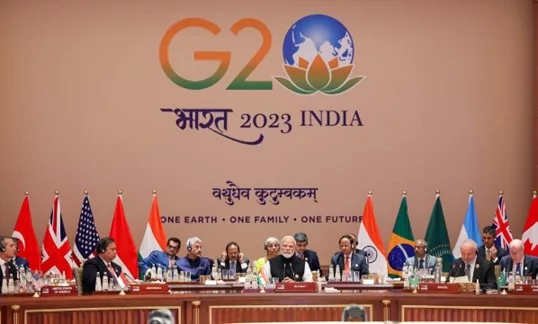
Two trade blocs, an ocean apart, have spent the past two years doing something unusual: writing women and youth explicitly into the legal architecture of continental and regional trade. The African Continental Free Trade Area has its Protocol on Women and Youth in Trade, adopted in 2024 and now moving through ratification across the continent.
The Caribbean has SheTrades Caribbean, the Caribbean Development Bank's partnership with the International Trade Centre. Both exist because the evidence was too consistent to ignore: when women trade, economies diversify, household income stabilises, and growth becomes more durable. The policy case has essentially been won. What remains unresolved is whether the women these instruments were written for are actually positioned to use them.
Kenya is a useful place to see the gap up close because Kenya is further along than most. The country is actively working through ratification of the AfCFTA's Phase II and III protocols, including Women and Youth in Trade, and a National Assembly workshop earlier this year, held jointly with the State Department for Trade, placed the protocol squarely on the legislative agenda.
That is genuine progress. But a Kenya country study published in April, examining the protocol through a gendered and intersectional lens, found what it called an implementation-reality gap: high-level commitment on paper and, on the ground, the same old barriers — limited access to finance, thin representation in trade policymaking, and a digital divide that keeps women traders disconnected from the information systems the protocol assumes they can reach.
This is not a Kenya-specific failure. It is what happens whenever a policy instrument is designed at the level of government and expected to land, fully formed, at the level of an individual trader's daily decisions. The protocol tells a woman running a cross-border textile business that discrimination should be eliminated and preferential access exists. It does not, on its own, give her the negotiating confidence, financial literacy, or professional network to act on that access. That second layer is not a legal problem. It is a leadership development problem.
The Caribbean side of this story is instructive precisely because it has started addressing that second layer directly. The CDB's SheTrades Caribbean Grow and Go grants — $420,000 distributed last year across 20 women-led businesses from Barbados to Suriname — were never just capital transfers. Every awardee entered a structured six-month capacity-building programme alongside the grant: a tailored development plan, mentoring and market-entry support.
Caribbean Export's GRIT project, working with women entrepreneurs across six territories, follows the same logic: grants paired deliberately with training rather than handed out alone. The region seems to have absorbed a lesson Africa's protocol architects are only now confronting: access without capability is a door nobody walks through.
There is also a demand signal worth naming. Early data from ACCA's 2026 Global Talent Trends survey found that 66 per cent of Caribbean women in finance and accountancy now aspire to entrepreneurship — trailing only Africa's 84 per cent, and well above the global average of 48 per cent.
The ambition is not the constraint. What both regions lack is not more women who want to lead trade-facing businesses. It is a pipeline that converts stated ambition and legal entitlement into functioning leadership.
The opportunity in front of both regions is to stop treating this as two separate stories. An AfCFTA-ratifying Kenya and a SheTrades-equipped Caribbean are, structurally, working the same problem from opposite sides of the Atlantic.
A formal exchange — Caribbean capacity-building models informing AfCFTA implementation and African trade networks opening to SheTrades-trained entrepreneurs — would do more for both regions' women traders than either bloc's protocol can do alone.
The legislation has caught up with what women in trade have always known about their own value. The next task, and the harder one, is building the leaders who can act on it.
Founder, The Elevation Coach | Founder & Group CEO, The Africa Guide