Amnesty International Kenya has called on the government to take concrete action to end enforced disappearances, establish the whereabouts of missing persons, hold those responsible to account and provide reparations to victims and their families.
The call comes as Kenya marks the International Day of the Victims of Enforced Disappearances, observed annually on August 30.
Amnesty said the government must move beyond acknowledging past human rights violations and take steps to address cases of enforced disappearance.
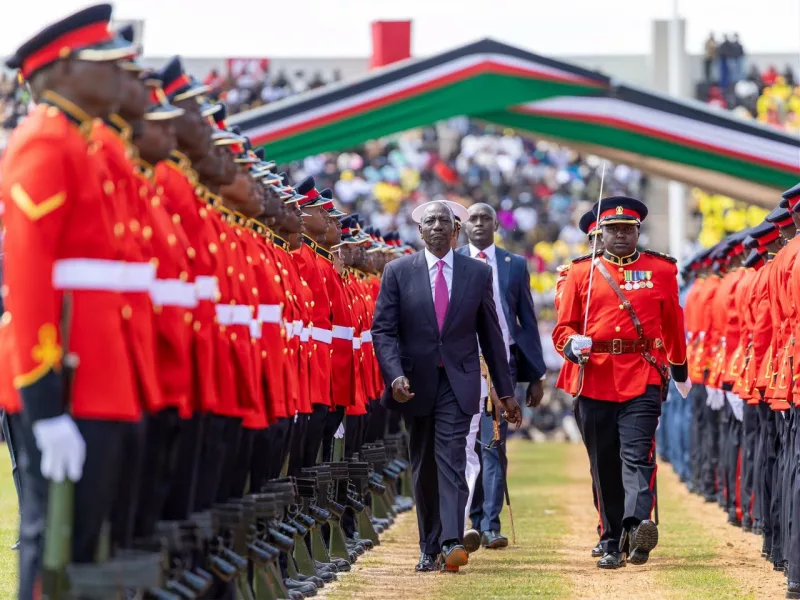
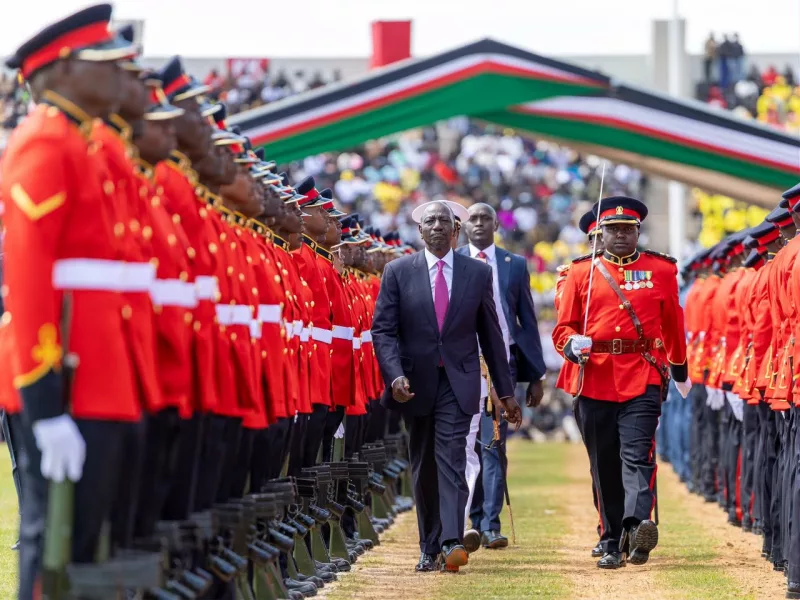
The organisation cited President William Ruto’s recent remarks during the commemoration of the 16th anniversary of the Constitution of Kenya, where he said no Kenyan should lose their life, liberty or dignity for criticising the government, expressing an unpopular opinion or participating in a peaceful demonstration.
“Amnesty International Kenya welcomes this acknowledgement. But words must now be matched with action,” the organisation said.
Amnesty said the Constitution guarantees human rights to every person, citing Article 29, which protects against arbitrary deprivation of freedom, torture and cruel, inhuman or degrading treatment.
It also cited Article 49, which provides for the rights of arrested persons, and Article 238, which requires national security to be exercised in accordance with the Constitution and the law.
According to data from the Missing Voices Coalition cited by Amnesty, six cases of enforced disappearance were documented in Kenya in 2025, alongside 125 cases of police killings.
Amnesty said 19 cases of enforced disappearance and 69 police killings had been recorded in 2026 so far.
“While the number of documented enforced disappearances declined from the previous year, the persistence of such cases remains deeply concerning,” Amnesty said.
The organisation also pointed to a national reparations framework and report presented by the Kenya National Commission on Human Rights at State House Nairobi on June 15, 2026.
According to Amnesty, the framework included 35 verified cases of enforced disappearance alongside other human rights violations linked to recent security operations and protests.
Amnesty said victims of enforced disappearance had yet to receive reparations, despite the State having established a process to compensate victims of violations arising from protests.
“These are not merely statistics. Behind every number is a person whose liberty was taken away, a family left searching for answers, and a community forced to confront the consequences of impunity,” the organisation said.
Amnesty said President Ruto’s declaration that Kenyans should not lose their liberty or dignity for expressing an opinion or participating in peaceful protests was consistent with constitutional protections for freedom of expression, assembly and association.
However, it said such rights could not be protected through statements alone.
“The true test of the State’s commitment to constitutionalism is what happens when those rights are exercised by people who criticise the government, challenge those in power or demand accountability,” Amnesty said.
The organisation further raised concerns over the conduct of security agencies, saying Kenya’s experience since 2024 had demonstrated the risks of operating without effective accountability.
“Enforced disappearances, arbitrary arrests and excessive use of force have a chilling effect on civic participation and undermine the constitutional order,” it said.
“The State has an obligation to ensure that security agencies protect people, rather than become a source of fear.”
Amnesty called on the government to ensure that allegations of enforced disappearance are promptly, independently, impartially, thoroughly and transparently investigated, including cases documented during the 2024 protests and thereafter.
It also urged the government to disclose the fate and whereabouts of people subjected to enforced disappearance and ensure that those unlawfully detained are released or brought promptly before an independent and impartial court.
The organisation further called for victims and their families to have access to truth, justice and effective remedies, including full and effective reparations.
It urged authorities to investigate and, where there is sufficient admissible evidence, prosecute people suspected of criminal responsibility for enforced disappearances, regardless of their rank, position or affiliation.
Amnesty also called for effective command and individual accountability within security agencies, saying responsibility should extend beyond junior officers to those who authorised, ordered, facilitated or concealed violations.
The organisation urged the government to strengthen oversight bodies, including the Independent Policing Oversight Authority and the Internal Affairs Unit, and called for Kenya to ratify and domesticate the International Convention for the Protection of All Persons from Enforced Disappearance.
It also called for protection of human rights defenders, lawyers, journalists, witnesses, survivors and families of victims from intimidation, harassment and reprisals.
“As Kenya approaches the 2027 General Election, the lessons of the past must inform the present,” Amnesty said.
“The State must guarantee that political dissent, peaceful protest and criticism of government are not met with arbitrary arrests, enforced disappearance, torture or excessive use of force.”
The statement was signed by Amnesty International Kenya Executive Director George Morara.