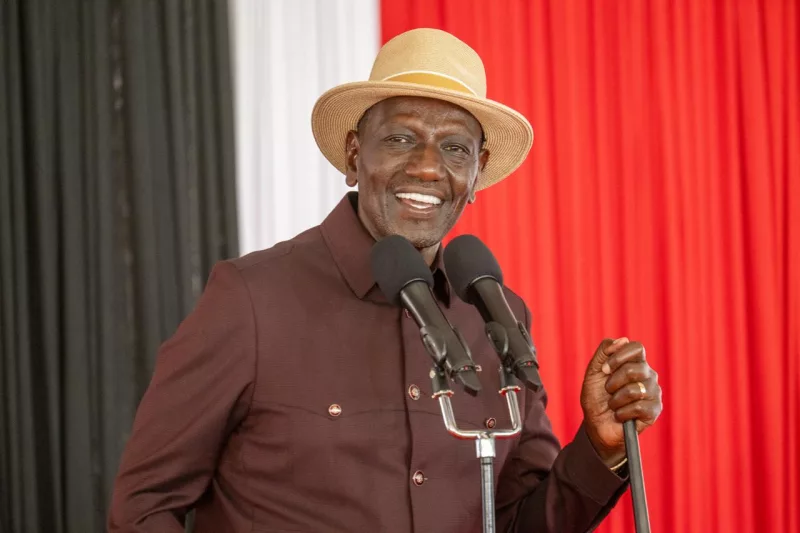
 President William Ruto during a meeting with Teso leaders at Eldoret State Lodge/PCS
President William Ruto has dismissed opposition calls to abolish the Affordable Housing Programme, terming such proposals reckless.
Ruto warned that scrapping the initiative would put more than one million jobs at risk.
Speaking during an engagement with members of the Teso community from Busia County at Eldoret State Lodge, Ruto took aim at leaders who have pledged to dismantle the housing programme if elected.
“You hear someone saying he is going to abolish housing. Huyo si ni mtu mjinga ya mwisho?” Ruto said.
The President questioned where the more than 1.1 million young Kenyans he said were earning a livelihood through the Affordable Housing Programme would go if the projects were stopped.
“You who is saying you are going to abolish housing, vijana 1.1 million wanaofanya kazi Affordable Housing Programme wanakuja kufanya kazi kwako?” he posed.
Ruto said critics of the programme were speaking without considering its economic impact, particularly the employment opportunities it creates for young people and workers in the construction sector.
“Na unasikia mtu mkubwa anasimama hapo anasema atakuja kuabolish affordable housing. They don't know what they are talking about,” he said, adding that leaders should think carefully before making public pronouncements.
“Before you engage your mouth, engage your mind,” Ruto said.
The President also defended the government's decision to spread major development projects beyond Nairobi and other traditionally favoured urban centres.
He cited the planned Sh4 billion smart city project in Malaba, Busia County, saying some critics had questioned why such an investment should be undertaken in the region.
“There are people with a lot of hate asking why a smart city of Sh4 billion can be built in Busia. Now they are asking, where is this Malaba? Who is there for such a project to be built?” Ruto said.
He insisted that communities in Teso and other historically marginalised parts of the country deserved equal access to development.
“They are going to know that even the people of Teso are important and they are also Kenyans. And they deserve what they get from Kenya,” the President said.
Ruto said his administration was pursuing what he described as a more equitable distribution of national development, arguing that many communities were witnessing major government-funded projects for the first time.
“We have brought justice to our country. Justice for all the people of Kenya,” he said.
“There are a lot of people in Kenya who are seeing developments for the first time. They're hearing about a Sh1 billion project for the first time. They have never seen it before, and they have been in Kenya for 60 years. How unfair can we be?”
The President further accused some of his political opponents of opposing government programmes out of bitterness, claiming they were being used to undermine his administration's development agenda.
Earlier, Ruto was installed as a Teso elder and given the name Ojokotau, meaning someone with a big heart.
He pledged that the government would continue working with the Teso community and other regions to ensure development projects were spread more equitably across the country.