

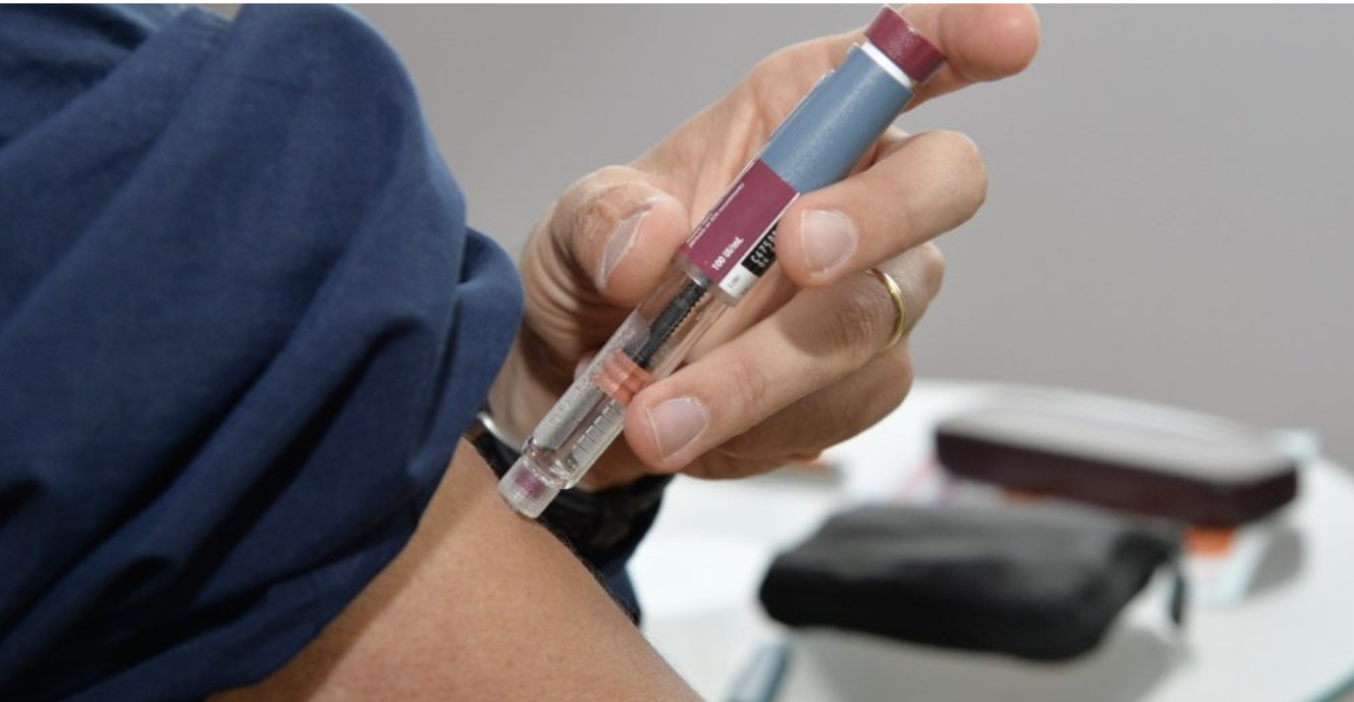
 A person using an insulin pen.
 Kenyans living with diabetes could have an easier and safer way of taking insulin if the Social Health Authority (SHA) adds insulin pens and pen needles to its benefits package, health advocates have said.
The call comes as the number of people living with diabetes continues to rise, while many patients still struggle to get regular treatment because of cost and limited access.
An estimated 813,300 adults in Kenya were living with diabetes in 2021, representing about 3.1 per cent of the adult population. However, more than half of those with diabetes are estimated to remain undiagnosed, meaning the true number could be much higher.
It is estimated that about 15 per cent of people with diabetes need insulin, but only about half of those people receive it. The World Health Organisation says insulin prices and availability remain major barriers to treatment in many low- and middle-income countries.
Dr Elizabeth Jarman, a noncommunicable disease technical adviser at Médecins Sans Frontières (MSF) Access, said Kenya needs to make modern insulin treatment easier for people who need it.
“The prevalence of diabetes is rapidly increasing around the world, but access to treatment is not improving at the same rate, especially in low- and middle-income countries where modern, more efficacious, and person-preferred treatments like analogue insulin pens are unaffordable or unavailable,” Jarman said.
“By introducing analogue insulin pens to its Social Health Authority benefits package, Kenya would be leading the charge towards upending the global double standard in diabetes care and ensuring that people with diabetes have more equitable access to care.”
Insulin is a life-saving medicine for people with type 1 diabetes. Some people with type 2 diabetes also need it when their bodies no longer make enough insulin or when other medicines fail to control their blood sugar.
Insulin can be given using a vial and syringe or through a pen. A pen is a small device that contains insulin and allows a person to inject a measured dose.
Advocates say pens are easier to use, particularly for children and people who need to inject themselves several times a day. They can also make it easier to measure the correct dose.
The cost varies depending on the type of insulin, dose and where it is bought. Monthly out-of-pocket insulin costs range from Sh5,000 to Sh20,000, according to various studies.
Other patients can pay more, especially those using newer insulin products or buying from private pharmacies.
WHO says human insulin remains the more affordable option and is still an important part of diabetes treatment. But newer insulin analogues can offer some benefits, including a longer action and greater flexibility in timing and dosing.
Kenya has already taken some steps towards making analogue insulin available.
Analogue insulin pens are included in the country's Essential Medicines List and National Clinical Guidelines for the Management of Diabetes. The problem, advocates say, is ensuring that inclusion on paper translates into access for patients through the health insurance system.
Dr Narine Danielyan, MSF medical coordinator in Kenya, said the country should now complete that process by including the devices in the SHA package.
“Now is the time to go the last mile and ensure these devices are available as part of the Social Health Authority benefits package so that more people in Kenya have access to the insulin delivery device that is most effective for their own clinical needs, in alignment with national guidelines.”
The issue is particularly important for children with type 1 diabetes.
About 8,000 Kenyan children are currently receiving analogue insulin pens through the Changing Diabetes in Children programme. Advocates warn that some could struggle to continue receiving the same type of treatment when they leave the programme as they grow older if the devices are not routinely available in Kenya.
The push for insulin pens also comes as Kenya reviews what treatments should be covered under SHA.
The Benefits Package and Tariffs Advisory Panel recently invited proposals on how the health system can improve the services covered under the scheme. The proposal on insulin pens is therefore part of a wider debate on what treatments should be paid for through public health insurance.
WHO has repeatedly warned that high prices, limited competition and weak supply systems make insulin difficult to access in poorer countries. Three major manufacturers have historically controlled most of the global insulin market, limiting competition.
WHO has also called for countries to improve purchasing, regulate prices and increase competition to make insulin more affordable.
The organisation says access to insulin should also go together with proper diagnosis, blood sugar testing and devices needed to safely give the medicine.






