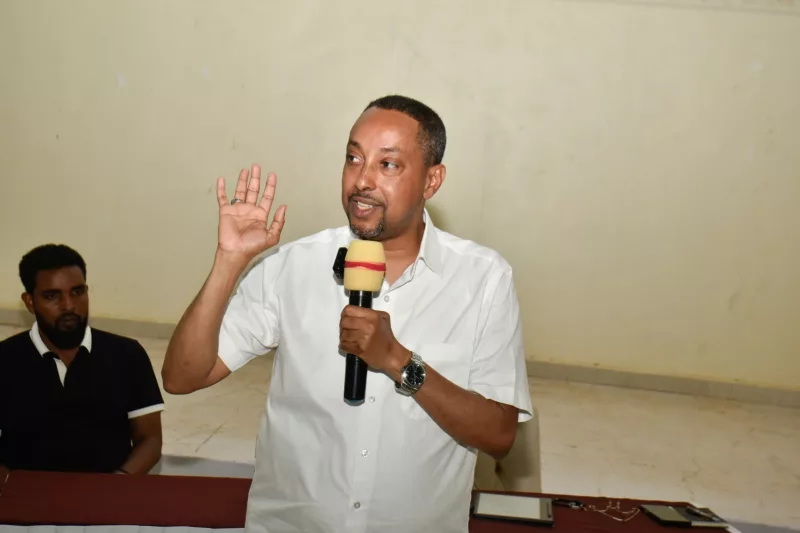
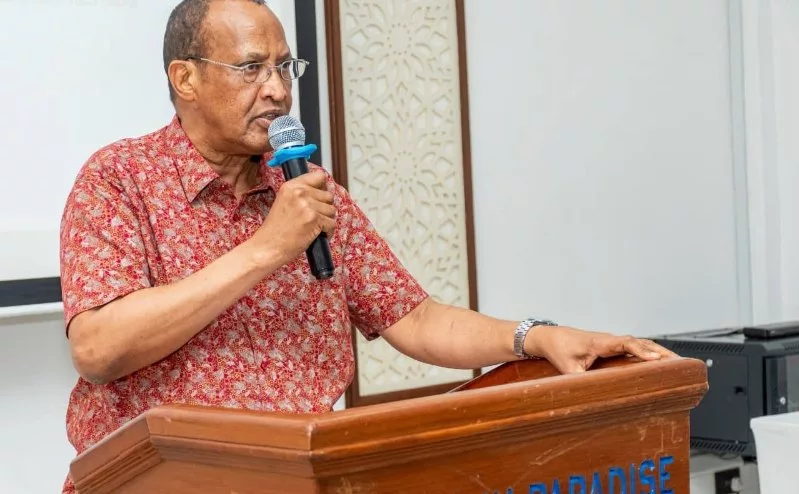
 Garissa Governor Nathif Jama speaking at the forum./STEPHEN
ASTARIKO
Garissa Governor Nathif Jama speaking at the forum./STEPHEN
ASTARIKO
Garissa County has begun implementing a new legal framework aimed at improving the financing and management of municipalities, towns and other urban areas.
The move follows the operationalisation of the Garissa County Financing of Cities and Urban Areas Act, 2026, which provides a framework for financing urban authorities and assigns them specific responsibilities and revenue sources.
The Garissa County Assembly is among a small number of county assemblies to enact legislation specifically providing for the financing of municipalities and other urban areas.
Speaking at the conclusion of a two-day sensitisation retreat on the implementation of the law, Governor Nathif Jama said the legislation was intended to give municipalities and urban areas greater financial capacity to address local needs.
“This is a historic piece of legislation and, to the best of our knowledge, the first of its kind in the country, positioning Garissa at the forefront of strengthening urban governance under devolution,” Jama said.
He said the law would allow municipalities and other urban authorities to raise, collect and use designated revenues, subject to the legal and institutional framework governing county finances.
“The Act strengthens devolution further by empowering our municipalities and urban areas with greater autonomy to raise, collect and utilise their own revenues,” he said.
Jama, however, cautioned those tasked with implementing the law to ensure it translated into improved service delivery rather than remaining a legal document without practical impact.
He said municipalities could contribute to local economic growth, investment and employment if they were adequately financed, properly managed and subjected to effective oversight.
County Assembly Speaker Abdi Idle Gure said the effectiveness of the legislation would ultimately depend on its implementation and the management of public resources.
“The true value of this Act will be determined not by its enactment, but by the effectiveness, consistency and accountability of its implementation,” Gure said.
The legislation provides for the financing of cities, municipalities, towns and markets.
It also gives urban authorities clearer responsibilities for managing services within their respective jurisdictions.
It allows designated urban authorities to collect and retain specified revenues while providing mechanisms for allocating resources from the county government.
Among the functions expected to be undertaken by municipalities and other designated urban authorities are solid waste management, street lighting, parking, management of bus parks and taxi ranks, outdoor advertising and urban markets.
They will also be responsible for social halls, abattoirs, building approvals and development control, recreational parks and playgrounds, regulation of hawking and street trading and maintenance of urban roads.
The framework is intended to bring the management of these services closer to residents while making local authorities more directly accountable for service delivery.
Municipal officials who attended the sensitisation meeting said the law would provide a clearer basis for planning and financing local priorities.
They said closer management of resources could also make it easier for residents to participate in identifying priorities and scrutinising the use of public funds.
The law also seeks to reduce duplication between county departments and urban authorities by requiring the county government to reorganise its departments when functions are transferred to municipalities and other urban authorities.
This is intended to clarify responsibilities and prevent different levels of government from undertaking the same functions within urban areas.
Chairperson of the County Assembly Committee on Lands, Housing, Physical Planning and Urban Development Khadija Idriss said the assembly would use its legislative and oversight mandate to monitor the implementation of the law.
“Through our legislative, oversight and representation mandates, the assembly remains a critical partner in ensuring the framework delivers the intended benefits to the people,” Khadija said.
Implementation of the Act places greater responsibility on both the county government and urban authorities to ensure the additional financial and administrative responsibilities are matched with proper planning, transparency and accountability.
 County Assembly Speaker Abdi Idle Gure speaking at the
forum./STEPHEN ASTARIKO
County Assembly Speaker Abdi Idle Gure speaking at the
forum./STEPHEN ASTARIKO Officials follow proceedings/STEPHEN ASTARIKO
 Khadija Idriss, Chairperson of the County Assembly
Committee on Lands, Housing, Physical Planning and Urban Development. /STEPHEN
ASTARIKO
Khadija Idriss, Chairperson of the County Assembly
Committee on Lands, Housing, Physical Planning and Urban Development. /STEPHEN
ASTARIKO Garissa governor Nathif Jama interacts with chairpersons
and chief executive officers of Garissa County’s six municipalities, County
Executives from key departments, and other senior county officials. /STEPHEN
ASTARIKO
Garissa governor Nathif Jama interacts with chairpersons
and chief executive officers of Garissa County’s six municipalities, County
Executives from key departments, and other senior county officials. /STEPHEN
ASTARIKO