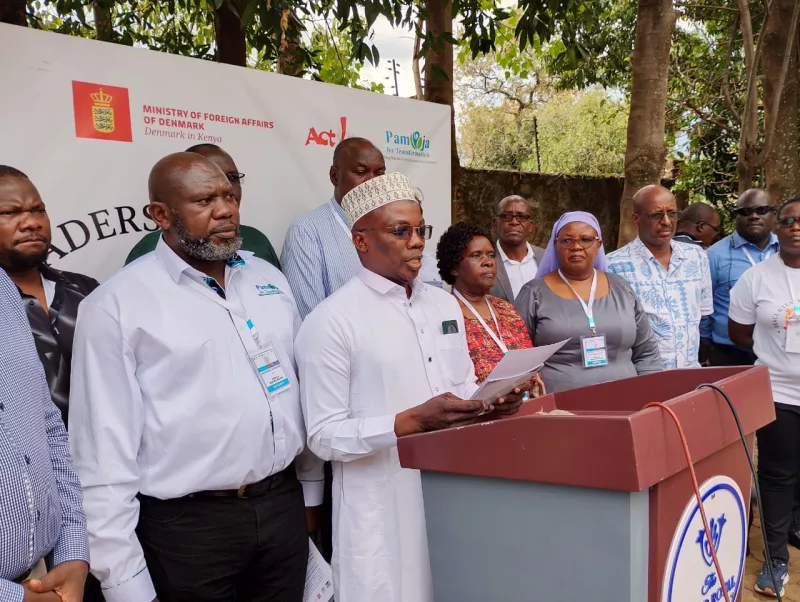
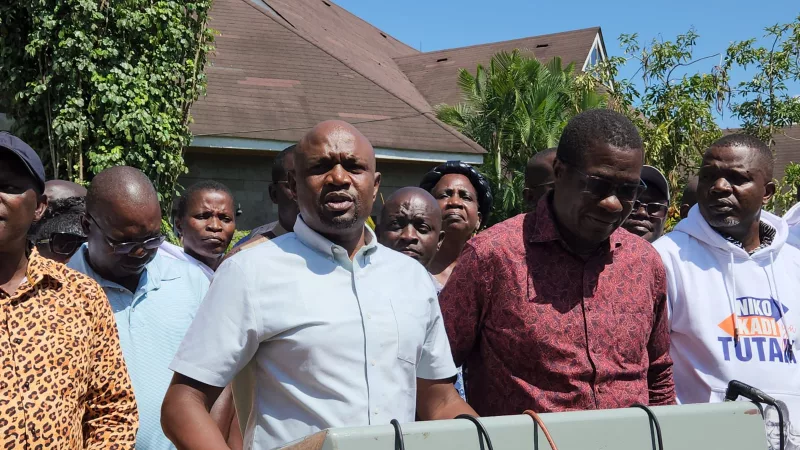
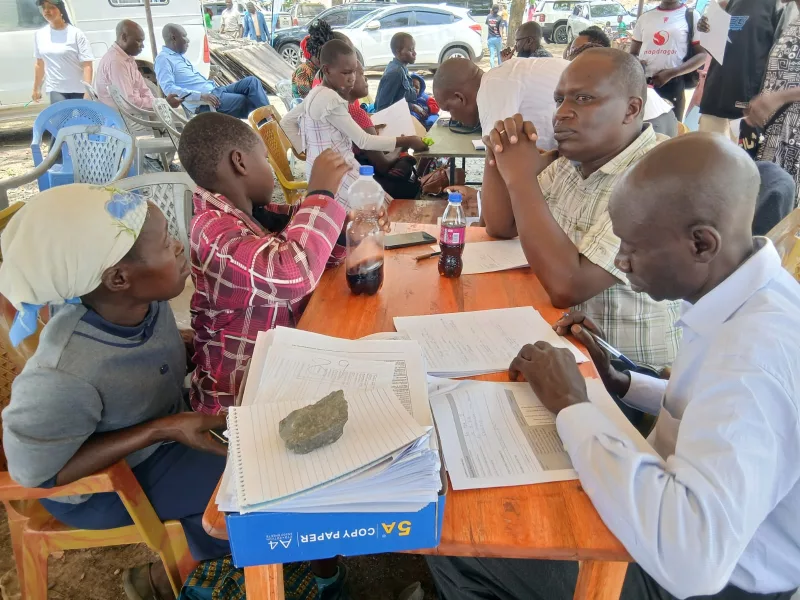
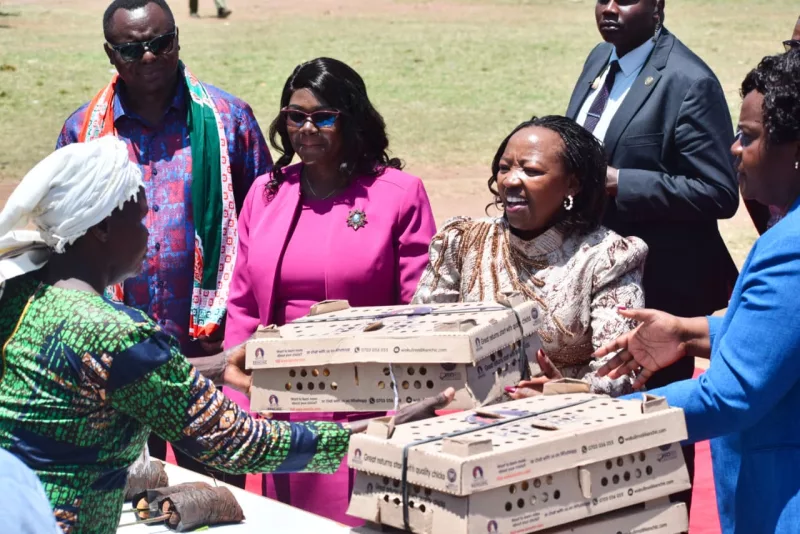
 First Lady Rachel Ruto with Homa Bay Governor Gladys Wanga during handover of chicks to women groups at Oriwo Boys High School in Karachuonyo constituency/ROBERT OMOLLO
More than 80 women's groups in Homa Bay have received a boost to their livelihoods under a State livestock empowerment programme aimed at increasing household incomes and promoting sustainable enterprises.
The groups are among 2,300 groups identified to benefit from the programme being implemented by the State Department for Livestock Development across all 47 counties.
The women have also undergone financial literacy training to help them manage funds effectively and build sustainable businesses.
First Lady Rachel Ruto on August 26 presided over the distribution of 2,300 day-old improved KENBRO chicks to smallholder farmers in Homa Bay as part of efforts to boost livestock production and household self-reliance.
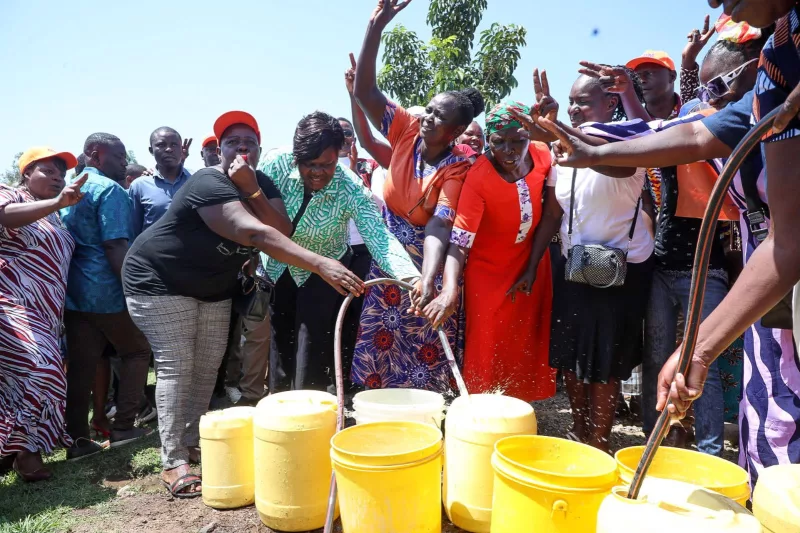
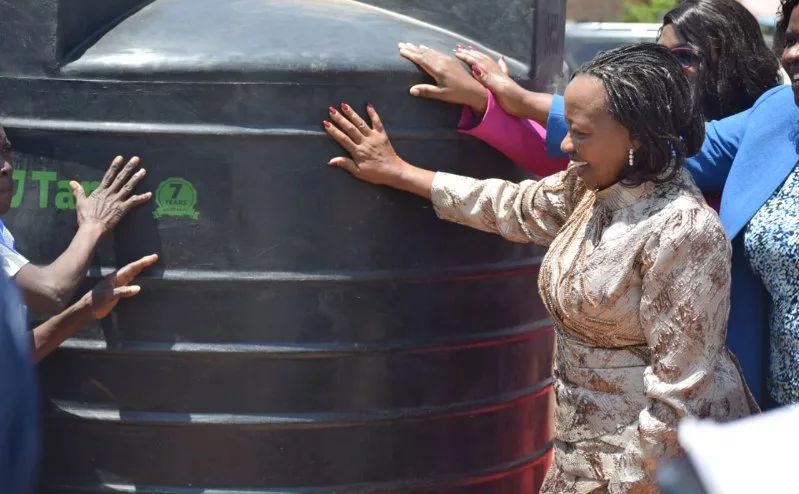 First Lady Rachel Ruto and Homa Bay Governor Gladys Wanga hand over water tanks to various women's groups in Homa Bay County/ROBERT OMOLLO
Ruto said the initiative marked an important step towards transforming the livestock sector while improving food security, nutrition and household incomes.
She said her office had partnered with the State Department for Livestock Development to train more than 1,200 women groups across the 47 counties on livestock production and management.
“The women have been equipped with skills to build viable and sustainable enterprises. The programme will economically empower them and improve their source of livelihoods,” Ruto said.
Speaking at Oriwo Boys High School in Karachuonyo, the First Lady urged women to view agriculture not only as a source of food for their families but also as an opportunity to create wealth for future generations.
She said small beginnings could produce remarkable results.
Homa Bay Governor Gladys Wanga said the initiative would promote financial inclusion, enterprise development and food security.
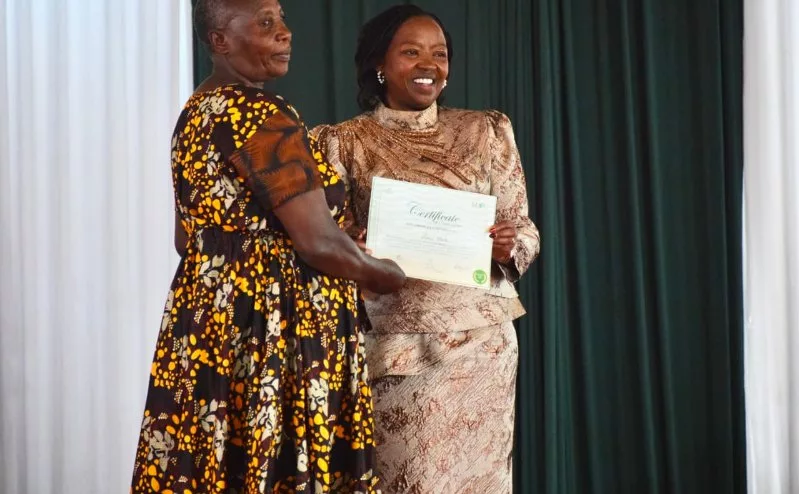 First Lady Rachel Ruto gives a certificate to a woman who has been trained during the launch of the programme in the Karachuonyo constituency/ROBERT OMOLLO
She said programmes targeting women were key to improving household livelihoods.
“A society where women are empowered progresses. We support the programme because it is a way of sustaining the livelihoods of people,” Wanga said.
Principal Livestock Production Officer Fred Oruru said improved indigenous chicken plays a critical role in supporting 3.6 million households, particularly women and young people.
He said the birds combine the hardiness of local breeds with faster growth, better egg production and greater disease resistance.
According to Oruru, the improved birds can lay between 200 and 280 eggs a year, compared with about 45 eggs from indigenous birds.
They can also attain a weight of 2 to 2.5 kilogrammes in 3.5 months, compared with 1 to 1.5 kilogrammes in eight months for local breeds.
Oruru said the State Department would continue providing farmers with training, extension services and market linkages.
“With proper management, chicken farming can become one of the most profitable and sustainable ventures for smallholders in Homa Bay. The handover is not an end in itself but part of a continuous programme to transform the poultry industry nationally,” he said.