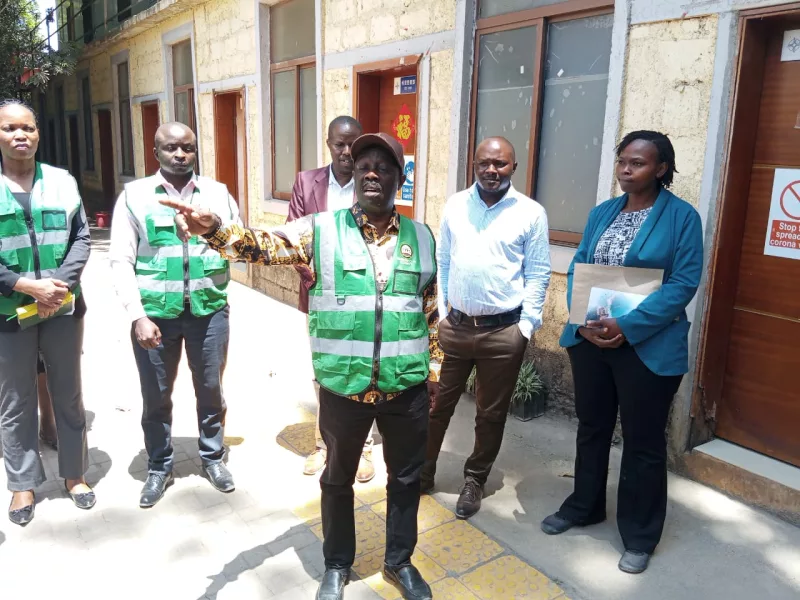
 KLDA General Manager Peter Kitavi./HANDOUT
Residents of Karen have raised fresh concerns over the proposed Riruta–Ngong Metre Gauge Railway (MGR) commuter line.
The residents are demanding that the Kenya Railways Corporation must first complete and disclose a comprehensive feasibility study before proceeding with key project decisions.
The Karen & Langata District Association (KLDA), which represents an estimated 42,000 residents across about 14,000 acres, said it had submitted 28 technical, legal and community questions to Kenya Railways as stakeholder engagement sessions on the proposed railway opened in Karen.
The association said the document recently shared by Kenya Railways was a “Feasibility Study Work Plan and Options Appraisal” rather than the completed feasibility study it says was required by a High Court judgement.
KLDA was the first interested party in a constitutional petition challenging the project. According to KLDA, the court found that the project had proceeded without compliance with mandatory pre-feasibility and feasibility study requirements.
The court also ordered a full feasibility study, fresh competitive tendering, and genuine public participation, including disclosure of route alignments, financing arrangements, and procurement records.
KLDA General Manager Peter Kitavi said residents were not opposed to the railway but wanted the project subjected to proper scrutiny.
“We are not opposed to a railway that is justified by evidence and delivered lawfully,” Kitavi said.
“We are opposed to being asked to comment on a route that appears to have been decided before the feasibility study was even completed.”
The association said its technical team had identified several gaps in the work-plan document shared by Kenya Railways only days before the consultations.
Among the concerns is the apparent absence of an assessment of alternative routes previously presented by KLDA in court filings. The association said the document moves to three alignment options along the existing Ngong Road corridor despite stating that the strategic transport corridor should first be confirmed.
KLDA also questioned a statement in the document describing one of the three options as the “presently emerging preferred engineering direction”.
The residents’ association wants Kenya Railways to explain what impact the public consultations could have on that preference and publish a like-for-like comparison showing how each option would affect properties, access roads and other infrastructure in Karen.
The group has also raised questions over changes between the 2024 environmental assessment and documents presented in 2026.
It said a bridge structure included in the earlier environmental assessment no longer appears in the latest documents, while another bridge has been reduced by nearly half its length.
KLDA has asked for a full register of the changes, together with supporting engineering drawings.
The association is also concerned about what it described as a compressed timetable for selecting a preferred railway alignment.
According to KLDA, Kenya Railways’ programme envisages confirmation of a preferred alignment within days of the stakeholder consultations, which it argues leaves insufficient time for residents’ proposals to be properly surveyed, engineered, costed and assessed.
The 28 questions submitted by the association also cover the railway’s objectives, its coordination with the Nairobi Metropolitan Area Transport Authority (NaMATA) and the planned Bus Rapid Transit network.
Other issues include the economic case for the project, land and property impacts, safety at road and railway crossings and the basis of Kenya Railways’ claims in court that the project is 40 per cent complete.
KLDA has asked Kenya Railways not to confirm a preferred option or undertake further works until a complete feasibility study is published and its questions answered.
The association said it remained ready to participate in the process once the required information was made available.
“We have waited since 2023 for the documents the High Court ordered disclosed,” Kitavi said.
“A work-plan document shared days before a meeting is not the disclosure the judgement requires, and it is not a basis for a lawful decision.”
KLDA said it would continue engaging Kenya Railways while keeping residents and the wider public informed as the process progresses.