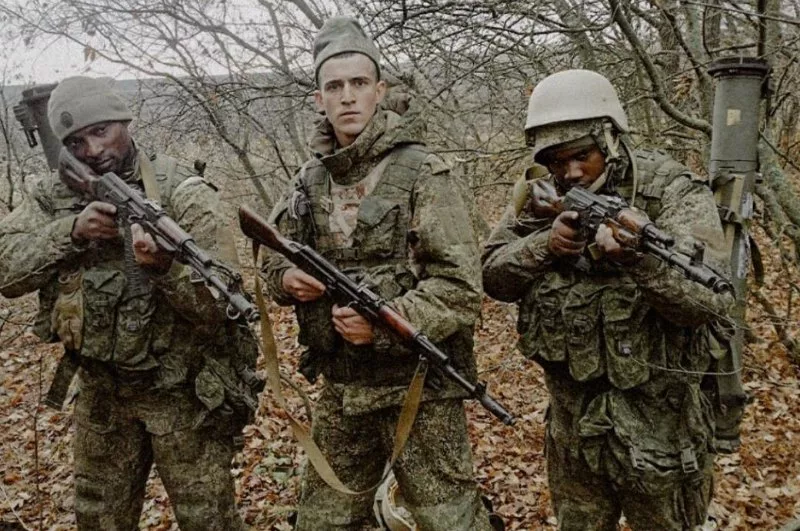
 African troops fighting for Russia in Ukraine /HANDOUT
Dennis Ombwori was a driver. Clinton Nyapara wanted to buy his mother a plot of land. Eric Mwangi, Joseph Kamau and Ronald Kipkurui had, between them, the kind of restless, ordinary ambition that defines a generation of young Kenyan men locked out of formal work. None of them set out to become soldiers.
All five are now dead, killed in a war fought over ground none of them could have pointed to on a map, for a country that will not fully account for how many of them it took in, and a government back home that concedes it does not know how many more like them are still out there.
Officially, more than 1,000 Kenyans have been drawn into Russia's war on Ukraine, recruited to fight alongside other foreigners as, in the words of one of the country's own diplomats, "cannon fodder."
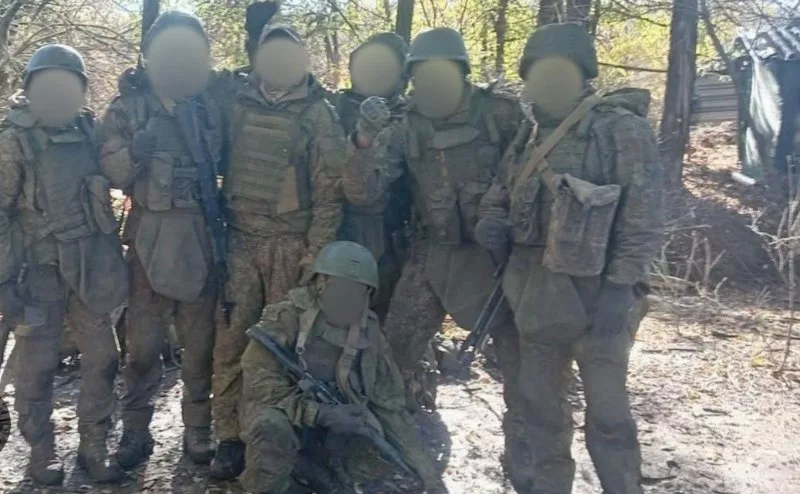 African troops fighting for Russia in Ukraine /HANDOUT
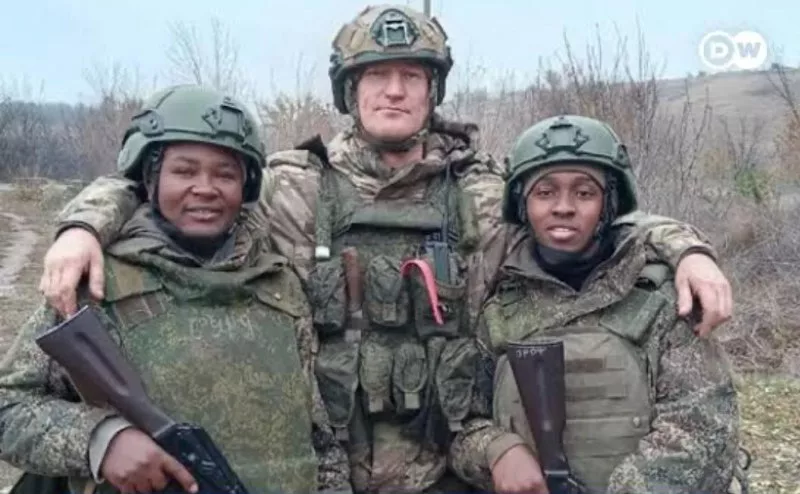 African troops fighting for Russia in Ukraine /HANDOUT
Nineteen are confirmed dead. Thirty-two are missing. Dozens more are unaccounted for, their families waiting on news that may never come, and dreading the kind of news that, if it comes, may never let them bury their dead.
Over several months, the Star set out to establish how that pipeline actually works — who builds it, who profits from it, and why, a year after Nairobi first admitted the scale of the problem, it has not stopped.
What emerged from that reporting, drawn from documents, recruitment material and accounts gathered independently, is a trade in desperation that has been engineered, refined and defended against detection with the same discipline any other export business would apply to moving a product across a border undetected — except the product, in this case, is a person.
The recruits fit a type. Investigators and recruiters alike look for men with a police or military background — physically built, often recently discharged on questionable terms, and financially stretched enough that a stranger's promise starts to sound like an opportunity rather than a warning.
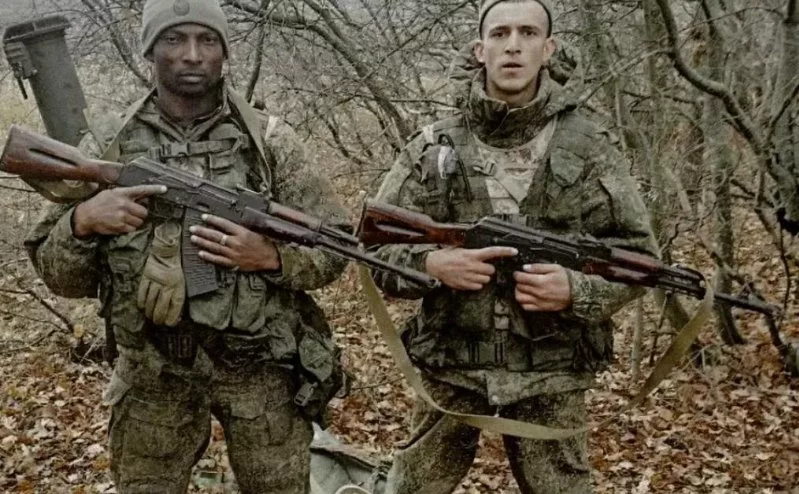 African troops fighting for Russia in Ukraine /HANDOUT
They are offered up to Sh2 million as a joining fee and a monthly wage of Sh140,000 under a standard one-year contract; some are dangled figures as high as Sh5 million, payable 20 days after signing.
In practice, the Star found, only a fraction of that headline figure — roughly Sh2 million — ever reaches the recruit; the rest is absorbed by air tickets, military kit and the recruiter's own cut, which runs to about Sh100,000 for every successful delivery.
The trip comes fully paid: passport processing, visas, a travel itinerary dressed up as tourism, accommodation along the way. At the far end of the contract sits the biggest lure of all — the promise of Russian citizenship, and with it the right to bring a family over for good.
 African troops fighting for Russia in Ukraine /HANDOUT
The recruiters tend to have worked the security services once — ex-police, ex-military — and many have handled human cargo before, moving people into conflict zones in Sudan, Somalia and the Democratic Republic of Congo long before Ukraine became the destination of the moment.
Kenyans are not the only ones being moved this way: victims are drawn from across the continent, including Uganda, Tanzania, the Central African Republic, the DRC, Mozambique, Zimbabwe and Angola, sourced both in person and through trusted networks on platforms such as Telegram.
What makes the network durable, this investigation found, is its route-mapping.
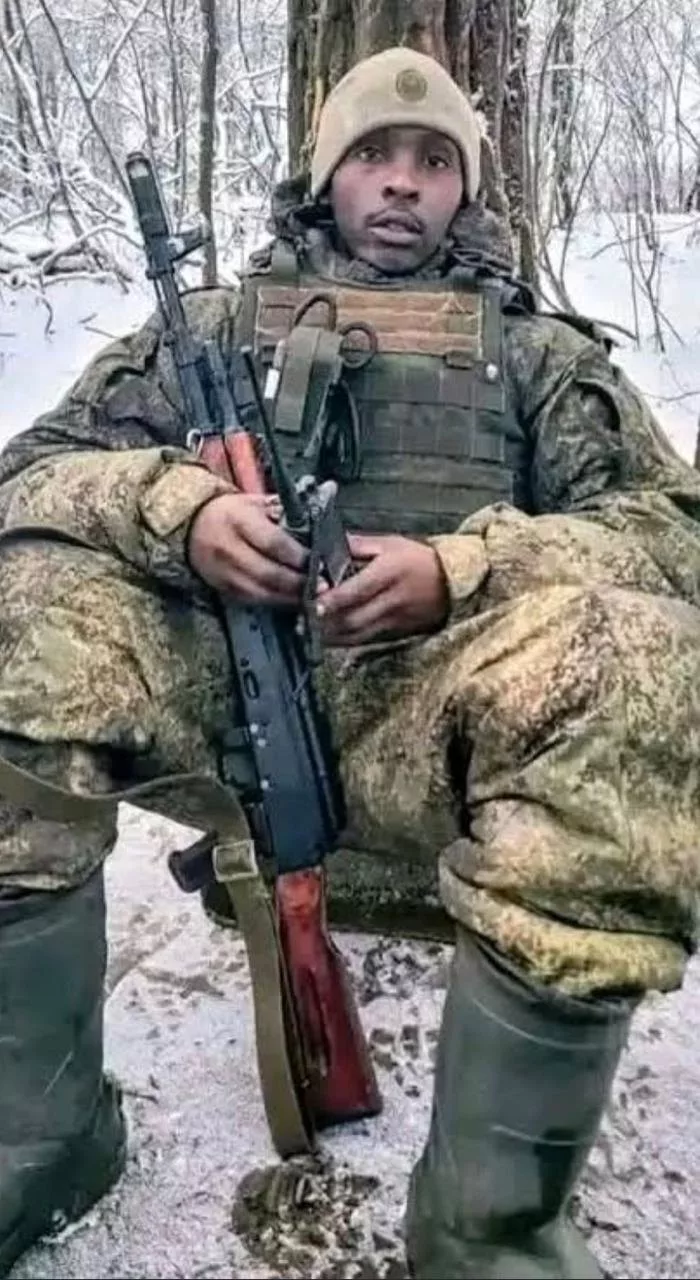 African troops fighting for Russia in Ukraine /HANDOUT
The trick that keeps it working at each checkpoint is a visa swap: a recruit travels out on a temporary visa for a transit country, then is issued a Russian visa only once safely in that third country, typically a tourist or visitor visa rather than anything resembling a work permit, backed by a tourist itinerary designed to survive questioning at the border.
It is only after landing in Russia that recruits sign the contracts that bind them, before receiving what several accounts describe as barely two weeks of weapons training and being sent to the front.
The government's own account, delivered to Parliament, matches large parts of this picture.
Reading a National Intelligence Service report on February 18, 2026, National Assembly Majority Leader Kimani Ichung'wah told the House that "so far over 1,000 Kenyans have been recruited and departed to fight in the Russia-Ukraine war".
He added that recruits "leave the country on tourist visas to join the Russian Army through Istanbul, Turkey as well as Abu Dhabi, United Arab Emirates."
The NIS report puts 89 Kenyans still on the frontline at the time, 39 hospitalised and 28 missing in action — and went further than diplomats had been willing to go publicly, alleging "collusion by officers at the Russian Embassy and the Kenyan Embassy in Moscow," and describing training so thin that, in Ichung'wah's words, recruits "are basically given a gun and sent to die."
Kenya's diplomatic position has hardened in public even as departures continued in private.
Foreign Affairs PS Korir Sing'Oei said on February 10, 2026, that it was "unacceptable" for Kenyans to be participants in the conflict, describing them as being "used as cannon fodder on the war front" and insisting "no Kenyan would voluntarily enter into that kind of engagement."
Eleven days later, following a meeting with Russia's ambassador in Nairobi Vsevolod Tkachenko, he said he had pressed for "unimpeded consular access" and "clear, transparent protocols regarding the repatriation of both prisoners of war and the remains of the deceased."
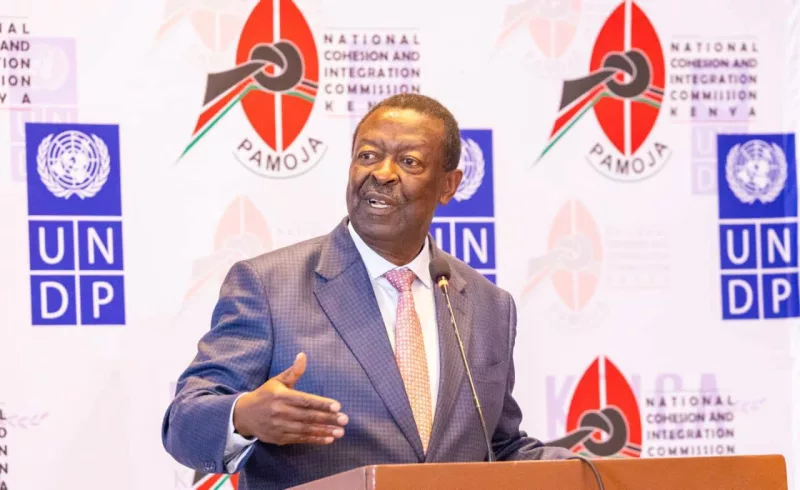
Prime Cabinet Secretary Musalia Mudavadi announced on the same day, February 10, that more than 30 Kenyans had already been evacuated from Russia and that 600 recruitment agencies accused of misleading Kenyans with false job offers had been shut down.
Five weeks later, after bilateral talks in Moscow with his Russian counterpart Sergey Lavrov, Mudavadi announced what his office presented as a breakthrough: Russia's agreement to facilitate consular access to hospitalised Kenyans, support repatriation of the injured and the dead, and allow those who wished to leave active service to disengage.
He also disclosed that "Kenya has been placed on a STOP LIST for the recruitment of its nationals," citing Section 68 of the Penal Code, which bars Kenyans from enlisting in a foreign armed force without the President's written authority.
Moscow's public position, by contrast, has been one of flat denial.
The Russian Embassy in Nairobi, in a statement issued February 19, 2026, dismissed what it called a "dangerous and misleading propaganda campaign".
It insisted that "the government authorities of Russia have never engaged in illegal 'recruitment' of Kenyan citizens," adding that it had "never issued visas to Kenyan citizens who sought to travel to Russia with the stated purpose of participating" in the war.
It did, however, concede a legal loophole that does much of the pipeline's work for it: Russian law, the embassy noted, "does not preclude citizens of foreign countries from voluntarily enlisting" once they are already in the country legally.
National Assembly Speaker Moses Wetang'ula told Parliament on February 12 that Lavrov had personally insisted to him that the Russian government was not involved and that Kenyans killed at the front were being "buried in mass graves."
In Moscow the following month, Lavrov was more clipped still, telling Mudavadi, according to his account, that "no one is being hired, just as no one is being recruited," and maintaining that the contracts recruits signed were voluntary and carried no clause obligating repatriation.
Between those two positions — a Kenyan government citing a law it cannot enforce beyond its own border, and a Russian state that says it merely tolerates what its own legislation allows — sits the industry this investigation traced: agencies that keep operating under new names after being shut down, embassy-adjacent networks that ease visas through, and a commission structure that rewards every successful delivery, dead or alive.
No compensation has reached the families of the dead from either government, and this newspaper found no evidence that the headline salaries advertised to recruits were ever deposited into their Kenyan bank accounts in full.
For the families of Ombwori, Nyapara, Mwangi, Kamau and Kipkurui — and for the scores of others whose names have not made it into any government report — the arguments over sovereignty, penal codes and diplomatic protocol change nothing.
Whichever way the war turns, Kenyans who signed those contracts will be the first casualties of it, and the last to be compensated for it.
The government's own advice to those still weighing the offer is blunt: verify any job overseas through official channels, register with the nearest Kenyan embassy on arrival in any foreign country and treat any deal that sounds too good as exactly that.