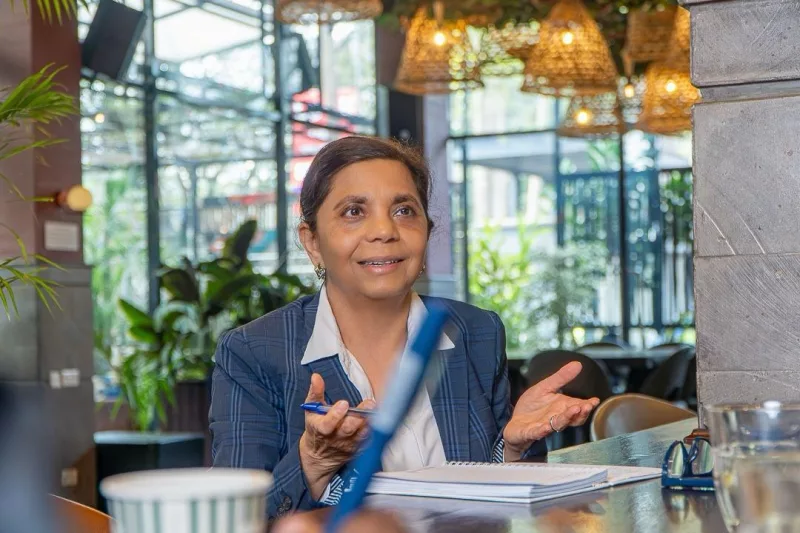
For Jyoti Patel, a business leader and Chief Culinary Officer and head of culinary at Artcaffé Group, a career in food is about much more than creating memorable dishes.
It is about building systems, developing people, maintaining high standards and understanding how food businesses can grow without losing their identity.
Patel has spent more than 13 years at Artcaffé, playing a central role in the company’s transformation from a restaurant chain into a diversified food business spanning restaurants, retail, baking, a central commissary and business-to-business operations.
As Kenya’s hospitality sector navigates rising operating costs, changing consumer tastes, supply-chain disruptions and rapid technological change, Patel believes the country has an opportunity to position itself as East Africa’s culinary and food innovation hub.
In an interview with The Star, she spoke about her leadership journey, mentoring young chefs, opportunities in Kenya’s hospitality industry, the importance of local sourcing, food safety, technology and the future of the sector.
You have been with Artcaffé Group for more than 13 years. What have been the defining moments in your leadership journey?
The work I am proudest of has been building systems that did not exist before. Designing our central commissary from scratch was a major turning point. It created the production backbone that later made our retail and B2B operations possible and required me to think beyond a single kitchen.
Another defining moment was earning our ISO 22000:2018 food safety certification. More important than the certificate itself was how our teams responded to it. They took ownership of quality and understood that food safety was not simply a compliance exercise. That change in mindset fundamentally influenced how we operate.
What does your role as Chief Culinary Officer involve beyond creating menus and recipes?
Recipes and menus are the visible part of the job. Much of my work is structural. I oversee systems that support our kitchens and beverage operations, onsite baking, hot and cold retail delis and the central commissary. The challenge is balancing creative ambition with operational discipline. We want to use local ingredients in fresh and exciting ways, but our recipes, specifications and quality controls must also work consistently across branches, retail and B2B operations.
What leadership principles have helped you build high-performing culinary teams?
I see leadership as service rather than control. A large part of leadership is identifying talent that people have not yet recognised in themselves and giving them room to grow. That requires empathy and listening, but also honest feedback and discipline. I use systems and standards as tools to help people achieve consistency and take pride in their work rather than as rules to police them.
I also believe you cannot lead a kitchen from behind a desk. You have to stay on the floor, understand what your teams are experiencing and develop people alongside them.
Mentorship is important to you. What qualities do you look for in young chefs?
Technical skills matter, but they are not the most important quality because technical skills can be taught. I look for hunger to learn and resilience, the ability to take difficult feedback and use it as fuel rather than seeing it as an insult. I also look for humility. People need to remain close to the work and understand that no task is beneath them. Most importantly, I look for people who care about the outcome and take genuine pride in getting things right. Someone once saw potential in me and opened a door, so mentorship is central to how I lead.
Hospitality is known for long hours and high staff turnover. How do you keep teams motivated?
People stay when they can see a future. Many members of our management and senior teams started in entry-level roles. That is perhaps the strongest message we can give a new employee. We support that through continuous mentorship and skills development. We also try to be present when the work gets difficult, not only when things are going well. The objective is for people to feel that they are building careers rather than simply clocking shifts.
Artcaffé has evolved into a diversified food business. What has driven that transformation?
It has largely come from listening to our guests as their lifestyles changed. They wanted the quality and warmth of our restaurants at home, which helped drive concepts such as Artcaffé Market. The central commissary gave us the capacity to supply our growing branch network while also supporting retail and B2B customers. But even as the business has diversified, the central idea remains the same: creating moments for the community and keeping human connection at the centre of the business.
How does one maintain consistency in food quality as the business expands?
Consistency comes from controlling the variables early. Our ISO 22000-certified commissary for instance handles core preparation, giving every branch the same baseline before a cook begins the final execution. We also teach teams the reasoning behind standards rather than simply telling them what to do. When people understand why a standard exists, they are more likely to follow it because they believe in it. Also ensure training, hands-on leadership and trust in your business.
What operational lessons have you learnt from scaling a food business?
Complexity is the enemy of consistency. If you try to replicate highly skilled preparation everywhere without a central backbone, quality will eventually drift. Systems must also be simple and make sense to the people using them. A framework people understand builds confidence; one they do not understand creates fear. At the same time, leaders must remain connected to the floor. That is where you discover what is actually happening. Scaling is about maintaining one brand standard while respecting what is local.
What consumer trends are influencing menu development?
Consumers increasingly want meaning from a meal, not just a transaction. Try to create an experience through dishes that engage the senses and demonstrate your craft. There is also greater demand for transparency. Guests want to know where their food comes from, which gives you an opportunity to tell the stories of the farmers producing it. And the human side remains important. The warmth of your team is a major reason people return.
What technological developments will have the biggest impact on Kenya's hospitality sector?
Technology has to work within Kenya's infrastructure, and we already have a significant advantage through mobile money. Over the next five years, cashless and mobile integration will become even stronger. Cold-chain traceability and temperature-controlled logistics can help bridge rural-to-urban supply gaps and reduce food waste. Cloud-based inventory and procurement systems will make forecasting across multiple outlets easier, while kitchen display systems and other lightweight technologies can help high-volume operations work more efficiently.
How important is sustainability to the food business?
Sustainability has to be part of how a business operates rather than something that simply appears in a report. For us, that means sourcing locally and building reliable relationships with Kenyan producers and aggregators. We also support waste-to-value initiatives that rescue surplus produce that might otherwise be lost. That approach reduces agricultural waste while supporting smallholder farmers.
Are locally sourced ingredients becoming more important?
Local sourcing has moved from being a preference to being a necessity—for cost, resilience and environmental reasons. Our ambition goes beyond conventional local sourcing. We are genuinely interested in ancient grains and hardy, nutrient-dense crops that our elders grew, as well as climate-smart and drought-resistant indigenous produce. Food businesses have a role in bringing these traditional foods to a new generation. We can take deeply rooted local crops, apply modern culinary techniques and incorporate them naturally into contemporary menus. That supports farmers, helps build resilience against climate change and reconnects consumers with traditional food knowledge.
What are the biggest food safety challenges facing Kenya's hospitality industry?
Heavy reliance on rain-fed agriculture exposes supply chains to seasonal shocks and price volatility. There are also gaps in transport and cold-chain infrastructure between rural and urban areas, resulting in post-harvest losses and inconsistent product quality. Another challenge is helping smaller independent suppliers consistently meet strict food handling and traceability requirements.
Food safety is ultimately about trust. As food businesses grow across restaurants, retail and manufacturing, strong safety systems are essential to protecting consumers and maintaining confidence.
How have inflation and rising operating costs affected restaurants?
Rising costs for utilities, fuel and imported goods have put considerable pressure on margins. At the same time, consumers are becoming more cautious with their spending. People are eating out less frequently or looking for greater value, whether through lunch offers or more casual formats. Restaurants have therefore had to tighten operations, reduce food waste, improve efficiency and focus menus on products that provide both value to customers and sustainable margins.
What opportunities do you see for Kenya's hospitality sector over the next five years?
There are significant opportunities. Tourism is diversifying beyond traditional safaris into conferences, events, weddings, eco-tourism and wellness retreats. A growing urban middle class is also supporting domestic demand for local dining concepts, casual formats and higher-quality experiences. Data-driven guest analytics and automation will further improve productivity.
Kenya also has the ingredients to become East Africa's culinary and food innovation hub: a multicultural population, diverse agriculture, a vibrant urban dining scene and a technology-fluent population.
To realise that potential, we need culinary schools operating at international standards, food-tech incubators focused on agriculture and safety, and closer collaboration between farmers, regulators, hospitality businesses and investors.
The hospitality industry has traditionally been male-dominated. What has your experience been?
Senior positions in hospitality and food manufacturing have historically been male-dominated, but there is real change. At Artcaffé, much of the leadership team is female, demonstrating what can happen when organisations promote on merit and invest in their people. With intentional mentorship and clear career paths, talent can progress from entry level to executive positions regardless of gender.
What advice would you give young people aspiring to leadership in hospitality?
Be ambitious, but stay close to the actual work. Learn the systems deeply, the specifications, quality controls and infrastructure that hold an operation together. Stay curious and take every opportunity to gain exposure. Most importantly, invest in the people around you. Building strong teams and creating a culture where people can grow is what makes leadership sustainable.
What legacy would you like to leave in the industry?
I am not looking to leave a personal mark. I would rather have been a stepping stone for other people. Hospitality begins with service, and that service is not only to guests. It is also service to the teams that make everything possible. My deepest interest is in our young people, particularly Gen Z, whose energy and fresh perspectives will shape what comes next. It is a privilege to work alongside them, develop their talent and give them a space where they can thrive. If I leave behind a culture where every young person feels seen, valued and capable of driving their own growth and contributing to the country's growth, then I will have done my job.
In one sentence, how would you describe the future of Kenya's food and hospitality industry?
Transformative. The industry is moving beyond ordinary dining into a connected lifestyle experience where atmosphere, community, technology and the senses shape how people engage with food and hospitality.