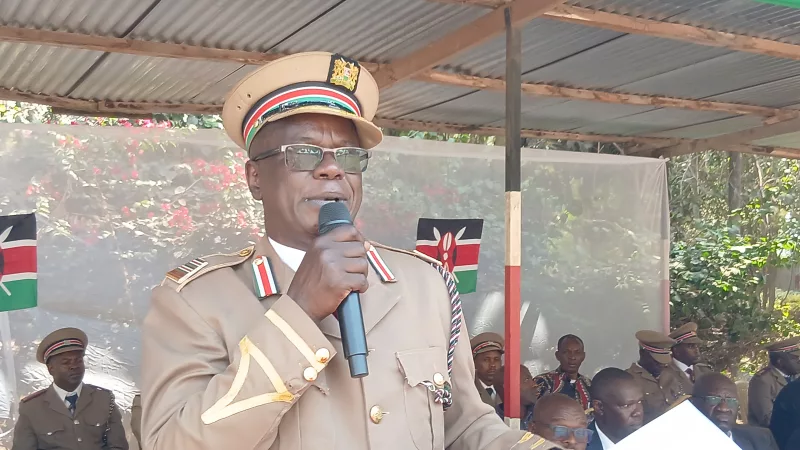
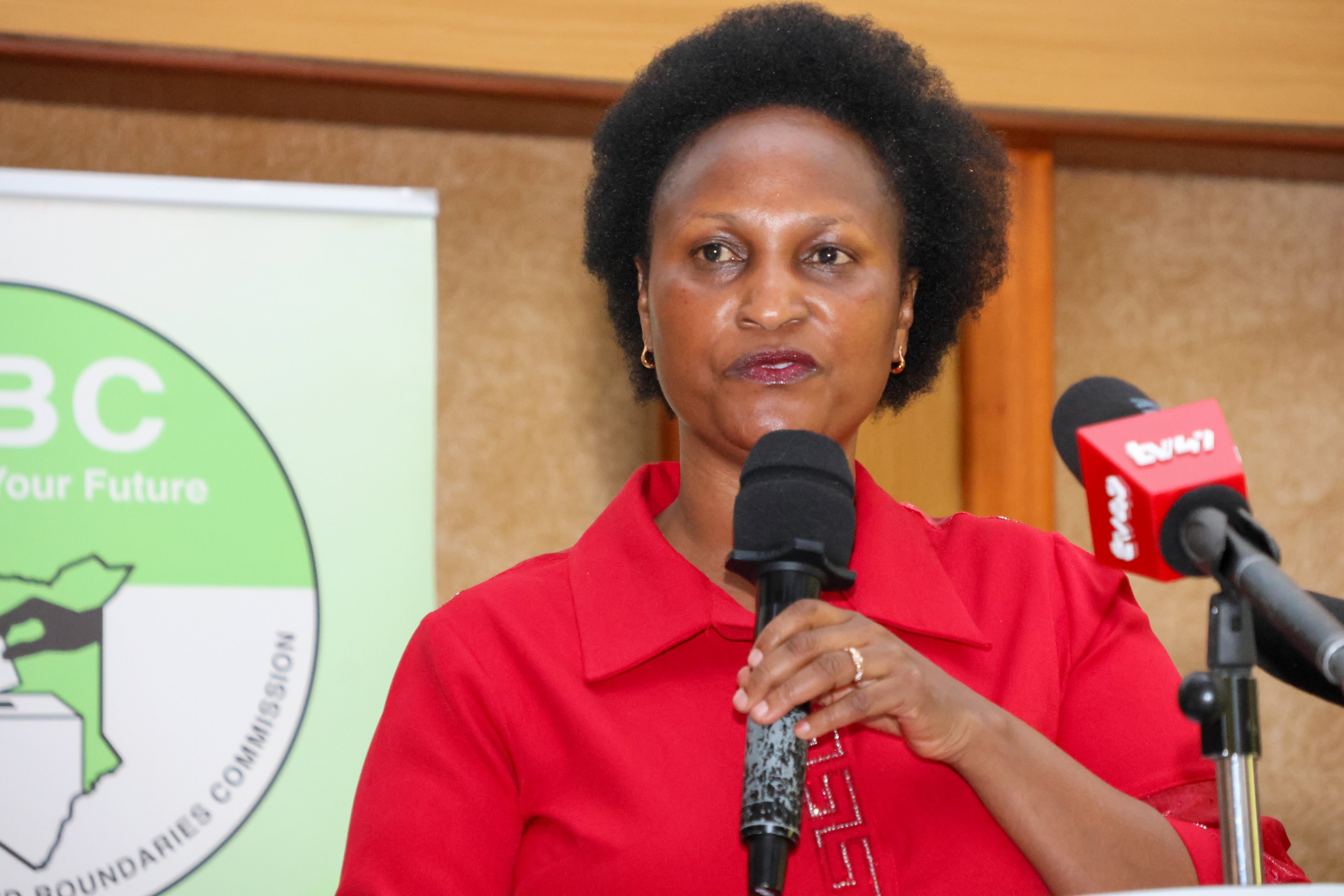
 IEBC Commissioner Ann Nderitu/HANDOUT
The Independent Electoral and Boundaries Commission (IEBC) has clarified that a university degree is currently not a requirement for candidates seeking to run for president, governor or member of Parliament in the 2027 General Election.
IEBC Commissioner Ann Nderitu said the position follows a court decision that declared the degree requirement contained in Section 22B(1) of the Elections Act unconstitutional.
“As we start now, there is no requirement for a degree for anybody. That's the situation we are in,” Nderitu said.
She was responding to questions on Sunday night on Citizen TV on the education qualifications required for candidates after the 2022 General Election generated debate over the eligibility of aspirants without university degrees.
Nderitu said the issue of academic qualifications had been challenged in court before the 2022 election, with petitioners questioning the requirement for degrees for presidential, parliamentary and gubernatorial candidates.
She said the cases were determined after the 2022 General Election, with the court finding that Section 22B(1) of the Elections Act was unconstitutional.
According to Nderitu, the court based its decision partly on Articles 27 and 10 of the Constitution.
Article 27 provides for equality and freedom from discrimination, while Article 10 sets out national values and principles of governance, including public participation.
Nderitu said the court considered the proportion of Kenyans holding university degrees and cited the 2019 Census figure of 3.5 per cent.
She said the ruling reasoned that requiring degrees for elective positions could effectively exclude the remaining 96.5 per cent of Kenyans from contesting for positions such as president, governor and member of Parliament.
“According to the ruling then, it means that the rest of the Kenyan 96.5 per cent cannot participate in elections for governor, for president and for member of parliament. Meaning then, that is discriminatory,” she said.
On public participation, Nderitu said the court found that the process used to introduce the degree requirement did not meet the constitutional threshold under Article 10.
She said the requirement could only be introduced again through the proper legislative and public participation process.
“Unless now, maybe somebody will go to court, or we then start the process of public participation and now allow the degree process now to come through the proper public participation, and what Kenyans will return, the verdict Kenyans will return upon public participation, then we go by that,” Nderitu said.
She said the absence of a degree requirement did not mean that the Constitution had no provision for educational qualifications.
According to Nderitu, the Constitution requires Parliament to provide education qualifications for elective positions, with the Elections Act having been used to put the requirement into effect.
“The Constitution expected that there shall be registration by Parliament interpreting Article 99 that requires that there shall be education qualification, then put it into force that this is the qualification that will be required for every seat,” she said.
Nderitu said the court's decision meant that the degree requirement provided through the Elections Act could not currently be enforced.
“But degree, as we start now, is not part of the requirement,” she said.
She was also asked about the educational qualification for Members of County Assembly (MCAs), where a post-secondary qualification had previously been required.
Nderitu said the MCA requirement had not been part of the court case, but added that the ruling raised questions about maintaining different educational requirements for governors and MCAs.
She said the court had considered the qualifications for governors and MCAs to be equivalent, creating a problem if a degree were required for one position while post-secondary education was required for the other.
“Then there is a problem there in terms of matching according to the ruling,” Nderitu said.